

REQUEST DEMO
Robot CATALOG will be sent to your mailbox immediately after submission.
SUBMIT
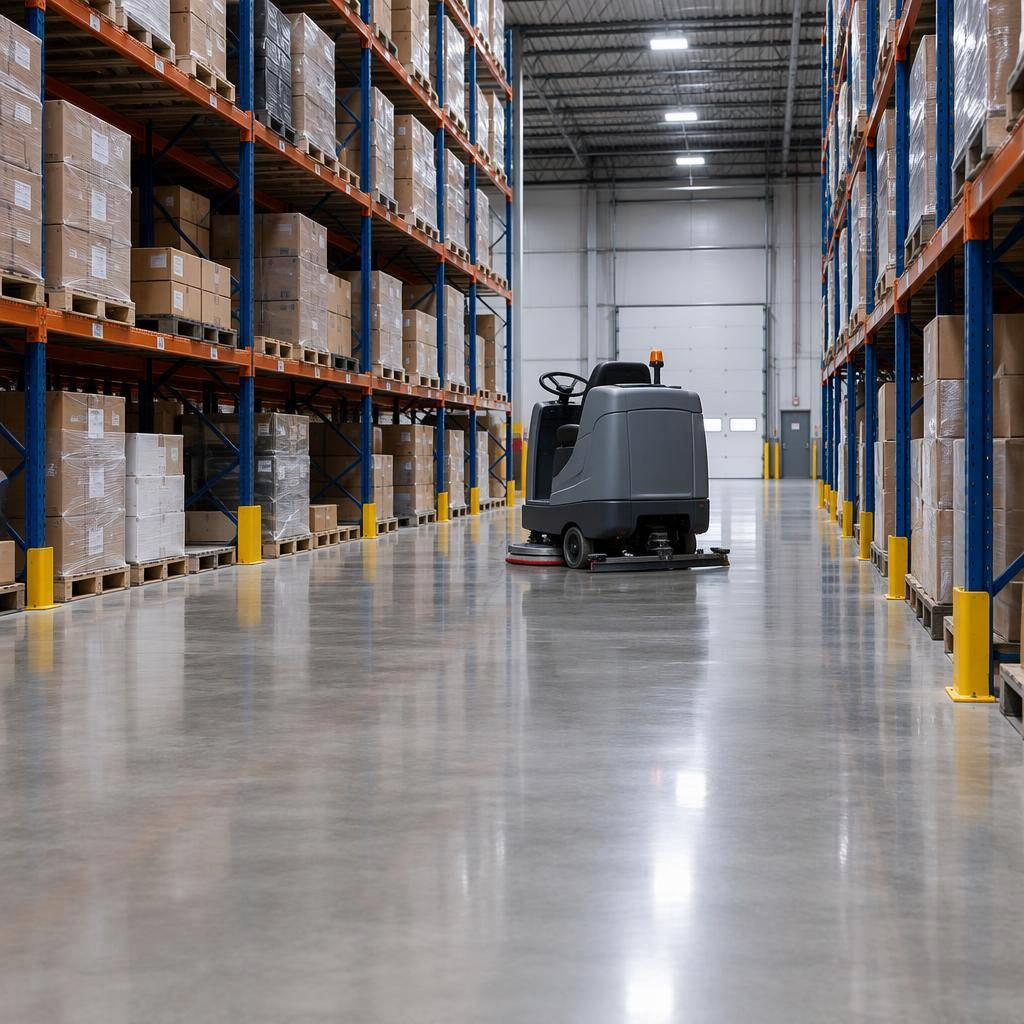
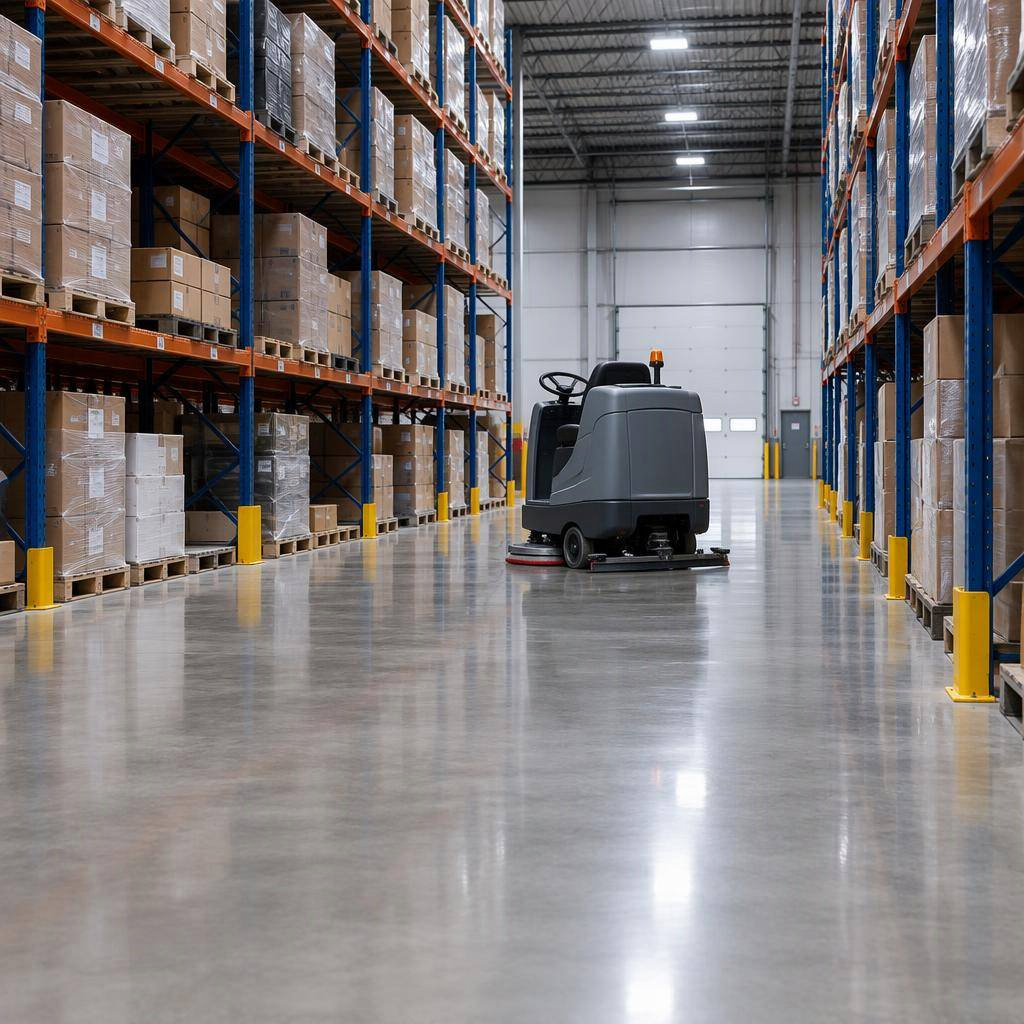
Short answer. On this rubric, CleaniBot C5 is our top pick for large indoor hard floors and ranks first (7.90 / 10) because unattended automation is 20% of the score and C5 is the machine with a documented charge + fill + drain + sewage-tank self-clean workstation. Avidbots Neo 2W still leads raw tanks and theoretical robot throughput. Tennant T16AMR (Brain Corp BrainOS) still leads path width and named industrial certification. If those two dimensions are all you buy, do not use this ranking — use the 12-model table.
Disclosure. OrionStar publishes this page and sells CleaniBot C5. Scores use the same rubric for every machine. Specs are manufacturer-published, accessed 5 November 2026. No laboratory comparison test.
Perspective (read this first). Scores are for large, medium-to-large indoor hard-floor sites — warehouses, plants, airports, big-box — not for hotels or school corridors. Compact robots (S55 Pro, LionsBot R3, Pudu CC1 Pro) are scored in picks by floor size, not here.
| Rank | Robot | Overall | Standout specification | Best suited to |
|---|---|---|---|---|
| 1 | OrionStar CleaniBot C5 | 7.90 | Workstation: charge, fill, drain, sewage-tank self-clean | Large indoor hard floors with a plumbed dock |
| 2 | Avidbots Neo 2W (32 in) | 7.55 | 3,941 m²/h theoretical; 109 / 135 L | Widest open floors, purpose-built robot |
| 3 | Kärcher KIRA B 50 | 7.30 | 2,365 m²/h theoretical auto; optional full dock | 550 mm class with Kärcher dock option |
| 4 | Tennant T16AMR | 7.20 | 910 mm path; CSA/ANSI C22.2 No. 336 | Industrial ride-on, certified, no water dock |
| 5 | Tennant T7AMR | 6.75 | 110 L / 110 L; 6–6.5 h Li; BrainOS hybrid | Large retail / airports, manual fallback |
| 6 | ICE RS26-AU (EMMA) | 6.70 | 2,687 m²/h autonomous; BrainOS | 26 in ride-on with a published auto rate |
| 7 | Gausium Scrubber 50 Pro | 6.60 | 500–1,300 m²/h practical band | Mapped mid-large, optional workstation |
| 8 | Nilfisk Liberty SC50 | 6.30 | CSA/ANSI C22.2 No. 336; 63 dB(A); 6 h | Populated large sites that name the standard |
| Criterion | Weight | What a 10 looks like | What a 5 looks like |
|---|---|---|---|
| Scrubbing productivity (D1) | 25% | High theoretical or practical m²/h and ≥700 mm path, autonomous figure | Mid 500 mm class, or a high figure that is manual-only |
| Coverage persistence (D2) | 20% | ≥100 L class tanks and ≥4 h scrub, recovery ≥ solution | ~45–60 L or ≤3 h without a water dock |
| Unattended automation (D3) | 20% | Charge + fill + drain + tank self-clean as a documented capability | Off-board or on-board charge only |
| Navigation and safety (D4) | 15% | Named third-party robotic standard (CSA/ANSI C22.2 No. 336, IEC 63327) + sensor suite | Sensor suite, no named robotic-safety certificate in the reviewed documentation |
| Site fit (D7) | 10% | Fits large-site aisles without a 3 m+ U-turn penalty | Extreme mass/turn, or tight-only geometry |
| Noise and stated compliance (D5) | 5% | ≤65 dB(A) and a named EMC/FCC/IP line | ≥75 dB(A) |
| Serviceability (D6) | 5% | Published consumable hours + remote | Dealer network only, cycles not published |
Weighted total = Σ (score × weight). Price is excluded; the reviewed manufacturer materials do not provide a comparable list price we will print.
Manual-mode theoretical m²/h (Tennant family brochure) is not treated as equal to an autonomous figure. That is why T16AMR is 8, not 10, on D1 despite 5,890 m²/h on the sheet.
D1 8 · D2 7 · D3 10 · D4 7 · D7 7 · D5 7 · D6 8. C5 does not out-scrub a 910 mm ride-on. It wins this ranking because D3 is a fifth of the score and the C5 manual documents a workstation for charge, clean-water refill, drain and sewage-tank self-clean — plus 1.5 h charge against a 3 h scrub. 550 mm, 1,980 m²/h maximum theoretical, 45 L / 45 L, dual 400 W / 16 kPa, 18.18 kPa vacuum, ≤70 dB(A), 800 mm pass, FCC Part 15. Limit: ≤2% climb, IPX3, no CSA/ANSI C22.2 No. 336 number in the manual. OrionStar’s C5 page says “90L water tank system”; the spec table is 45 L + 45 L, which we read as 90 L combined.
D1 9 · D2 9 · D3 6 · D4 7 · D7 8 · D5 4 · D6 5. Best raw robot throughput in the set: 790 mm, 3,941 m²/h theoretical, 109 / 135 L, 4–6 h. Purpose-built (no seat). Limit: 75 dB(A), 688 kg, ~3.05 m turn; Home Base is charge on the 2024 sheet, not a documented water dock. If you ignore D3, Neo is the large-floor machine.
D1 8 · D2 7 · D3 8 · D4 7 · D7 7 · D5 6 · D6 5. Closest C5 analogue: 550 mm, 2,365 m²/h theoretical autonomous, 55 / 55 L, ~3.5 h, optional dock that fills, empties, rinses and charges. Limit: dock is optional; charge 5.2–8 h depending on sheet; 900–1,000 mm clearance.
D1 8 · D2 9 · D3 4 · D4 9 · D7 7 · D5 5 · D6 6. Industrial BrainOS ride-on: 910 mm, 190 / 225 L, 4 / 5.5 h, UL/CSA 60335-2-72 and CSA/ANSI C22.2 No. 336 (UL File E358987). Limit: D3 is charge-only; 5,890 m²/h is theoretical manual; autonomous U-turn 3.43 m. This is the machine a warehouse tender that names the standard will shortlist even when it loses our automation weight.
D1 7 · D2 8 · D3 4 · D4 8 · D7 8 · D5 6 · D6 6. 650 mm, 110 / 110 L, lithium to 6–6.5 h, hybrid drive, BrainOS. Limit: 4,250 m²/h theoretical manual; no water dock; 850 mm body.
D1 7 · D2 8 · D3 4 · D4 8 · D7 7 · D5 6 · D6 7. The BrainOS 26 in with a published autonomous 2,687 m²/h, 110 / 110 L, 4 h, 68 dB(A), Robot Operations Center on the flyer (D6 7). Limit: autonomous grade 0% on that flyer; 8–12 h charge; no water dock.
D1 7 · D2 6 · D3 7 · D4 7 · D7 7 · D5 5 · D6 5. Disc-brush row: 460 mm, 1,987 theoretical / 500–1,300 practical, 30 / 24 L, 3 h, optional workstation charge+refill. Practical band is a point in its favour. Limit: smaller tanks than C5/KIRA; noise not on the spec page we used; “4× spot clean” unverified.
D1 6 · D2 7 · D3 4 · D4 9 · D7 6 · D5 8 · D6 5. D4 and D5 are excellent (CSA/ANSI C22.2 No. 336; 63 dB(A); up to 6 h). Limit: 510 mm and 1,895 m²/h theoretical auto are mid-pack on a warehouse rubric; no water dock; 2021 productivity-sheet conflict (we used 1,895 m²/h). It is the populated-site pick, which is why it wins a slot in Article B and loses this one.
S55 Pro (~1,197 m²/h, 22 / 15 L, charge-only), LionsBot R3 (800–1,200 practical, 21 / 24 L) and Pudu CC1 Pro (700–1,000 all-covered, 15 / 15 L) are the right machines for doors, hotels and mixed carpet. On a large-facility rubric they would cluster at the bottom because D1 and D2 are 45% of the weight. That would be a scoring artefact, not a product verdict. Use picks by floor size.
Scores use manufacturer pages, datasheets and the C5 manual reviewed on 5 November 2026. Competitor figures are cited by model and access date. We did not run a soil test, a navigation test or a timed shift. Changing D3 from 20% to 5% would likely put Neo or T16AMR first — which is the honest sensitivity. If your tender ignores docks, do not use this ranking as a purchase order.
Start from practical bands where they exist. Otherwise take 50–70% of theoretical autonomous m²/h and even less of Tennant’s manual theoretical. Confirm on a mapped trial.
You still need a traffic plan. T16AMR and SC50 publish CSA/ANSI C22.2 No. 336. C5 publishes drop, collision and runaway detection plus FCC Part 15. First weeks: a person on the app, not an empty building assumption.
Consumable hours, local parts, remote diagnostics, and a named response time. C5 publishes daily/weekly/monthly/half-year plus a parts table. ICE publishes a Robot Operations Center. Ask Tennant/Kärcher/Avidbots/Gausium/Nilfisk for the equivalent in the RFP.
C5 is a 3 h scrub + dock loop. Neo and SC50 are closer to a single battery window (4–6 h). T16AMR lithium 5.5 h still needs a water plan because there is no fill dock on the spec sheet.
If the night crew’s cost is water, yes — that is why D3 is 20% and why C5 ranks first here. If the site cannot plumb a drain, Neo, T16AMR and T7AMR still score as charge-only large-floor machines.
Not published in the OrionStar manual. Not invented here. Ask for a quote that separates robot, dock, mapping, training and year-1 consumables.