

REQUEST DEMO
Robot CATALOG will be sent to your mailbox immediately after submission.
SUBMIT
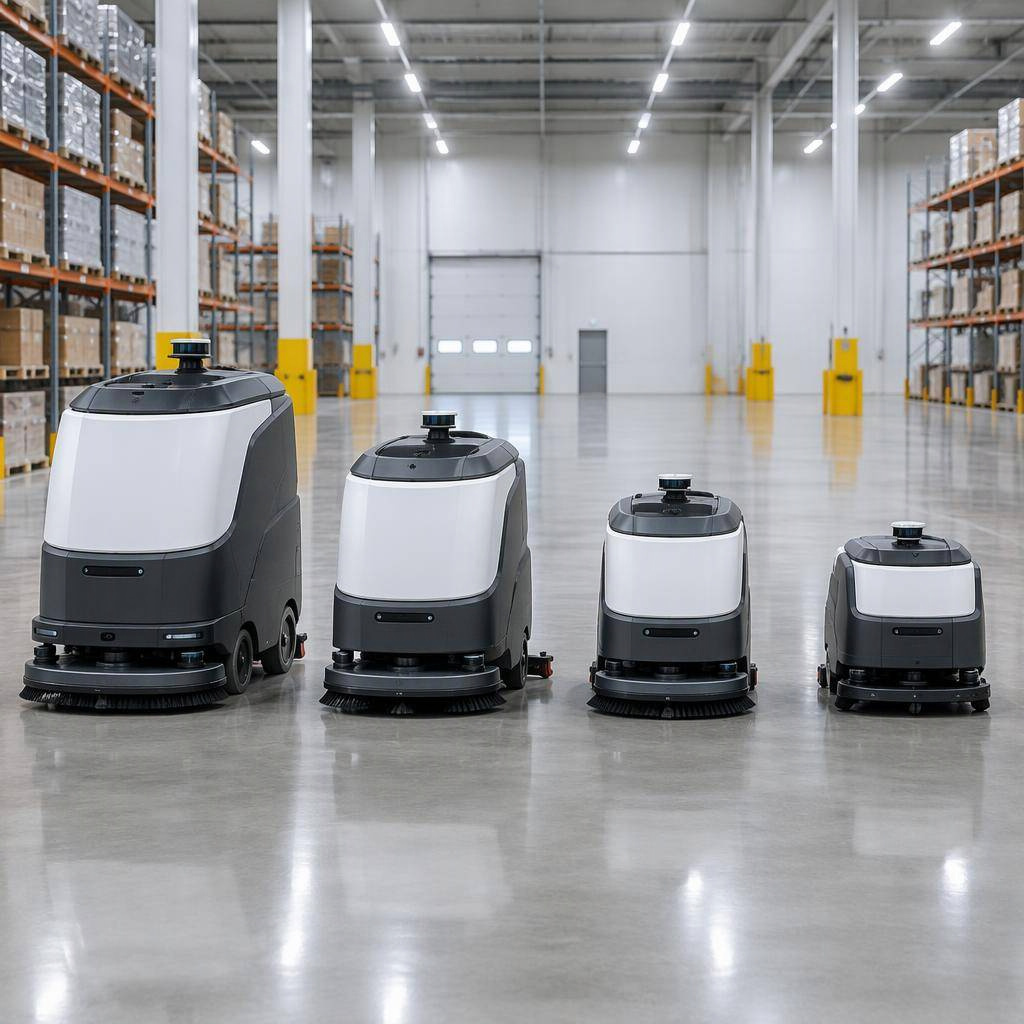
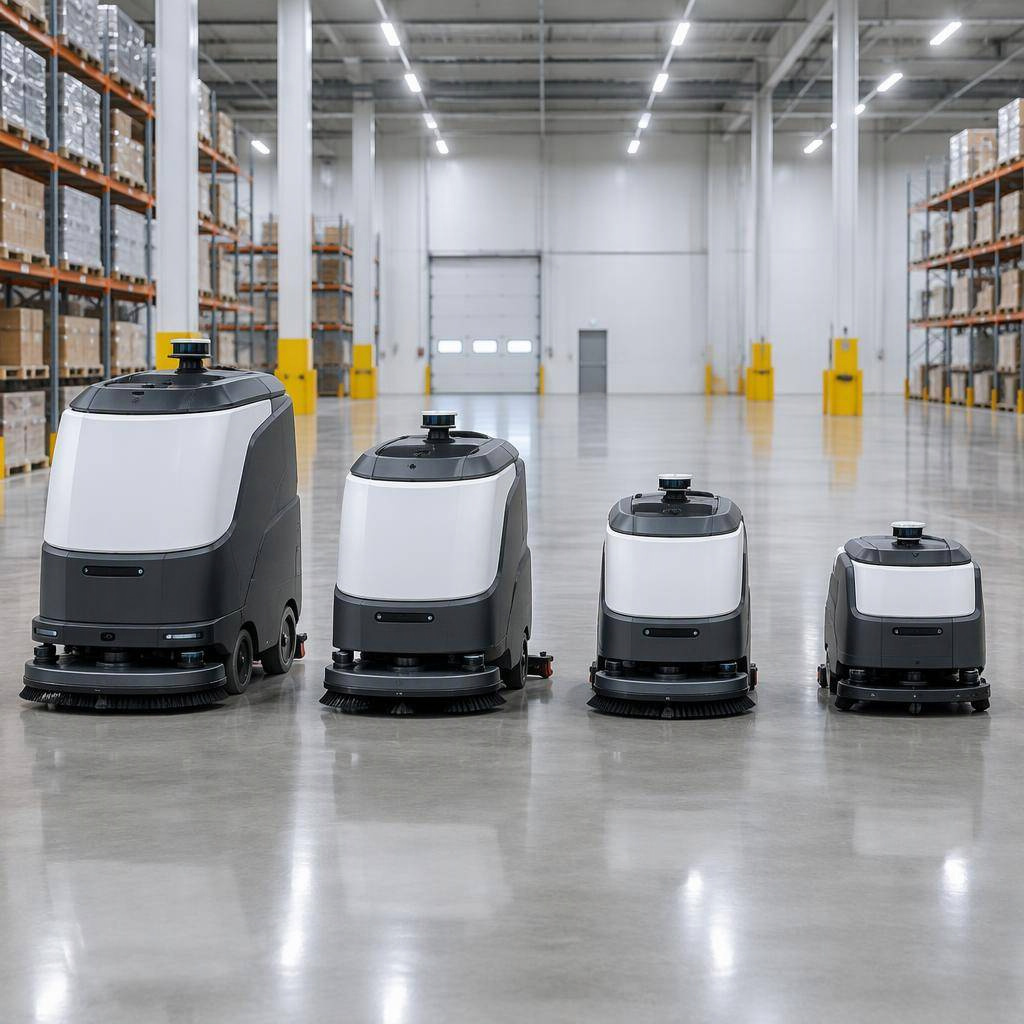
For medium and large hard floors that can take a water-and-charge workstation, start with CleaniBot C5 (550 mm path, 1,980 m²/h maximum theoretical, 45 L / 45 L tanks, 3 h scrub). For compact mixed-mode floors, start with CleaniBot S55 Pro (~1,197 m²/h scrub, 70 kg, 700 mm pass, six modes). For the largest industrial aisles, look at Avidbots Neo 2W or Tennant T16AMR. If a named robotic-safety certificate is a tender clause, put Nilfisk Liberty SC50 or T16AMR on the shortlist. Picks by floor size are in our 2026 picks; warehouse scores are in the scored ranking.
Disclosure. This page is published by OrionStar, which sells CleaniBot C5 and CleaniBot S55 Pro. Competitor figures are manufacturer-published, accessed 5 November 2026. We did not laboratory-test the other machines. Theoretical m²/h is not the same as a measured shift.
Figures as published, accessed 5 November 2026. Productivity is theoretical unless marked practical. Tennant AMR coverage figures are theoretical max in manual mode.
| Model and use case | Width (mm) | Productivity (m²/h) | Runtime (h) | Tanks C/R (L) | Docking station | Noise (dB(A)) | Min. pass (mm) |
|---|---|---|---|---|---|---|---|
| OrionStar CleaniBot C5 — medium/large hard floors | 550 (840 w/ side brush) | 1,980 max / theoretical | 3 scrub | 45 / 45 | Workstation: charge, fill, drain, sewage-tank self-clean | ≤70 | 800 |
| OrionStar CleaniBot S55 Pro — compact all-in-one | 520 scrub | ~1,197 (published mode figure) | 4.5 standard scrub | 22 / 15 | Charge dock | 65 scrub | 700 |
| Kärcher KIRA B 50 — mid/large, optional full dock | 550 | 2,365 theoretical autonomous | ~3.5 | 55 / 55 | Optional: charge, fill, drain, rinse | 69 | 900–1,000 |
| Gausium Scrubber 50 Pro (disc) — mid, optional workstation | 460 | 1,987 theoretical; 500–1,300 practical | 3 scrub | 30 / 24 | Optional workstation: charge and refill | Not published | 800 |
| LionsBot R3 Scrub Pro — narrow corridors | 366 (682 w/ side brush) | 800–1,200 practical | up to 3 | 21 / 24 | Optional refuel: charge, fill, drain | 71 | Body 570 wide |
| Pudu CC1 Pro — compact 4-in-1, including carpet | 500 w/ side brush | 700–1,000 all-covered | 5 scrub | 15 / 15 | Optional: charge, fill, drain | <70 | 700 |
| Nilfisk Liberty SC50 — populated sites, certified | 510 | 1,895 theoretical autonomous | up to 6 | 57 / 53 | Not published | 63 | Aisle turn 1,592 (manual) |
| Tennant T380AMR — mid retail, BrainOS hybrid | 500 | 3,106 theoretical manual | 4–5 | 75 / 75 | Off-board charge | 66 | Aisle nav ~1,070 |
| Tennant T7AMR — large open retail / airports, BrainOS | 650 | 4,250 theoretical manual | 4 FLA / 6–6.5 Li | 110 / 110 | Off-board charge | 70 | Aisle nav ~1,220 |
| ICE RS26-AU (EMMA) — BrainOS ride-on, 26 in | 660 | 2,687 autonomous | 4 | 110 / 110 | On-board charge | 68 | Not published |
| Tennant T16AMR — industrial warehouse, 36 in | 910 | 5,890 theoretical manual | 4 FLA / 5.5 Li | 190 / 225 | Off-board / Li opportunity charge | 71 | Pass 1,450 |
| Avidbots Neo 2W (32 in cylindrical) — largest purpose-built robot | 790 | 3,941 theoretical | 4–6 | 109 / 135 | Home Base (charge) | 75 | Turn ~3,050 |
C5 tank figures are 45 L clean and 45 L sewage from the product spec table. OrionStar’s C5 product page and a marketing line in the manual say “90L water tank system”; we read that as the two tanks combined, not a third tank. S55 Pro is the commercial name; the spec table prints “Model S55”.
S55 Pro — 70 kg, 700 mm pass, six modes, HEPA H13, 4.5 h standard scrub, charge-only dock (water is manual). Pudu CC1 Pro — compact 4-in-1 including carpet; 700–1,000 m²/h all-covered; 15 L tanks; optional water dock. Its 1,500–3,000 m²/h AI spot figure is not full-coverage scrub. LionsBot R3 — 570 mm body, 800–1,200 m²/h practical, 24 L recovery > 21 L clean. Corridor machine, not a hall machine.
C5 — 550 mm, 1,980 m²/h max theoretical, 45 L / 45 L, dual 400 W / 16 kPa, workstation (charge, fill, drain, sewage-tank self-clean). Climb ≤2%, IPX3, no CSA/ANSI C22.2 No. 336 number in the manual. KIRA B 50 — same width, 2,365 m²/h theoretical autonomous, 55 L / 55 L, optional full dock, ~3.5 h. Gausium 50 Pro (disc) — rare practical band 500–1,300 m²/h plus 1,987 theoretical; optional charge+refill workstation. T380AMR — BrainOS hybrid for narrower mid-retail; 3,106 m²/h is theoretical max manual; off-board charge.
T16AMR — 910 mm BrainOS ride-on, 190 / 225 L, UL/CSA 60335-2-72 and CSA/ANSI C22.2 No. 336; 5,890 m²/h theoretical manual; 3.43 m U-turn. Neo 2W — purpose-built, 790 mm, 3,941 theoretical, 109 / 135 L, 75 dB(A), ~3 m turn; Home Base is charge on the 2024 sheet. T7AMR — 650 mm, 110 L, 6–6.5 h lithium, airports and malls. ICE RS26-AU — BrainOS 26 in with a published autonomous 2,687 m²/h; flyer lists 0% autonomous grade.
| Criterion | What we measure | How we read it |
|---|---|---|
| Productivity | m²/h and path, labelled theoretical or practical | C5 1,980 theoretical / 550 mm sits with KIRA and Gausium. Neo and T16AMR are a different, open-aisle band. |
| Tank and runtime | Litres and named-mode hours | C5 45/45 + 3 h with a workstation; S55 Pro 22/15 + 4.5 h; Neo / T16AMR are 100 L-class. |
| Automation | Dock type | C5 workstation is charge+fill+drain+self-clean. KIRA, Gausium, LionsBot, Pudu: optional docks. BrainOS Tennant/ICE in this table: charge-only. |
| Navigation and safety | Sensors and named standards | SC50 and T16AMR: CSA/ANSI C22.2 No. 336. C5: laser+vision, drop/collision/runaway, FCC Part 15; no named robotic-safety certificate number in the manual. |
| Passability | Pass, turn, weight, grade | S55 Pro 700 mm / 70 kg. C5 800 mm / 215 kg / ≤2%. Neo and T16AMR need wide aisles. |
Three names recur on spec sheets. They are published by standards bodies, so you can read the scope yourself.
A standard named on a brochure is a claim until you see the certificate. Ask every vendor, including us, for the certificate file. The C5 manual we read names FCC Part 15 and IPX3 but no robotic-safety certificate number.
Every number in the table is taken from a manufacturer page, datasheet or the OrionStar manuals, accessed 5 November 2026. Competitor figures are cited by model and access date. We did not run a side-by-side lab test. Brochure theoretical m²/h assumes an empty rectangle; a live store will come in lower. Before you buy, run a mapped trial on your floor, with your soil and your night crew. How to stand that trial up is in the implementation guide.
Named width, recovery ≥ solution, named-mode runtime, obstacle sensing, e-stop, and a dock plan (charge vs charge+water). Unattended nights make water fill/drain a first-class feature.
Prefer practical bands (Gausium 500–1,300; LionsBot 800–1,200; Pudu 700–1,000 all-covered). C5 1,980, KIRA 2,365 and Neo 3,941 are theoretical. Tennant 3,106–5,890 in this table are theoretical max manual.
See the table. BrainOS ride-ons (Tennant, ICE) for hybrid fleets; Nilfisk when the certificate is named; Kärcher and C5 in the 550 mm workstation band; Gausium mapped mid-size; LionsBot, Pudu and S55 Pro compact; Avidbots for open-floor tanks.
Not without a site risk assessment. SC50 and T16AMR publish CSA/ANSI C22.2 No. 336. C5 lists drop/collision/runaway detection and FCC Part 15. S55 Pro lists 360° fusion and an e-stop. First weeks: an attendant on the app.
Hours on brushes, squeegees and HEPA, and who stocks parts locally. C5 and S55 Pro publish consumable tables. Most competitor sheets here do not — put the table in the RFP.
Not published in the OrionStar manuals. We will not invent a figure. Ask for a quote that splits robot, dock, mapping, training and year-1 consumables.