

REQUEST DEMO
Robot CATALOG will be sent to your mailbox immediately after submission.
SUBMIT
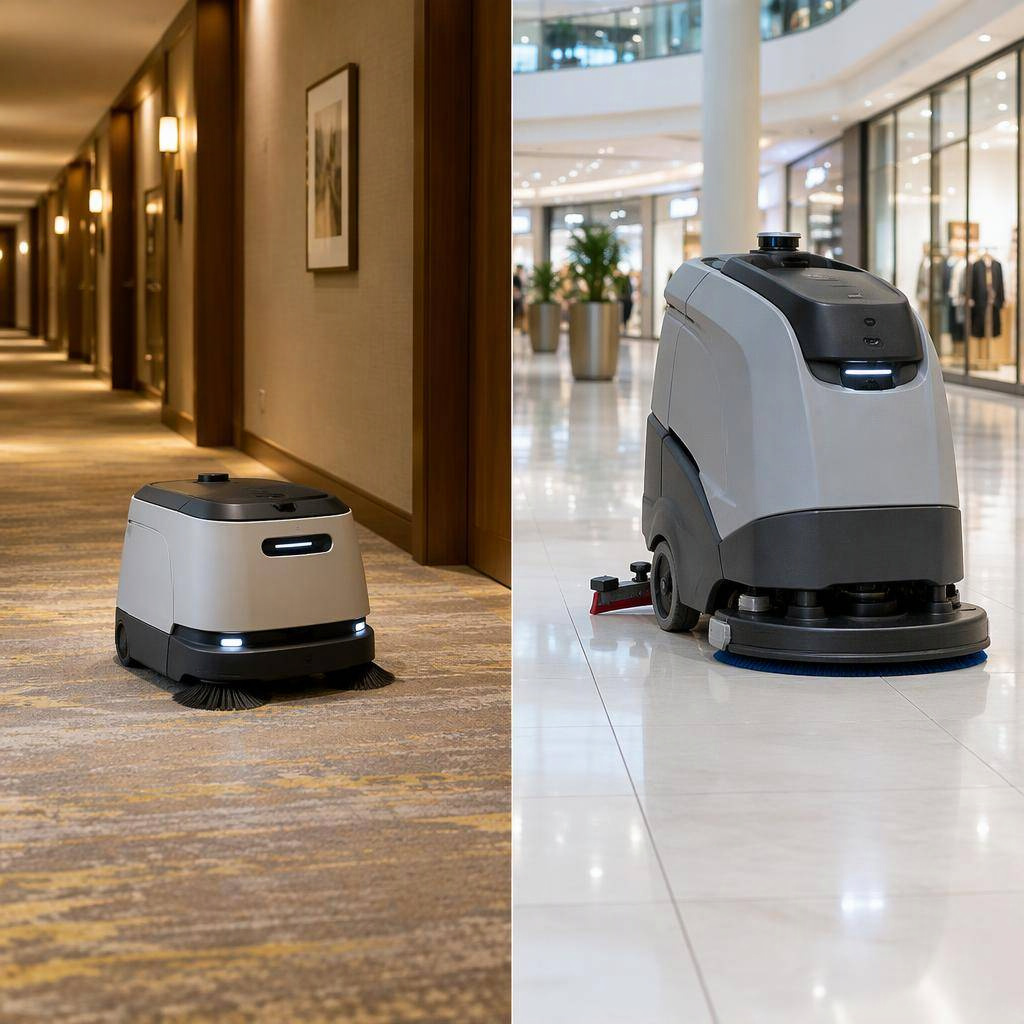
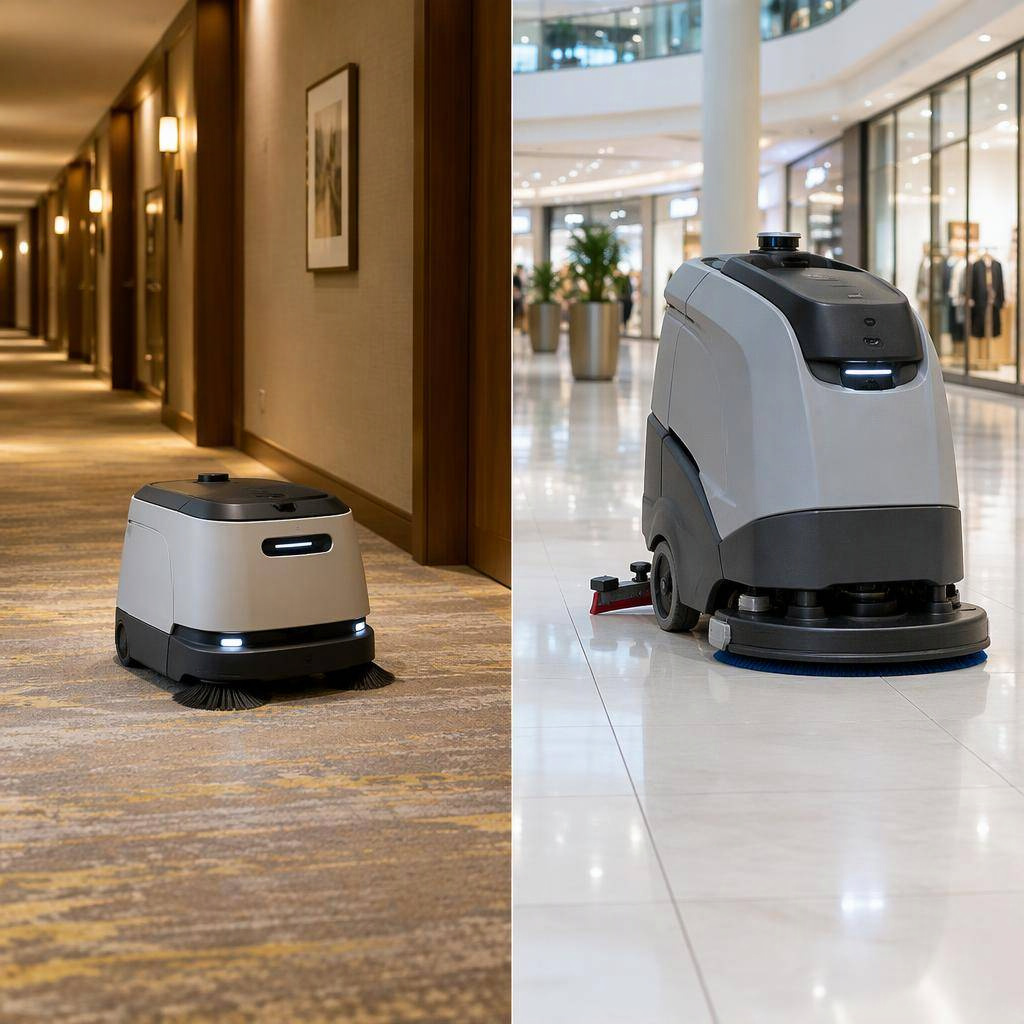
For medium and large hard floors that can take a plumbing-ready workstation, our pick is CleaniBot C5. For compact mixed-mode floors (offices, hotels, shops, short-pile carpet), our pick is CleaniBot S55 Pro. For the largest open warehouses, Avidbots Neo 2W. For a wide-aisle ride-on hybrid, Tennant T7AMR. For a named robotic-safety certificate, Nilfisk Liberty SC50. Full 12-model table: 2026 comparison. Warehouse scores: scored ranking.
Disclosure. OrionStar publishes this page and sells CleaniBot C5 and CleaniBot S55 Pro. We define the dimensions, score our own machines on them, and state where a competitor leads. Specs are manufacturer-published, accessed 5 November 2026. We did not laboratory-test the other eight brands.
Facility managers, cleaning contractors and FMS buyers who have already decided they need an autonomous scrubber and now need a named machine for a named floor. If you need the rollout sequence — survey, dock, map, first week — use the implementation guide after you shortlist.
We sell two of the machines on this page. That is a conflict. The way we handle it is mechanical:
We have not run a side-by-side soil test. A brochure 2,000 m²/h is not your Tuesday night shift.
Five dimensions, same as the comparison article:
Total cost is not a dimension here. Neither OrionStar manual publishes price or RaaS. We will not invent one.
Eight category winners. Four other capable machines are listed at the end as “not a category winner”, not as failures.
Key specs. 550 mm path (840 mm with side brushes); 1,980 m²/h maximum theoretical; 45 L clean / 45 L sewage; 3 h scrub / 8 h dust mop; 1.5 h charge; workstation (charge, fill, drain, sewage-tank self-clean); ≤70 dB(A); 800 mm pass; 215 kg GVW.
C5 is the workstation-class walk-behind in this set. Dual 400 W rollers at 16 kPa and 18.18 kPa vacuum are a heavy-soil spec, not a damp-mop spec. 45 L / 45 L is enough to run a large concourse between dock visits; the workstation is what turns that into an unattended night rather than a babysitting job. Laser + vision localisation, missed-area rescan, dual side brushes to 0 cm, and elevator / access-control integration (integrator work, not a DIY toggle) match the buildings this machine is aimed at: warehouses, airports, stations, commercial complexes, hospitals, schools.
Climb is ≤2% and IP is IPX3 (an IEC 60529 rating) — this is not a ramp machine and it is not a wet-room hose-down machine. 1,980 m²/h is a maximum / theoretical figure, not a measured shift. The manual does not name CSA/ANSI C22.2 No. 336 or a SIL/PLd certificate; “designed to comply with functional safety” is not the same as a certificate number. A 910 mm ride-on (T16AMR) or 790 mm Neo will cover a clear warehouse aisle faster on paper. OrionStar’s C5 page and the manual’s feature copy say “90L water tank system”; the spec table and tank chapters say 45 L + 45 L. We use 45 L + 45 L and read 90 L as the two tanks combined.
Best for medium and large indoor hard floors (tile, epoxy, marble, emery, cement) where you can plumb a workstation and want the robot off the night attendant’s water trolley. Skip if you need a named robotic-safety certificate in the tender, a ride-on for 3 m aisles, or a sub-700 mm door.
Key specs. 520 mm scrub path; ~1,197 m²/h standard/power scrub; 22 L / 15 L; 4.5 h standard scrub (2.5 h power); charge dock only; 65 dB scrub / 50 dB mop; 70 kg; 700 mm pass; HEPA H13; six modes, no head swap. Spec table prints “Model S55”; we use the commercial name S55 Pro.
S55 Pro is the machine you put through a 700 mm door and leave in a hotel back-of-house. Six modes (standard scrub, power scrub, standard sweep & vac, eco sweep & vac, sweep-vac-mop, dust mop) switch without changing components. LiFePO4 25.6 V / 40 Ah, 2,000 cycles, <4 h charge, auto-return below 10% or 25%. 360° fusion perception, 10.1 in screen, 4G + Wi-Fi, IP43, short-pile carpet under 5.5 mm. Noise at 65 / 50 dB is the quietest compact scrubber in this set after Nilfisk’s 63 dB ride-on.
The box dock charges. It does not fill or drain. Water is a hose and a funnel. Recovery tank (15 L) is smaller than clean (22 L), so dryness is the constraint, not solution. Edge cleaning is 10 cm, not zero. Bump height drops to 5 mm in most cleaning modes. It will not win a warehouse score against C5, Neo or T16AMR — and it is not trying to.
Best for offices, hotels, shops, schools and mixed hard-floor plus short-pile carpet where doors are 700 mm and noise is a night complaint. Skip if you need unattended water top-up, a 0 cm edge, or industrial throughput.
Key specs. 790 mm (32 in cylindrical); 3,941 m²/h theoretical; 109 L solution / 135 L recovery; 4–6 h; Home Base charge; 75 dB(A); 688 kg GVW; ~3.05 m autonomous turn.
Neo is a robot that was not converted from a ride-on. Tanks and theoretical throughput are the largest purpose-built pair in this set (T16AMR still wins path width at 910 mm and solution litres at 190 L). Recovery 135 L against 109 L solution is the right way round for dry floors. 4–6 h on AGM, 15 kPa vacuum, 360° sensing, Home Base included.
75 dB(A) is loud for occupied retail. 688 kg and a 3 m turn need a real aisle. Home Base on the 2024 cylindrical sheet is charge; automatic water fill is not specified there. This is the wrong machine for a hotel corridor.
Best for open warehouses, plants and concourses with wide aisles. Skip if you cannot accept 75 dB or a 3 m U-turn.
Key specs. 650 mm; 4,250 m²/h theoretical manual; 110 L / 110 L; 4 h flooded / 6–6.5 h lithium; BrainOS Teach-and-Repeat + Area Fill; off-board charge; 70 dB(A); 492 kg.
T7AMR is the BrainOS machine you can still drive. That matters on day one, on a spill, and in a site that already runs Tennant dealers. 110 L tanks and a 650 mm path sit in the large-retail / airport band. Lithium runtime is among the longest in this set. Brain Corp’s stack is the same family as T380AMR, T16AMR and ICE RS26-AU.
The headline 4,250 m²/h is theoretical max manual, not autonomous. There is no water-fill dock on the spec sheet. Off-board charge. 850 mm wide, 10 ft U-turn — not a 700 mm door machine.
Best for large retail, airports, universities that want a ride-on they can also take over by hand. Skip if unattended water is a requirement or the aisle is narrow.
Key specs. 510 mm; 1,895 m²/h theoretical autonomous; 57 L / 53 L; up to 6 h; 63 dB(A); CopyCat / Fill-In / Manual; CSA/ANSI C22.2 No. 336-17 on the 2021 fact sheet.
If the RFP names a third-party robotic-safety standard, SC50 is one of two machines in our twelve that print CSA/ANSI C22.2 No. 336 (the other is T16AMR). 63 dB(A) is the quietest ride-on here. Six-hour runtime and Fill-In mapping are operationally simple. EMC note on the fact sheet is relevant to hospitals.
2021 “world’s only third-party certified” copy is out of date; we do not repeat it. One dealer sheet conflicts on theoretical productivity (11,000 vs 20,400 ft²/h); we use 1,895 m²/h and you should confirm with Nilfisk. No water dock in the sheets we used. ~480 kg class ride-on.
Best for populated healthcare, education and retail tenders that name the standard. Skip if you need a workstation or compact doors.
Key specs. 366 mm (682 mm with side brush); 800–1,200 m²/h practical; 21 L / 24 L; up to 3 h / 2 h charge; 71 dB; 85.5 kg; 635 × 570 × 828 mm; optional refuel station.
R3 is the machine that fits the route a cleaner still mops by hand: back-of-house, racks, 570 mm body. Practical efficiency is published as a band, not a fantasy peak. Recovery 24 L > clean 21 L. Optional refuel station does charge, fill and drain. Side brush takes the path to 682 mm without growing the footprint.
Three hours and 21 L will not run a warehouse. 71 dB is not a library machine. Older LionsBot brochures show a lower practical band (500–800 m²/h); we used the current product page.
Best for corridors, racks and multi-floor service lifts. Skip if the job is a 20,000 m² empty hall.
Key specs. 500 mm with side brush; 700–1,000 m²/h all-covered; 15 L / 15 L; 5 h scrub; 75 kg; 700 mm path clearance; optional dock charge+fill+drain; carpet vacuum in the mode list.
CC1 Pro is the compact machine that admits carpet exists. Floor-type detection, VSLAM + LiDAR, optional elevator/gate, optional water dock. All-covered 700–1,000 m²/h is honest for this size. Silent mop 9 h is a night-office number.
15 L tanks are small. The 1,500–3,000 m²/h “AI spot” figure is not full-coverage scrub — do not put it in a comparison table next to C5’s 1,980. An IEC 63327 / TUV line appears on a reseller PDF; we have not independently verified the certificate file.
Best for mixed hard floor and carpet in one robot. Skip if you only have hard floors and need 45 L-class tanks — that is C5.
Key specs. 550 mm; 2,365 m²/h theoretical autonomous; 55 L / 55 L; ~3.5 h; optional dock (charge, fill, drain, rinse); 69 dB(A); 228 kg empty; 900–1,000 mm clearance.
KIRA is the cleanest like-for-like against C5: same 550 mm class, larger tanks, higher theoretical autonomous rate, optional dock that also rinses the tank. Roller pre-sweeps and scrubs; side brush is in the standard story. Lithium 24 V / 160 Ah.
The full dock is optional, not assumed. Charge time is up to 5.2–8 h depending on sheet — slower than C5’s 1.5 h. Clearance 900–1,000 mm is tighter than C5’s 800 mm pass spec in the other direction (KIRA needs a wider hole). We still pick C5 when sewage-tank self-clean and 1.5 h opportunity charge are the night-ops constraint.
Best for buyers standardised on Kärcher who want a 550 mm autonomous with an optional water dock. Skip if you have already chosen a BrainOS ride-on fleet.
Not the 12-row hub table — the eight picks, four columns.
| Pick | Width (mm) | Tanks C/R (L) | Scrub runtime (h) | Water automation |
|---|---|---|---|---|
| C5 | 550 | 45 / 45 | 3 | Workstation charge+fill+drain+self-clean |
| S55 Pro | 520 | 22 / 15 | 4.5 | Charge only |
| Neo 2W 32" | 790 | 109 / 135 | 4–6 | Home Base charge |
| T7AMR | 650 | 110 / 110 | 4 / 6–6.5 Li | Off-board charge |
| Liberty SC50 | 510 | 57 / 53 | up to 6 | Not published |
| R3 Scrub Pro | 366 | 21 / 24 | up to 3 | Optional refuel |
| CC1 Pro | 500 | 15 / 15 | 5 | Optional fill+drain |
| KIRA B 50 | 550 | 55 / 55 | ~3.5 | Optional full dock |
Assumption — not a quote. Neither OrionStar manual publishes purchase price, monthly RaaS or payback. Reseller pages that print a dollar figure for Pudu or others are not used here.
What you can still do on paper, with your numbers:
Payback is a site spreadsheet, not a blog sentence. Ask every vendor for a line-item quote that separates robot, dock, software, training and year-1 parts.
Walk the floor with a tape. Record door widths, the tightest U-turn, slope, glass, night occupancy, and where a drain and a 16 A (or vendor-specified) socket can live. C5 wants ≤2% grade and 800 mm. S55 Pro wants 700 mm and will not like 5 mm lips in scrub modes. Then run a mapped trial — not a demo in an empty hall. Standing that trial up is the implementation guide.
If the tender names a safety standard, ask for the certificate file, not the brochure line. IEC 63327:2021 (automatic commercial floor treatment machines, applied with IEC 60335-2-72) and CSA/ANSI C22.2 No. 336 (commercial robotic floor treatment machines in the U.S. and Canada) are the two to know. Competitor figures on this page are cited by model and access date.
Path width, tanks, dock type, and whether you need a named certificate. Brand familiarity is real (Tennant dealers) but it is not a spec.
Prefer practical bands (Gausium, LionsBot, Pudu all-covered). Treat C5 1,980, KIRA 2,365, Neo 3,941 as theoretical. Treat Tennant 4,250 / 5,890 as theoretical manual.
Only with a site risk assessment. SC50 and T16AMR publish CSA/ANSI C22.2 No. 336. C5 publishes drop/collision/runaway detection and FCC Part 15. S55 Pro publishes 360° fusion and an e-stop. First weeks: attendant on the app.
Hours on brushes and squeegees, who stocks HEPA locally, mean time to a technician, remote diagnostics. C5 and S55 Pro publish consumable tables in the manuals; ask competitors for the equivalent.
C5 3 h scrub + 1.5 h charge + workstation water is a split-shift design. S55 Pro 4.5 h standard scrub on one fill of 22 L may still be water-limited. Neo 4–6 h and SC50 up to 6 h are single-shift on battery; water is a separate question.
If the attendant’s job is “empty, fill, charge every two hours”, yes. That is the C5 workstation case. If the building cannot plumb a dock, S55 Pro, BrainOS ride-ons and Neo (charge Home Base) still run — with a person on water.