

REQUEST DEMO
Robot CATALOG will be sent to your mailbox immediately after submission.
SUBMIT
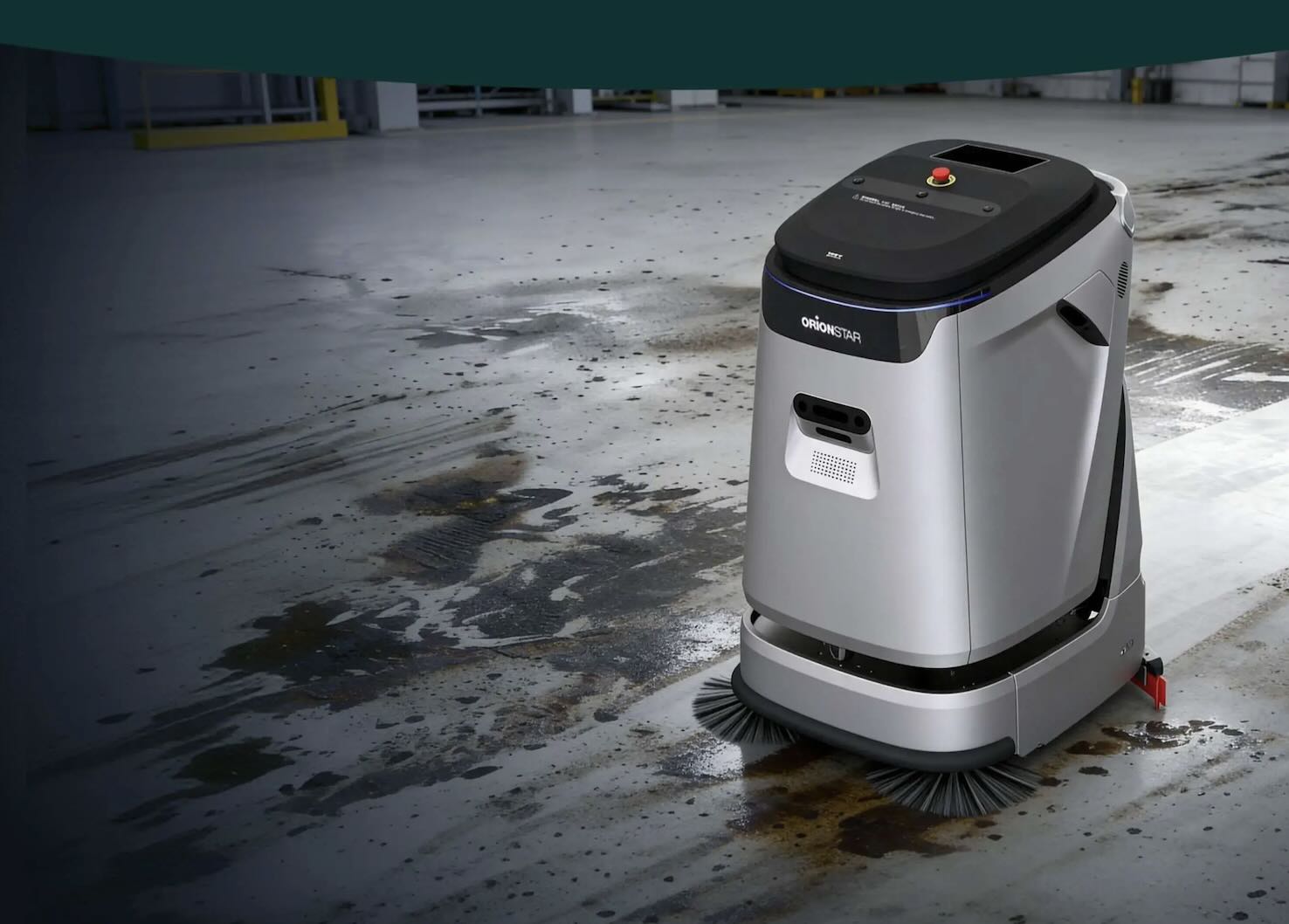
Shortlist the OrionStar CleaniBot C5 when the job is to scrub clear, level warehouse aisles with a compatible hard floor. If the aisle regularly collects pallet splinters, stretch wrap or labels, remove loose debris first. Choose a sweeper if loose material is the main problem, and a sweep-then-scrub routine if the same aisle also has wheel marks or adhered grime. The floor can need different equipment on different shifts even when the route never changes.
Disclosure: OrionStar publishes this guide and sells the CleaniBot C5. The recommendations below concern equipment fit; they are not results from a comparative warehouse trial.
| What you find on the aisle | First step | When to shortlist the C5 |
|---|---|---|
| Tyre marks or adhered grime on a cleared hard floor | Trial wet scrubbing with a floor-compatible cleaning solution | When the trial meets the site’s finish and reopening requirements; do not assume one pass removes old marks |
| Loose dust or light debris, with no persistent marks | Use an appropriate sweeper or dry-cleaning process | Only if inspection shows a separate need for wet scrubbing |
| Stretch wrap, straps or pallet fragments | Remove bulky debris using the site’s approved procedure; sweep what remains where appropriate | After the aisle is clear and inspection shows that scrubbing is still needed |
| A spill or unidentified residue | Follow the site’s spill procedure and release the area before routine cleaning | Only after staff verify the route is suitable for routine scrubbing |
| Mixed dirt after dispatch | Clear debris, sweep, then inspect before deciding whether to scrub | When wet cleaning adds a visible result that sweeping alone does not deliver |
A good candidate is a recurring scrubbing route on a compatible floor such as epoxy or cement, with enough room to turn and a way to manage forklift and pedestrian traffic. The C5’s separate 45 L clean- and wastewater tanks and a workstation that refills and drains it are reasons to trial it when the same route is cleaned repeatedly. They are not reasons to send it into an aisle that has not been cleared.
Check the surface against the manual and confirm detergent compatibility with the floor supplier. Test old wheel marks before promising that wet scrubbing will remove them. If the route includes a loading ramp beyond the C5’s stated 2% slope limit, end the C5 route before the ramp and assign that section separately.
On comparable stretches, run the current sweeping routine and inspect the result. On the trial stretch, add the scrubber after the sweep. Compare remaining marks, staff time spent preparing and intervening, and when each aisle is ready for traffic again. Use the normal post-dispatch debris load, not an unusually clean demonstration aisle. If sweeping alone meets the floor standard, there is no reason to add a wet pass there. If scrubbing adds value but clearing debris takes most of the shift, fix that upstream task before expanding the robot route.
Trial the OrionStar CleaniBot C5 on a cleared, level hard-floor aisle if tyre marks still remain after sweeping. Its 550 mm scrub path and separate 45 L clean- and wastewater tanks support a repeatable wet-cleaning route. Judge it on the marks it actually removes before the aisle reopens; if the main problem is loose debris, choose a sweeper instead.
For alternatives by floor type, see the commercial cleaning robot comparison by site.
Not when loose debris is the main job. Large fragments and wrap should be picked up, and loose material can require a dedicated sweep. Use a scrubber for what remains on the floor surface after clearing.
Treat them as separate routes. The scrubber that works on an indoor level aisle may not fit a ramp’s slope, surface or traffic pattern. Verify both routes before combining them.
C5 tank capacities, compatible floor examples, slope limit and workstation functions are from OrionStar manual and specification materials extracted on 5 November 2026. The debris examples and proposed comparison are selection guidance, not field-test results.
Airport concourses