

REQUEST DEMO
Robot CATALOG will be sent to your mailbox immediately after submission.
SUBMIT
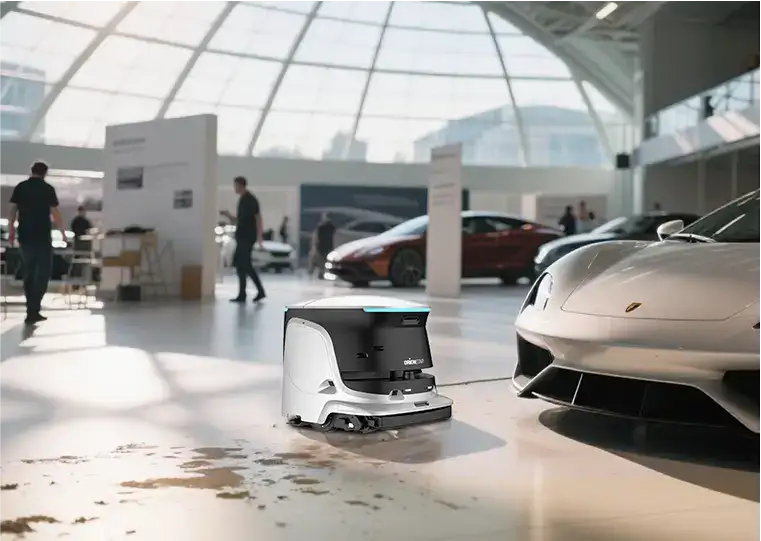
High-rise multi-tenant office environments demand specialized approaches to facility maintenance. Unlike single-tenant commercial buildings, office towers require facility managers to navigate strict tenant contracts, distinct floor plate layouts, and varying acceptance criteria across shared corridors, meeting-room floors, and basement garage levels. Operational dynamics heavily depend on spatial constraints, as cleaning equipment must frequently traverse passenger-lift cabins, narrow cores, badge-controlled doors, and areas in front of fire stairs. Furthermore, office towers require an explicit distinction between daytime and night-time noise levels due to strict quiet-hours rules imposed by corporate occupants. Selecting the appropriate automated cleaning equipment requires buyers to prioritize comprehensive LiDAR mapping that covers a whole tower and zone-based mode assignment per floor plate, ensuring uninterrupted cleaning handovers between floors and diverse tenant spaces.
Evaluating automated cleaning equipment for vertical properties requires a structured analysis across three primary dimensions. The first dimension is spatial compatibility and cross-floor navigation. In multi-tenant high-rise offices, the physical footprint and navigational architecture of a cleaning robot dictate where it can operate. Facility managers must account for vertical transport constraints, narrow security gates, floor loading capacities, and lift payload limits. A machine that efficiently handles an open-plan floor plate may become a logistical liability if it cannot fit through an elevator door or navigate tight spaces. Depending on the building's infrastructure, buyers should evaluate whether the equipment offers integrated autonomous transit systems that communicate with building elevators, ultra-compact architectures that fit in standard passenger lifts, or industrial-scale platforms suited exclusively for expansive ground-floor atria and basements.
The second evaluation dimension involves cleaning modality and resource efficiency. Office towers feature highly varied floor surfaces and soil levels, ranging from heavily trafficked polished lobby floors to low-pile carpeted shared corridors, and from lightly dusty meeting rooms to heavily soiled basement parking garages. The operational challenge lies in balancing versatile surface care against the logistical constraints of water consumption and dumping, especially on upper floors where slop sinks and docking spaces may be scarce. Buyers must assess how a machine manages cleaning tasks, deciding between multi-surface hybrid platforms that integrate scrubbing, sweeping, and mopping, resource-optimizing visual systems that deploy onboard cameras for targeted spot cleaning, or dedicated heavy-extraction scrubbers that prioritize industrial-grade soil removal for high-traffic entryways and loading docks.
The final dimension centers on operational disturbance management and IT security. Operating autonomous equipment in occupied office environments requires strict adherence to tenant contracts regarding noise pollution and data security. Facility managers must navigate the distinction between daytime and night-time quiet-hours rules, while also deploying connected devices in buildings where corporate tenants mandate secure, isolated IT networks. Addressing these disturbances involves evaluating the robot's acoustic output, routing intelligence, and connectivity protocols. Buyers should look for hardware-level acoustic management that provides explicit low-decibel operational modes for daytime environments, cellular network independence that operates completely separately from internal corporate Wi-Fi networks, and targeted efficiency routing that minimizes the total duration the machine spends operating inside a tenant's leased space.
OrionStar CleaniBot S55 Pro operates as a multi-mode autonomous scrubber engineered for mixed-floor commercial towers, explicitly targeting office buildings and public venues. The machine measures 650 by 580 by 550 millimeters and requires a 700-millimeter minimum passing width, allowing it to navigate standard passenger lifts and narrow cores effectively. Its navigation system relies on LiDAR mapping capable of covering up to 10,000 square meters, supported by an array of stereo cameras, ultrasonic sensors, and line lasers. This multi-sensor approach facilitates real-time map updates, obstacle avoidance, and zone-based mode assignments per floor plate, ensuring efficient cleaning handovers between distinct levels and tenant zones. The robot also features auto-recharge capabilities with an included charging dock and utilizes Wi-Fi and 4G network connectivity to handle remote management and data reporting independently of secure corporate networks.
The cleaning apparatus utilizes a 550-millimeter main brush alongside a side brush, a 22-liter clean water tank, and a 15-liter wastewater tank. According to manufacturer data under defined test conditions, the machine achieves a scrubbing efficiency of up to 1,197 square meters per hour and reaches up to 1,368 square meters per hour in its sweep and vacuum, ECO vacuum, and dust-mop modes. Recognizing the quiet-hours rules that tenants impose, the equipment operates at 45 decibels in dust mopping mode and 55 decibels in scrubbing mode, providing clear distinctions for daytime and night-time noise levels. The battery provides up to 4.5 hours of runtime for standard scrubbing, while the energy-efficient ECO vacuum and dust mop modes extend operational runtime to up to 19.5 and 28 hours respectively, allowing facility teams to service expansive lobbies and open-plan offices with minimal charging interruptions.
Pudu CC1 Pro functions as a compact all-in-one commercial cleaning robot marketed within an entry price band for its class. Designed explicitly for large commercial venues, the machine integrates sweeping, scrubbing, vacuuming, and mopping into a single chassis. The unit measures 629 by 552 by 695 millimeters and weighs 75 kilograms, ensuring its footprint remains compact enough to clear narrow tower corridors and standard passenger lifts. Navigation relies on the PUDU VSLAM+ system, which combines LiDAR and visual fusion positioning to operate accurately in dynamic environments without requiring QR codes. Crucially for high-rise deployments, the machine supports native e-gate and elevator control integrations, bypassing physical barriers and enabling autonomous floor-to-floor transit for seamless cleaning handovers without manual staff intervention.
The equipment features a 500-millimeter cleaning width and requires a minimum path clearance of 70 centimeters. Its fluid management system includes a 15-liter clean water tank and a 15-liter dirty water tank, driven by a 50-ampere-hour battery. Under defined test conditions, published runtimes indicate up to five hours for scrubbing, five hours for sweeping and vacuuming, four hours for carpet vacuuming, and nine hours in a dedicated silent mopping mode. Productivity ranges from 700 to 1,000 square meters per hour in all-covered cleaning, reaching up to 1,500 to 3,000 square meters per hour when utilizing AI real-time cleaning performance detection via a rear camera for spot scrubbing. While it actively changes modes based on floor type, operators should note that the 15-liter capacity may require more frequent emptying on heavily soiled basement levels.
ICE Co-Botics Cobi 18 serves as an ultra-compact autonomous scrubber-dryer built strictly for constrained access environments. With a highly compact physical footprint measuring 48 centimeters wide, 48 centimeters long, and 70 centimeters tall, the machine guarantees clearance through narrow elevator lobbies, in front of fire stairs, and across dense meeting-room floors. Navigation is managed through teach-and-repeat route mapping alongside fill-in mapping functions, utilizing sensors that generate point cloud maps to handle dynamic environments without facial recognition. Fleet management is administered through the i-SYNERGY software platform, which supports up to 60 stored routes and connects via 3G or 4G cellular networks, allowing facility teams to avoid integration hurdles with strict corporate Wi-Fi security protocols.
The machine delivers a 48-centimeter cleaning path and covers up to 800 square meters per hour according to manufacturer data. It incorporates a 10-liter solution tank and an 11-liter recovery tank, powered by a 24-volt lithium-ion battery that yields a 90-minute runtime per charge. While this smaller capacity limits its viability for vast tower lobbies or expansive garage levels without manual refills, the unit addresses tenant noise contracts directly through explicit acoustic management. The equipment maintains a sub-70 decibel operating profile, emitting 66 to 68 decibels in its Eco mode and 68 to 70 decibels in its Max mode. This explicitly rated noise distinction accommodates daytime cleaning schedules around busy open-plan floor plates, making it a highly targeted tool for space-restricted multi-tenant operations.
Kärcher KIRA B 50 is configured as a heavy-duty autonomous professional scrubber-dryer suited for expansive basement or garage levels, grand atria, and massive tower lobbies where floor loading limits and passenger-lift payloads are not a constraint. This industrial-scale platform measures 42 by 30 by 46 inches and weighs 502 pounds without water, meaning it exceeds standard passenger lift payloads and narrow badge-controlled door dimensions. The navigation stack employs a 360-degree multi-sensor setup featuring laser scanners and 3D sensors for obstacle and fall detection, and it carries safety certification for public areas under IEC 63327. Management occurs via a large onboard touch display, and the system supports an optional docking station designed to manage autonomous fresh water refills, battery charging, and waste draining for continuous large-area operation.
The cleaning apparatus utilizes cylindrical roller brush technology across a 22-inch working width, integrating dual brushes with a side brush to pre-sweep and scrub in a single pass. To support extended coverage in high-traffic entryways, it houses massive 14.5-gallon fresh and recovery water tanks. Powered by a 24-volt, 160-ampere-hour lithium-ion battery, the machine achieves a runtime of up to 3.5 hours and a maximum area performance of up to 25,450 square feet per hour under defined test conditions. It features a minimum autonomous clearance width of 39.5 inches and an autonomous climbing ability of six percent, making it highly effective for multi-story underground garages. The operating sound level is not publicly specified in the vendor data sheet, reflecting its design focus on maximum soil removal rather than daytime tenant zone maintenance.
Gausium Scrubber 50 operates as an AI-powered autonomous floor scrubber designed to optimize resource efficiency across shared corridors and open-plan spaces. The navigation framework utilizes a sensor fusion of 2D LiDAR alongside 3D and RGB cameras to perceive environmental changes, perform real-time map updates, and execute deep-learning rerouting to avoid employees and office furniture dynamically. To support autonomous facility management, the platform pairs with an optional self-docking workstation that handles automatic water refill and power charging, while operators oversee task assignments remotely through a dedicated mobile application.
The machine functions as a three-in-one solution that integrates scrubbing, sweeping, and dust mopping within a single unit. It features an Auto Spot Cleaning mode that proactively detects waste and cleans only where necessary, which claims up to a 400 percent efficiency improvement by bypassing clean areas entirely. This targeted approach is paired with a built-in multi-stage filtration system that recycles and reuses fluid, reducing freshwater consumption by approximately 80 percent. The system is powered by lithium iron phosphate batteries rated for up to 2,000 cycles. While the cleaning efficiency in square meters per hour, machine dimensions, and weight are not publicly specified on the vendor product page, the technology focuses heavily on reducing water and energy consumption on lightly soiled meeting-room floors. Regional distributor listings for the same model quote an unladen weight of 148 kg, a 460 mm cleaning width and a maximum theoretical productivity of 1,490 m²/h, and they list a minimum passage width of about 800 mm; because the manufacturer does not publish these values on its own product page, they should be treated as distributor data and confirmed with the supplier before they are used in an access or capacity assessment.
When procuring an autonomous floor scrubber for office towers, facility managers must map their selections directly to spatial compatibility, resource efficiency, and operational disturbance requirements. For buildings relying on centralized vertical transit, models like the Pudu CC1 Pro offer necessary e-gate and elevator integrations to facilitate seamless floor-to-floor handovers. In environments where equipment must bypass narrow corridors, badge-controlled doors, and standard passenger lifts without specialized integrations, compact architectures like the ICE Co-Botics Cobi 18 provide reliable accessibility. Conversely, for sprawling ground-floor lobbies, grand atria, and basement garage levels devoid of payload constraints, industrial-scale platforms like the Kärcher KIRA B 50 deliver the necessary extraction power and tank capacities. Finally, to adhere to tenant quiet-hours rules across open-plan floor plates, units providing explicit acoustic control and long-running dust mopping modes, such as the OrionStar CleaniBot S55 Pro, help facility teams execute continuous daytime maintenance while effectively managing noise pollution.
A realistic ROI model should use the loaded labor rate (including benefits and shift premiums) and focus only on repetitive hard-floor coverage rather than total building square footage. You must calculate the manual hours offset by the robot, subtracting any retained human attention needed for edge cleaning, docking, and maintenance. Payback speed depends on whether the redeployed staff hours translate into useful capacity or avoided expense. Ensure you include the initial capital cost, compatible docking stations, and estimated annual operating costs for a complete total cost of ownership (TCO) picture.
Buying the equipment outright typically provides the strongest five-year ROI for stable office sites with available capital budgets. However, a RaaS or leasing model is highly relevant for facilities that prefer a predictable monthly operating expense rather than a large upfront investment. A full-service RaaS subscription often bundles preventive maintenance, software updates, and field service response. This structure shifts the burden of equipment uptime and map adjustments from your internal operations team to the accountable provider.
Yes, provided the selected machine complies with strict daytime noise clauses imposed by office tenants. The OrionStar CleaniBot S55 Pro operates quietly at 45 dB in dust mopping mode and 55 dB in scrubbing mode. The ICE Co-Botics Cobi 18 also features an explicitly rated Eco mode running at 66 to 68 dB. Selecting a low-noise model allows your team to shift repetitive floor care to daytime shifts, saving on overnight labor premiums without disrupting meetings.
Advanced commercial scrubbers utilize native IoT integrations to communicate directly with building infrastructure, bypassing the physical constraints of secured access points. Models like the Pudu CC1 Pro feature built-in e-gate and elevator control integrations, allowing the robot to map multiple floors and autonomously transit between them. This enables seamless cleaning handovers and zone-based mode assignments across different tenant contracts without requiring manual intervention from facility staff. If a robot lacks elevator integration, it is better deployed for single-level operations like vast basement garages or grand atria.
Machine footprint and minimum passing width determine whether a unit can access narrow cores or dense desk layouts in a multi-tenant tower. Compact models are designed for these constraints; the ICE Co-Botics Cobi 18 measures an ultra-compact 48 cm wide, and the CleaniBot S55 Pro requires a minimum passing width of just 700 mm. In contrast, heavy-duty machines like the Kärcher KIRA B 50 are 30 inches wide and exceed 502 lbs without water, which often surpasses passenger-lift payload limits. You must match the robot's dimensions to your elevator capacity and the narrowest shared corridors in your floor plan.
Productivity relies on tank capacity, battery life, and the specific cleaning mode activated for the zone. For heavy soil in parking garages, scrubbing modes typically yield around 3.5 to 5 hours of runtime, with the CleaniBot S55 Pro delivering up to 1,197 m²/h efficiency and Kärcher KIRA B 50 achieving up to 25,450 ft²/h. For routine maintenance in lobbies and atria, energy-efficient modes extend battery life significantly; the CleaniBot S55 Pro can run up to 19.5 hours in ECO Vacuum mode or 28 hours in Dust Mop mode. Larger water tanks, such as the approximately 55 L capacity on the Kärcher KIRA B 50, further reduce docking interruptions in vast open areas.
Disclaimer: Third-party product specifications are based on public data (up to, according to manufacturer data, under defined test conditions) and may vary. Product names and trademarks are the property of their respective owners. Where any product utilizes cameras, environmental mapping, voice recording, or cloud-based data processing, facility operators must verify GDPR compliance prior to deployment.