

REQUEST DEMO
Robot CATALOG will be sent to your mailbox immediately after submission.
SUBMIT
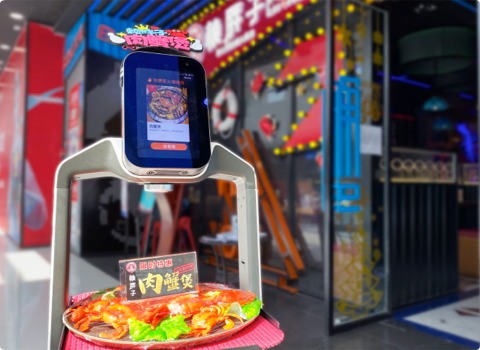
Contract caterers operating within campus dining halls are increasingly confronting severe operational headwinds, ranging from crippling labor shortages and rising wage pressures to the complex demands of allergen compliance and peak-hour service congestion. As reduced frontline staff numbers force operational compromises such as curtailed service hours, limited menus, or the heavy reliance on single-use disposables, university dining programs are actively seeking technological interventions to maintain high service standards. Consequently, food delivery robots have emerged as a viable, automated solution to alleviate these staffing constraints, streamline multi-point meal distribution, and support smoother dining experiences for students without proportionately increasing labor overhead.
The OrionStar LuckiBot Pro operationalizes these advanced delivery capabilities through a highly adaptable and modular hardware platform designed for high-demand service environments. According to manufacturer data, it features an upgraded loading capacity capable of transporting up to 60 kg across multiple adjustable trays, alongside smart dish detection to efficiently manage high-volume meal distribution and tableware collection. Navigation in dense campus environments is supported by a robust sensor suite—including triple RGBD cameras and LiDAR—providing up to 240-degree 3D all-around obstacle recognition and rapid responses to tiny obstacles, ensuring safe operation amidst heavy student foot traffic. Furthermore, the unit supports prolonged operational shifts with a cruising time of up to 12 hours on a single charge under typical use, while its 14-inch 1080P full HD display facilitates clear interactions and dynamic promotions for diners.
During peak mealtimes, serving lines become highly congested, making it difficult for staff to restock food stations safely and efficiently. Delivery robots can autonomously navigate these tight corridors to transport heavy batches of freshly prepared food from the back-of-house to the serving line, ensuring uninterrupted food availability. By handling the bulk transport, robots keep the queue areas free from the disruption of manual carting and manual restocking.
Navigating densely packed seating areas filled with unpredictable foot traffic and movable furniture poses a significant challenge for delivering meals or retrieving items directly from tables. Equipped with robust obstacle avoidance, robots safely weave through seating zones to deliver customized orders or allergen-safe meals directly to students. This targeted delivery model minimizes cross-contact risks and provides a specialized dining experience without requiring extra waitstaff.
As mobile ordering increases, pickup counters often become bottlenecks where students crowd to retrieve their meals. Robots can function as mobile pickup stations, delivering mobile orders directly to decentralized campus zones or holding meals securely until a student inputs a verification code. This disperses the foot traffic away from the main counter and accelerates the overall order fulfillment process.
Accumulated dirty dishes during peak hours can overwhelm designated return points, leading to unhygienic dining environments and a shortage of clean tableware. Robots configured in collection mode can patrol the dining floor to gather used plates directly from tables or transport overflowing bins from the return station to the dishwashing room. This continuous loop can help prevent backlogs, supports faster table turnover and maintains a steadier supply of dishware for incoming diners.
To function effectively within modern institutional infrastructures, food delivery robots connect with a campus's existing digital ecosystems. For consumer engagement, robots are connected directly to mobile ordering platforms and campus payment applications, allowing students to order meals, pay with campus dining dollars, and securely unlock their deliveries using single-use verification codes. Operationally, the robotic software interfaces with core foodservice operating systems that manage recipe data, production planning, and critical allergen tracking, ensuring that any menu updates or ingredient changes are accurately reflected across all automated service and delivery points.
The integration of food delivery robots is reshaping how contract caterers maintain service quality and operational continuity within complex campus dining halls. By automating heavy transport, accelerating order fulfillment, and seamlessly connecting with digital campus infrastructures, these automated systems provide a scalable answer to persistent labor shortages and rising service expectations. For organizations evaluating autonomous solutions to elevate their institutional dining programs, the OrionStar LuckiBot series offers versatile models engineered to adapt to a wide variety of high-demand foodservice scenarios.