REQUEST DEMO
Resources > Blogs > Beyond Static Signs: Elevating Vehicle Display Areas In Car Dealerships With In-Store Marketing Robots

Beyond Static Signs: Elevating Vehicle Display Areas In Car Dealerships With In-Store Marketing Robots

2026-11-24 04:17 OrionStar

Beyond Static Signs: Elevating Vehicle Display Areas In Car Dealerships With In-Store Marketing Robots

Introduction

In modern car dealerships, maintaining customer engagement in vehicle display areas presents significant challenges due to the high costs of physical marketing materials, widespread staff burnout from repetitive routine inquiries, and the ongoing struggle to bridge the gap between online research and offline showroom experiences. To address these operational hurdles and capture visitor attention more effectively, an increasing number of dealerships are turning to in-store marketing robots as a dynamic, interactive solution that revitalizes the customer journey and modernizes traditional vehicle presentations.

The Growing Need For Smarter Customer Engagement In Vehicle Display Areas

  • Sales managers, showroom operations teams, and dealership principals frequently struggle with low customer engagement, as static signage and printed screens typically hold buyer attention for only around 90 seconds.
  • There is a significant disconnected omnichannel experience, where physical display areas suffer from lagged information that fails to reflect real-time online pricing, live inventory, or volatile interest rates.
  • Employee burnout remains a pressing issue, with sales consultants frequently tied up answering routine inquiries rather than focusing on high-value sales interactions and closing deals.
  • Producing, printing, and distributing paper posters and physical spec sheets for every new vehicle model or promotion incurs high ongoing costs and limits campaign agility.

How In-Store Marketing Robots Can Help

  • These robots utilize multi-modal voice and touch interaction to greet visitors, answer routine questions, and proactively capture leads on the showroom floor.
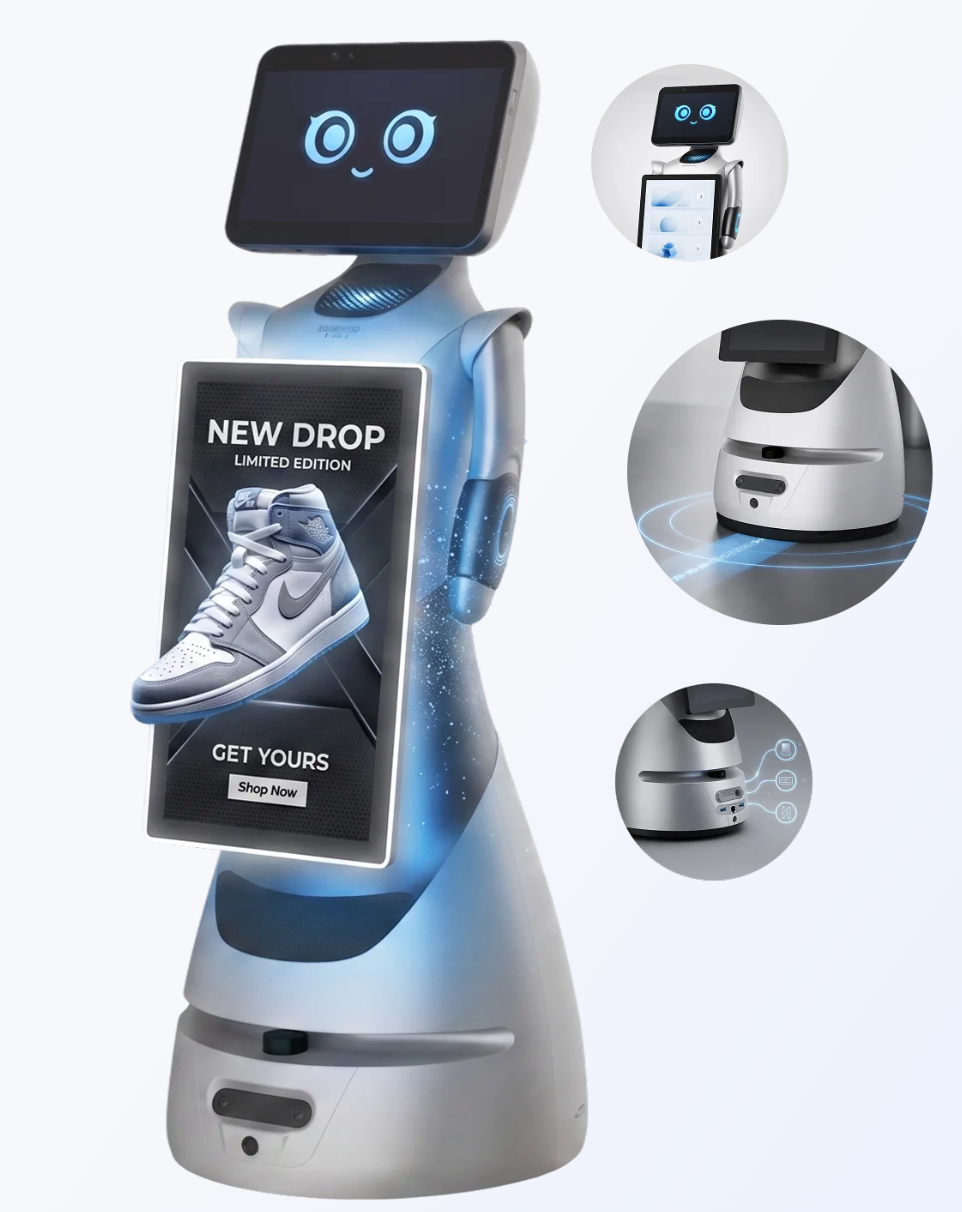
  • Equipped with high-resolution on-robot displays, they act as mobile digital signage that can showcase dynamic promotions, vehicle configurations, and real-time pricing.
  • They leverage 360-degree sound source localization to accurately identify and turn toward speaking customers, ensuring natural, face-to-face communication in busy environments.
  • Through autonomous navigation and wayfinding, they can seamlessly guide customers directly to specific vehicle models, finance offices, or service departments without requiring staff assistance.
  • Remote content management capabilities allow operations teams to instantly push updated marketing campaigns and inventory data across multiple robot units simultaneously.
  • Because these platforms often utilize cameras and cloud data processing for lead capture and personalized engagement, dealership operators must ensure robust GDPR compliance by securely collecting explicit customer opt-ins.

A Closer Look: OrionStar GreetingBot AD In Action

The OrionStar GreetingBot AD illustrates how these multi-modal capabilities function in active retail environments by combining humanoid greeting features with large built-in information screens. According to manufacturer data, it features a 14-inch FHD touch screen on the head alongside a prominent 21.5-inch FHD display on the chest, allowing it to handle interactive Q&A and broadcast-style digital signage simultaneously. Powered by a 6-microphone circular array for 360-degree sound localization and capable of mapping areas of up to 50,000 square meters, the unit can autonomously navigate dealership floors and maintain active engagement throughout an estimated 8 to 10-hour runtime.

Benefits For Sales Managers, Showroom Operations Teams, Dealership Principals

  • Extended customer dwell time: Interactive robot deployments have been shown to increase average customer dwell time to 18 minutes per interaction, vastly outperforming the 90 seconds typical of static displays.
  • Enhanced brand impressions: Acting as dynamic brand ambassadors, these robots can generate thousands of organic social media impressions during weekend events or grand openings.
  • Increased foot traffic: Effective digital marketing displays on robots and kiosks can entice 76% of consumers to explore retail stores they had not previously visited.
  • Empowered purchasing decisions: Real-time information delivery is highly influential, with 68% of consumers making purchasing decisions based on the content displayed on interactive digital screens.
  • Optimized labor allocation: By offloading routine vehicle configuration questions and facility wayfinding to automated systems, sales consultants are freed up to focus entirely on high-value negotiation and deal closure.
  • Reduced marketing costs: Shifting to digital mobile signage eliminates the recurring expenses of printing, shipping, and installing paper posters or physical spec sheets for every new vehicle launch.

Real-World Applications

Main Showroom Floor

The central showroom often suffers from disconnected omnichannel experiences where static brochures fail to reflect real-time inventory and pricing. In-store marketing robots roam this area to proactively greet walk-ins, utilizing their large displays to showcase live online stock, up-to-date financing options, and dynamic video content.

New Vehicle Display Bays

When a highly anticipated vehicle is launched, dealerships face high costs and limited agility in deploying physical promotional materials. Mobile digital signage robots can be positioned next to these new models to dynamically present feature videos, customizable color configurations, and interactive spec sheets without the need for printed collateral.

Customer Waiting And Negotiation Lounges

Car owners often face long, monotonous wait times averaging 90 minutes during financing processing or service appointments, leading to dropped satisfaction. Robots provide interactive entertainment, digital brochures, and self-guided dealership tours to keep customers engaged and informed while they wait for their paperwork to clear.

Vehicle Handover Areas

Delivering a new car requires explaining numerous technical features, which can be repetitive and time-consuming for dealership staff. Robots can assist by rolling alongside the vehicle to display interactive tutorials and warranty information, streamlining the handover process and ensuring a consistent, premium experience.

Integration With Other Smart Systems

To truly bridge the physical-digital gap, in-store marketing robots seamlessly integrate with existing smart dealership ecosystems, including Dealership Management Systems (DMS) to ensure that on-screen pricing and inventory perfectly match online data without double-entry. They also act as active nodes within the dealership’s Customer Relationship Management (CRM) platforms, logging showroom visits, pushing high-propensity shopper alerts to a sales representative’s mobile device, and leveraging QR codes so customers can instantly transfer vehicle specifications to their smartphones. Furthermore, within a smart building architecture, these robots utilize LiDAR and 3D perception to navigate seamlessly while collecting near real-time data on customer foot traffic and interaction hotspots across the vehicle display areas.

Supporting ESG And Sustainability Goals

  • Replacing traditional paper posters, brochures, and cardboard cutouts with dynamic digital screens significantly reduces the physical waste and carbon footprint associated with continuous printing and logistics.
  • Transparently and accurately communicating volatile interest rates and real-time total cost of ownership projections via digital displays helps dealerships strictly adhere to consumer protection laws and regulatory advertising compliance.
  • Programming these robots to securely collect explicit customer opt-ins before processing personal data ensures strict alignment with global data privacy laws like GDPR.
  • By digitizing marketing materials and ensuring compliant data practices, automated engagement platforms actively support the broader environmental and social governance objectives of modern automotive retailers.

Closing

In-store marketing robots are fundamentally changing how car dealerships manage customer engagement and information delivery within their vehicle display areas. By seamlessly merging proactive interaction, dynamic digital signage, and real-time data integration, these platforms elevate the showroom experience while optimizing staff workloads and reducing physical marketing costs. For operations teams looking to modernize their spaces, the OrionStar GreetingBot series offers multiple configurations designed to meet varying interactive and promotional demands across the modern automotive retail landscape.

Note: Features involving facial recognition, voice processing, and data collection are subject to local privacy regulations (e.g., GDPR, PIPL). Dealership operators are responsible for obtaining explicit customer consent and configuring data retention policies in accordance with applicable laws.