REQUEST DEMO
Resources > Blogs > Optimizing Frontline Dining Operations: Serving Robots For Eateries In Busy Food Courts

Optimizing Frontline Dining Operations: Serving Robots For Eateries In Busy Food Courts

2026-11-21 02:47 OrionStar

Optimizing Frontline Dining Operations: Serving Robots For Eateries In Busy Food Courts

Introduction

Food court operators across global markets are navigating persistent operational frictions tied to understaffed frontline teams, shrinking profit margins, and peak-hour congestion that erodes guest satisfaction. With 77% of U.S. restaurant operators naming staffing recruitment and retention their top 2025 challenge, and global hospitality reporting more than 1.5 million unfilled frontline roles, many food service leaders are turning to automated serving robots to fill operational gaps, reduce unnecessary physical strain on existing staff, and create smoother, more reliable dining experiences for guests.

The Growing Need For Smarter Service In Food Courts

  • 77% of U.S. food service operators report that recruiting and retaining enough frontline serving staff is their top ongoing operational challenge, with only 32% of locations operating at full staffing levels as of 2025.
  • Average pre-tax margins for food service operators sit at just 3-5%, with 39% of U.S. food court operators reporting no profitability in 2024, as operating costs have risen more than 30% since 2019.
  • During peak lunch and dinner windows, simultaneous order stacking from dozens of independent food court stalls forces frontline staff to make constant long-distance runs between kitchens, pickup points, and shared dining zones, leading to extended guest wait times and frequent aisle congestion.
  • Frontline food service staff face high rates of musculoskeletal fatigue and repetitive strain injuries after 12-14 hour shifts, driving high annual turnover rates that add extra costs for recruitment, onboarding, and training.

How Serving Robots Can Help

  • Multi-tray delivery capacity that allows a single unit to carry multiple orders across different food court zones in one trip, reducing the total number of required cross-aisle trips.
  • Autonomous navigation with wide-angle 3D obstacle recognition that lets the unit move safely through crowded, high-foot-traffic spaces without disrupting guest movement.
  • Built-in voice interaction and ordering functionality that lets guests and stall staff send delivery requests directly to the unit without manual input from back-of-house teams.
  • Tableware collection capability that supports automated pickup of used dishes from shared dining areas, eliminating extra trips for bussing staff.
  • Multi-robot coordination systems that allocate dedicated service zones to each deployed unit to avoid cross-traffic conflicts in large multi-vendor food court footprints.
  • Self-charging and automatic docking functionality that supports up to 12 hours of continuous runtime on a single charge under defined standard test conditions, supporting extended full-shift operation for most food court use cases, actual runtime may vary depending on load and usage frequency.
  • All operators deploying serving robots that include cameras, voice input capture, or cloud data processing functions are advised to conduct full reviews of their system configurations to confirm full compliance with GDPR data minimization and privacy protection requirements.

A Closer Look: OrionStar LuckiBot Pro In Action

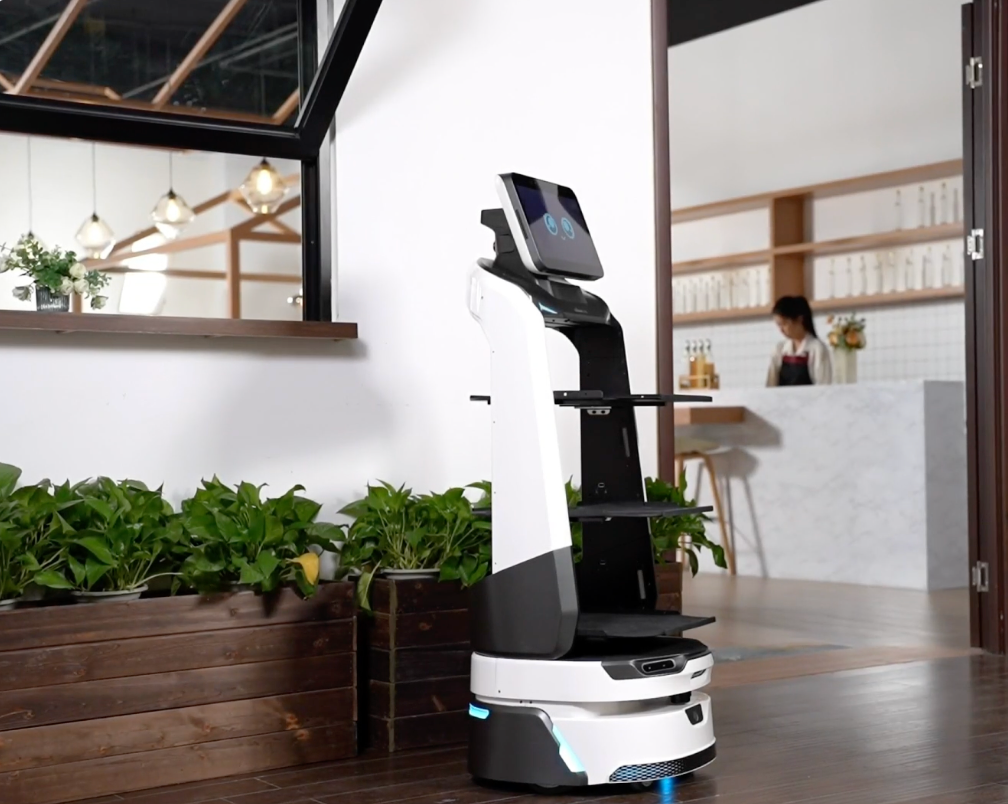
The OrionStar LuckiBot Pro delivers on these universal serving robot capabilities with a set of upgraded, high-performance features tailored for busy food court environments. According to manufacturer data, the unit offers up to 60 kg total payload capacity across 3 to 4 adjustable trays, 240-degree 3D all-around obstacle recognition powered by triple RGBD cameras and LiDAR, and up to 12 hours of continuous runtime on a single charge under defined standard test conditions, alongside a 14-inch 1080P full HD display that supports both interactive guest prompts and promotional content. Per official marketing data, the model also delivers up to 3x higher moving efficiency compared to the previous generation standard LuckiBot from OrionStar, making it well suited for high-traffic food court spaces with narrow shared aisles and uneven flooring.

Benefits For Food Court Operators, Restaurant Managers, Food Service Managers

  • Reduced labor burden: A single deployed serving robot can save an estimated 20 hours of frontline staff labor per week, eliminating the need for staff to make repetitive long-distance delivery and bussing trips across large food court footprints.
  • Lower operating costs: Leased serving robots priced between USD 800 and 1500 per month can generate between USD 1800 and 3000 in monthly labor savings, delivering an immediate payback period for most food court operators.
  • Higher table turnover rates: Automated delivery reduces guest wait times for ready orders, supporting a 15 to 20% increase in table turnover for shared seating areas during peak service windows.
  • Reduced staff physical strain: Deployments in European food service markets have shown that serving robots can reduce the number of required waiter trips to serve 20 guests at a large table from 10 to just 2, cutting total walking distance per service event by 320 meters and reducing the repetitive physical lifting and long-distance walking that are common causes of repetitive strain injuries for frontline staff.
  • Consistent service quality: Serving robots operate reliably across full 12 to 16 hour shifts without fatigue, eliminating delivery delays caused by overstretched frontline teams during peak lunch and dinner rushes.
  • Improved ROI on automation investments: Real-world U.S. market deployments show that high-performance serving robots can deliver up to 124% ROI within 3 years of deployment, replacing up to 2 part-time frontline roles per operating shift.

Real-World Applications

Food Stall Counters

Food stall counters are high-traffic zones where multiple vendor staff, delivery partners, and guests gather to place and collect orders, creating frequent bottlenecks during peak service. Serving robots can position at pre-marked dedicated stops at each stall counter to pick up ready orders the moment they are marked complete, eliminating crowding caused by waiting delivery staff gathering in the narrow counter space.

Shared Seating Areas

Shared seating areas in food courts often see high volumes of foot traffic, with guests moving between tables and discarded tableware left across multiple locations after meals. Serving robots can run pre-configured collection routes through these zones to pick up used tableware from tables, reducing the time bussing staff spend walking across the full dining footprint to clear dishes.

Pickup And Collection Points

Centralized pickup and collection points are common congestion hotspots, as dozens of guests line up to collect their orders at the same time during peak windows. Serving robots can deliver completed orders directly to guests waiting at these points, and send automated alerts via the food court queue management system to notify guests their order is ready, cutting crowd sizes at pickup counters by a significant margin.

Kitchen-To-Table Transfer Aisles

Kitchen-to-table transfer aisles are often narrow, high-traffic pathways that connect back-of-house vendor kitchens to the front-of-house dining zones, and are frequently blocked by moving staff, stacked trays, and dropped items. The 3D obstacle recognition capability of modern serving robots allows them to navigate these narrow aisles safely, even when other staff and guests are moving through the space at the same time, eliminating delivery delays caused by blocked pathways.

Integration With Other Smart Systems

Standard serving robot deployments follow a structured 5-step integration process that starts with an on-site facility assessment to identify navigation obstacles, followed by guided mapping of the full food court space, marking of dedicated stops at stall counters, pickup points, dining zones, and charging stations, multi-day live testing with staff feedback to adjust routing and obstacle avoidance settings, and final customization of alerts and peak-hour routing rules. Most modern serving robots can integrate directly with IoT-enabled elevator control systems to request elevator access automatically, cutting elevator handoff times down to 15 seconds in large multi-story food court facilities, and can also connect to existing POS systems, kitchen display systems, central order management platforms, and queue management systems to auto-trigger delivery dispatches the moment an order is marked as ready, removing the need for manual task assignment by frontline staff.

Supporting ESG And Sustainability Goals

  • Serving robots reduce the requirement for heavy physical labor in frontline food service hiring, advancing workplace inclusion by enabling a broader, more diverse pool of candidates that do not meet traditional high physical strength requirements to qualify for open food service roles.
  • By reducing repetitive physical strain on frontline staff, serving robots lower rates of work-related musculoskeletal injuries, sick leave, and early retirement, and human-centric deployments that position robots as supportive tools rather than full staff replacements help reduce the 102% annual average turnover rate for food service roles, cutting waste associated with repeated recruitment, onboarding, and training processes.
  • Automated serving robots deliver hot meals to pickup points faster and more consistently than overstretched human staff, reducing food waste caused by temperature loss for hot dishes, and eliminate unnecessary long-distance staff travel across large food court footprints to cut overall operational energy use.

When deployed with on-board edge processing capabilities that minimize unnecessary cloud data transmission, modern serving robots also support GDPR-aligned data minimization rules, helping operators meet global regulatory compliance requirements alongside their public ESG targets.

Closing

Serving robots are reshaping how food court operators manage frontline delivery, bussing, and guest service operations, reducing longstanding pressure on overstretched frontline teams while delivering consistent, reliable performance across peak service windows. The OrionStar LuckiBot series includes multiple purpose-built models calibrated for different food court size and throughput requirements, allowing operators to select configurations that align with their specific operational needs and facility layouts.