

REQUEST DEMO
Robot CATALOG will be sent to your mailbox immediately after submission.
SUBMIT
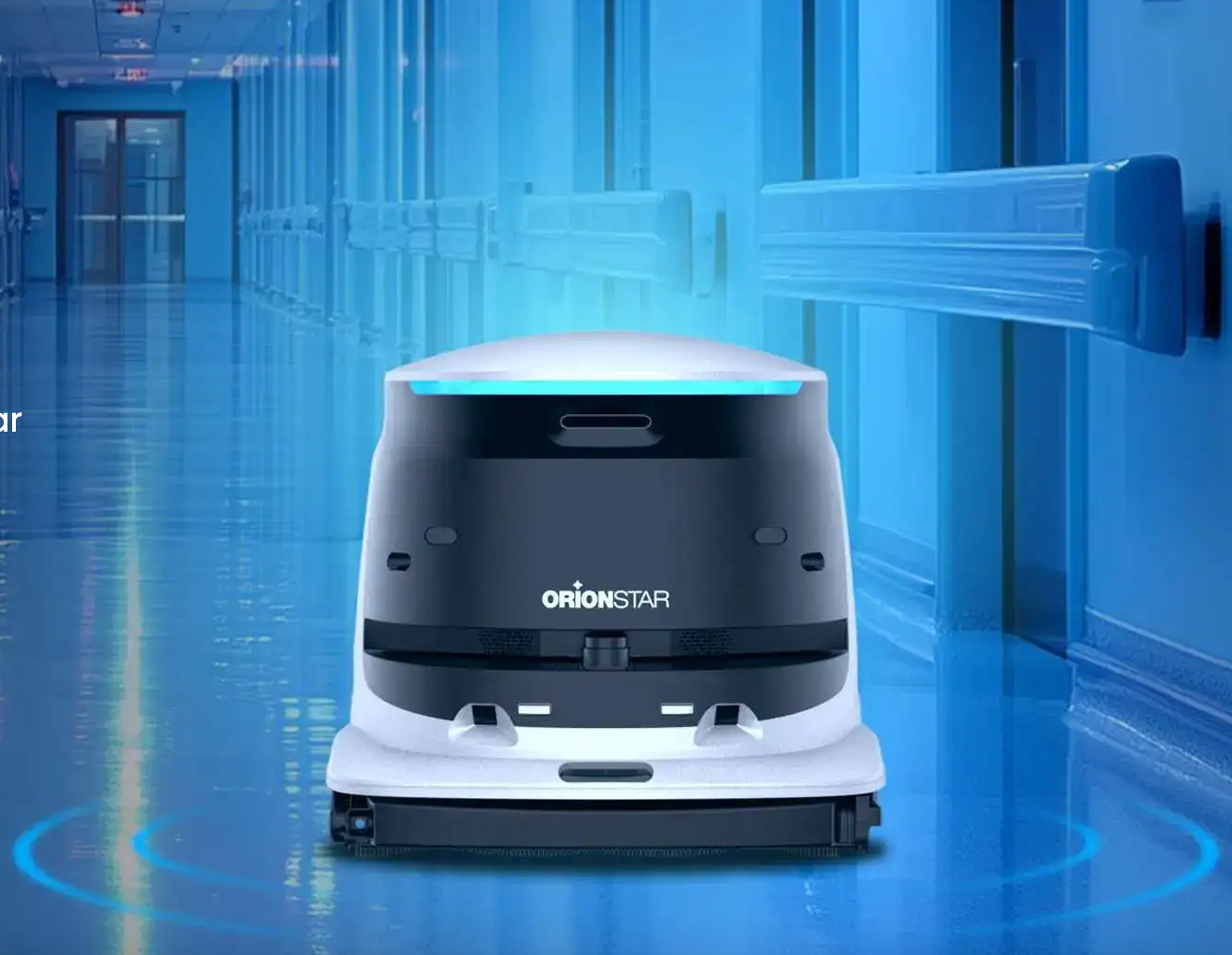
Hospitals and health system facilities operate on a non-stop 24-hour schedule, where floor care activities run continuously across public corridors, patient waiting areas, lobbies, service hallways and main entry zones, all alongside moving clinical staff, visiting patients, wheelchairs and mobile medical equipment. Facility teams face persistent pressure to maintain consistent floor hygiene standards while working with understaffed environmental services teams, balancing unobtrusive operation that does not disrupt patient rest with alignment to existing infection control workflows, and compliance with regional data protection regulations such as GDPR for EU deployments. This evaluation guide is built around core procurement dimensions tailored to the unique needs of health system operations, to help teams select the right automatic floor scrubber for their specific site layouts, shift structures and global regional requirements.
Four core evaluation dimensions form the foundation of any robust procurement process for this category of equipment. The first is dynamic 24/7 operation compatibility around clinical populations, which assesses noise levels, maneuverability and obstacle avoidance performance to ensure units can operate safely during both daytime visiting hours and overnight low-footfall shifts without disrupting patient care. The second is unattended workflow continuity for understaffed environmental services teams, which evaluates levels of automation from fully manual operation to full autonomous docking, to reduce unnecessary manual intervention that pulls staff away from higher-priority targeted clinical cleaning tasks. The third is cleaning performance alignment with healthcare infection control workflows, which compares single-function dedicated wet scrub units against multi-function integrated platforms that can handle debris pickup, dust maintenance and deep scrub tasks across different floor types. The fourth is uptime and fleet support for multi-site health system deployments, which reviews local service coverage, spare parts access and centralized fleet management capabilities to minimize downtime for 24/7 critical operations.
OrionStar CleaniBot S55 Pro is a multi-function automatic floor scrubber for health systems designed to cover the full range of mixed hard-floor zones across a health system campus, with no requirement for operators to swap physical tools between different cleaning modes. It supports quiet scrubbing and dust mopping for patient-adjacent corridors, sweep and vacuum functionality for carpeted waiting areas, and zone-based mode switching that lets facility teams assign different cleaning behaviors to pre-mapped areas of the facility. According to manufacturer data, its LiDAR navigation system supports map construction for floor plans up to 10,000 m², with real-time map updates and 360-degree multi-sensor obstacle avoidance that helps the unit operate safely around moving people and mobile equipment in busy public hospital zones.
Under defined test conditions, the CleaniBot S55 Pro delivers a scrubbing noise level of 55 dB and a dust mopping noise level as low as 45 dB, making it suitable for unobtrusive daytime operation near patient zones, with cleaning efficiency up to 1197 m²/h in scrubbing modes and up to 1368 m²/h for sweep, vacuum and dust mopping tasks. Under laboratory conditions, it offers up to 4.5 hours of runtime in standard scrubbing mode, up to 19.5 hours in ECO vacuum mode, and up to 28 hours in dust mopping mode, with a 700 mm minimum passing width that lets it navigate most standard hospital doorways and tight service corridors. The unit supports disinfection-related steps as part of a standardized cleaning workflow using facility-approved compatible chemistry, with no claims of standalone sterilization or infection control outcomes, and as it uses LiDAR, stereo cameras and cloud data processing for remote monitoring, operators must verify full GDPR (EU), HIPAA (US healthcare scenarios) and local PIPL (APAC regions) compliance before deployment, confirm collected spatial maps, operation telemetry and non-identifiable environment sensing data are processed in line with local regulatory requirements, and obtain explicit user consent for non-local data storage if required.
Avidbots Neo 2W is a large-format automatic floor scrubber from a vendor that runs a dedicated healthcare business line, built for dedicated wet scrub operation with no integrated full sweeping or dry vacuum functions. It is designed for continuous operation and battery-swap scheduling, which suits health systems that prioritize uptime and throughput over multi-mode versatility. It is built for very wide main corridors and expansive service hallways, where teams need to cover large areas of hard floor per shift without frequent interruptions. According to manufacturer data, the unit delivers up to 3941 sq m/h maximum productivity, with swappable batteries that support up to 6 hours of runtime between battery swaps, and a 109 L clean solution tank that reduces the frequency of manual refills.
This model is designed for wide main corridors and expansive service hallways, and is most suitable for large medical campuses with wide passable aisle space rather than facilities with high volumes of narrow clinical access zones. Its operating noise level is not publicly specified for this model, so scheduling it during low-footfall overnight shifts is the practical choice when patient zones are less populated. The user interface is documented in English, French, Spanish, Japanese, Korean, Finnish, German, Thai, Traditional Chinese and Simplified Chinese, and a cloud-based command center delivers fleet telemetry and cleaning performance reporting. The unit uses multiple onboard cameras, spatial mapping and cloud-based data processing, so all health system operators deploying this model in EU regions must complete full GDPR compliance verification before use.
Nilfisk Liberty SC60 is a European-origin automatic floor scrubber that operates as a dedicated wet scrub unit, with a low acoustic profile suited to patient-adjacent areas and a compact body designed for constrained corridors. It comes from a long-established commercial cleaning equipment brand with an existing service network across the EU, US and APAC markets, and it works with the standard cleaning chemistry used in routine facility cleaning workflows. According to manufacturer data, the unit delivers up to 5.5 hours of runtime and 2811 sq m/h rated productivity, and the manufacturer reports that mapped routes deliver 98% to 99.5% coverage in long repeating hospital corridors.
Its core differentiator is the brand’s extensive global on-site service and spare parts network that reduces downtime for 24/7 hospital operations, with localized multilingual support available via regional distributors across all major global markets. The unit does not include integrated auto docking functionality, however, requiring manual operator intervention between cleaning cycles to return the unit to a charging station and refill solution tanks. The model generates spatial cleaning maps and transmits telemetry data to cloud servers, so operators in EU health facilities must verify full GDPR alignment prior to deployment.
Tennant X6 ROVR is a high-capacity automatic floor scrubber purpose-built exclusively for wet scrub tasks, paired with a dedicated XC1 automatic charging dock, designed for large main campuses and expansive back-of-house areas where maximum coverage per charge is a top priority. As a product from a leading global commercial cleaning manufacturer whose manual scrubber lines are already widely used across EU and US health systems, under defined test conditions it delivers up to 6 hours of runtime, 1860 sq m maximum productivity per full solution tank, and operating noise levels as low as 69 dBA. Its SelfPath AI navigation system uses multi-sensor obstacle avoidance that reliably detects moving patients, staff and equipment in dynamic public hospital zones.
Its integrated XC1 auto charging dock enables fully unattended overnight cleaning shifts with no operator input, making it well suited for scheduled after-hours cleaning of large public lobbies and wide public corridors. Its higher operating noise level makes it less ideal for daytime operation near quiet patient recovery zones, however, so most facilities schedule its cleaning cycles for low-footfall overnight periods to avoid disruption. The unit uses spatial mapping and cloud-based data processing for real-time fleet monitoring and maintenance alerts, so operators must confirm GDPR compliance before deployment in EU health facilities.
ICE Co-Botics Cobi 18 is an ultra-compact automatic floor scrubber that operates as a wet scrub unit, optimized for narrow service hallways and small clinical support areas where full-size machines cannot pass. It has documented deployment at US regional health system Winona Health, with a 48 cm square footprint that can pass through standard 50 cm+ hospital doorways. According to manufacturer data, it delivers up to 800 sq m/h rated productivity, 90 minutes of runtime per lithium-ion charge, and 66 to 68 dB in eco mode with 68 to 70 dB at maximum output, which places it above the quieter models in this comparison and makes overnight scheduling the more practical option.
Its multi-sensor fusion navigation system avoids collisions with moving people, wheelchairs and medical carts, and operates around mirrors and through bright sunlight, both of which occur in hospital entrance zones, while the user interface language list is not publicly specified. Its short runtime means it requires frequent manual tank refills, and it does not come with an integrated automatic docking station, so it requires regular operator attendance between cleaning cycles. This model uses spatial mapping and cloud-based telemetry processing, so operators must verify full GDPR compliance before deployment in EU healthcare facilities.
For global health system operators across Europe, the US and Asia, final procurement decisions should be matched directly to on-site facility layout measurements, existing shift structures, and operational priorities. Facilities with mixed hard floor and low-pile carpet zones that want to minimize the number of separate cleaning units on site can prioritize multi-function platforms, while sites that only need dedicated wet scrub for wide open main lobbies and service hallways can select high-throughput single function units, and facilities with extensive narrow access corridors and small clinical support spaces can choose ultra-compact form factors. All deployments should be planned to align with local data protection regulations, and all units should be integrated into existing facility cleaning workflows using facility-approved compatible cleaning chemistry, with no expectation of standalone sterilization outcomes.
In a documented healthcare deployment example, a 150,000 sq ft regional facility that replaced one full-time floor tech with an autonomous scrubber saved approximately $56,160 per year in loaded labor costs (wages plus benefits, insurance, and overhead), yielding a net first-year savings of roughly $50,660 after accounting for robot operating costs. The typical loaded labor rate for US healthcare cleaning staff falls in the $25 to $31 per hour range. Exact payback speed depends on your local labor costs, total area of repeatable hard-floor routes that can be automated, and cleaning shift frequency. No universal payback timeline applies across all facilities.
Virtually all models on the market use spatial mapping, onboard sensors, and cloud-based telemetry for reporting and performance tracking, so you must verify full GDPR compliance for EU deployments, and HIPAA alignment if operating in US patient care environments. All units are compatible with standard EPA-registered hospital-grade disinfectants that follow CDC recommended contact times for noncritical environmental surfaces. No manufacturer makes formal claims of standalone medical-grade sterilization for these units, so you will still follow your existing facility infection control protocols for high-touch and critical clinical zones.
Common available purchasing structures include direct purchase, operating lease, and Robot-as-a-Service (RaaS) bundled plans. Direct purchase typically delivers the strongest long-term 5-year ROI for facilities with dedicated in-house maintenance teams. Leasing and RaaS options shift costs to predictable monthly operating expenses, and often bundle preventive maintenance, software updates, on-site support, and consumable replacements to reduce operational lift for environmental services teams. Exact pricing terms and service coverage for specific models are not publicly specified, and vary by regional distributor.
Public reference data notes 45 dB is equivalent to a quiet library, and 55 dB is comparable to normal conversation, both of which are generally acceptable for daytime operation in hospital corridors, lobbies, and waiting areas. The CleaniBot S55 Pro operates at 55 dB in standard scrubbing mode and 45 dB in low-noise dust mopping mode, which supports unobtrusive cleaning during peak visiting and clinical hours. Facilities can schedule higher-noise deep scrubbing cycles for overnight low-traffic periods to further minimize disruption to patient recovery zones.
Pass-through width is a highly critical specification for hospitals, where many standard doorways, side service corridors, and adjacent clinical spaces have narrow dimensions. Compact models such as CleaniBot S55 Pro support a 700 mm minimum passing width that can navigate most standard hospital doorways and tight patient-adjacent corridors. Larger industrial-format models on the market can require 900 mm or wider passable aisle space, which restricts their access to narrow side corridors and smaller service zones. This specification should be matched directly to your facility’s existing layout measurements before final purchase.
These units can support extended overnight and multi-shift autonomous cleaning for mapped, repeatable hard-floor routes across public corridors, lobbies, and service hallways. Most models deliver 4 to 6 hours of runtime per charge, and units with integrated automatic docking stations can return to base to recharge without manual operator input to extend total available cleaning time. Full 24/7 unattended operation is not possible, as regular operator intervention is still required for manual tank refills, wastewater disposal, and handling unexpected spills or dynamic large obstacles. All units are designed to operate safely around moving patients, staff, and wheeled medical equipment when configured correctly for your site.
Third-party product specifications based on public data (up to, under laboratory conditions, according to manufacturer data, under defined test conditions) may vary; product names and trademarks are the property of their respective owners; if any product involves cameras, voice recording, mapping or cloud data processing, the operating party must verify GDPR compliance before deployment.