

REQUEST DEMO
Robot CATALOG will be sent to your mailbox immediately after submission.
SUBMIT
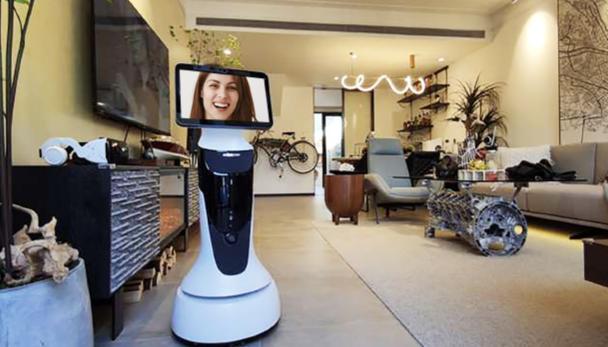
Supermarket operations managers, store managers, and retail marketing teams are navigating a difficult structural shift on the shop floor. Frontline labor costs are rising, retention is weak, and associate availability is consistently stretched thin. According to recent industry workforce surveys, 85% of retailers report increasing labor costs annually, while half expect to be understaffed one to three days a week during busy seasons.
For supermarkets, this understaffing directly impacts the customer experience. When checkout lines lengthen and promotional displays need updating, routine tasks like greeting shoppers or answering "where is it?" questions fall by the wayside. With physical stores still accounting for the vast majority of shopping volume, maintaining an active, helpful presence on the sales floor is a critical operational priority.
To bridge this gap, many retail groups are evaluating the deployment of a greeting robot. By consolidating wayfinding, digital promotion, and customer interaction into a single autonomous platform, these devices aim to absorb routine inquiries so human associates can focus on higher-value service. This guide examines how the OrionStar GreetingBot Mini fits into this operational strategy for supermarkets.
The recurring challenge for store managers is deploying staff effectively across a wide trading footprint. Routine direction requests consume significant associate time, while static signage fails to adapt to daily promotional changes or peak-hour queue dynamics.
A greeting robot functions as a mobile, highly visible in-store assistant. Instead of adding headcount to cover front-door greetings or manning informational kiosks, supermarkets can use these units to provide consistent coverage across multiple shifts. Vendors report that consolidating greeting, wayfinding, and dynamic digital promotions into a mobile device helps free up associates in high-traffic zones, such as prepared-food counters and produce departments. While specific return-on-investment (ROI) figures for supermarket greeting robots remain highly contextual to individual store layouts, the observable trend is task consolidation: shifting repetitive guidance away from human workers.
The OrionStar GreetingBot Mini is designed as a compact, AI-powered service robot. When assessing its viability, operations and marketing teams should weigh its physical footprint and interactive capabilities against the realities of a busy retail environment.
Space is at a premium in modern supermarkets. Large promotional displays and densely packed aisles can limit the mobility of standard service equipment.
Retail marketing teams require platforms that can capture attention and deliver accurate information.
Deployment success often relies on matching the robot’s capabilities to specific store zones:
Grocery-front service robots are documented in supermarkets across Europe, the US and Asia as visible in-store assistants rather than back-of-house transport units. The documented operating pattern is consistent: an integrated display, autonomous navigation with obstacle avoidance, multilingual voice and touch interaction and analytics, moving through sales-floor zones for product discovery, wayfinding, promotional content and queue monitoring.
Supermarket deployment guidance from robot vendors maps this pattern zone by zone - entrance areas for greeting and promotional display, checkout zones for queue monitoring and checkout visibility, produce departments for product discovery and assistance, and promotional aisles for campaign content and brand interaction - and recommends reviewing the store systems available for integration (inventory, pricing, promotions, booking, queue, loyalty, ticketing) before deployment goes live. Grocery-robot vendors report that a front-of-store unit extends customer-facing service coverage without increasing staffing pressure, and that it integrates into existing layouts without major infrastructure changes, which suits chains modernising store by store.
Independently audited ROI figures specific to supermarket greeting robots are not publicly available. What is documented is the operating pattern and the direction of the effect: repetitive guidance moves away from human workers, and associates are freed for prepared-food counters and produce departments, where the margin sits.
Deploying a mobile sensor platform in a space open to the public requires strict adherence to privacy regulations. The OrionStar GreetingBot Mini utilizes a 13 MP high-definition camera, a 2 MP wide-angle camera, LiDAR, and microphone arrays for navigation and interaction.
Supermarket operations managers must verify that the deployment complies with the General Data Protection Regulation (GDPR) and any applicable local data protection laws. Because shopper consent is not practical in a public store, operators should consult local legal counsel to establish a lawful basis for processing, which may include legitimate interest (Article 6(1)(f) GDPR) for basic navigation, provided biometric identification is disabled. This necessitates strict data minimization. Operators should:
From a centralized management perspective, the system supports OTA updates and remote status dashboards, aligning with IT expectations that retail robots should be managed as fleet devices rather than standalone appliances.
While the OrionStar GreetingBot Mini is optimized for tight aisles and compact navigation, retail groups often run supermarkets in very different footprints, from large-format stores to compact urban sites. Operations managers should note that the broader OrionStar GreetingBot series includes multiple models with different screen sizes and form factors, allowing retailers to standardize on a single software ecosystem while deploying the physical hardware that best matches each specific store footprint.
Can multiple robots operate in the same supermarket without interfering with each other? Yes. According to manufacturer specifications, the system supports multi-robot cooperation. Built-in intelligent priority numbering allows multiple units to navigate intersecting paths and avoid collisions automatically without human intervention.
How does the robot handle network connectivity in large metal-framed supermarket buildings? The unit supports both 4G (TDD-LTE, FDD-LTE) and Wi-Fi (2.4G/5G) networks. Store IT teams should ensure sufficient Wi-Fi coverage across the intended operating zones or utilize a dedicated 4G SIM if internal store networks have dead zones.
Can our marketing team update the promotional content dynamically? Yes. The robot features an open development platform with 23 client-side and 50 server-side API interfaces. This allows retail IT and marketing teams to push new promotional videos, static ads, or updated store maps to the 14-inch screen remotely.
Is the robot safe around shopping carts and small children? The robot navigates using a fusion of LiDAR and depth cameras to detect obstacles and avoid collisions in real-time. It operates at an adjustable movement speed of 0.5 to 1.2 meters per second, ensuring it can pace itself safely within typical shopper traffic flows.