REQUEST DEMO
Resources > Blogs > Elevating Operational Flow: How Robot Waiters Transform Fast Casual Restaurants’ Buffet Areas

Elevating Operational Flow: How Robot Waiters Transform Fast Casual Restaurants’ Buffet Areas

2026-10-26 12:46 OrionStar

Elevating Operational Flow: How Robot Waiters Transform Fast Casual Restaurants’ Buffet Areas

Introduction

Fast casual restaurants’ buffet areas face consistent overlapping operational challenges during peak service windows, including sudden spikes in transient guest volume, frontline staff being pulled away from guest interaction to cover last-minute transport and restock tasks, persistent structural labor shortages, frequent plate and tray spill incidents, and rising requirements for consistent food safety and hygiene compliance. Robot waiters have emerged as a practical, scalable solution to address these pain points without requiring full overhauls to existing buffet operating workflows.

The growing need for smarter service in buffet areas

  • Fast casual operators, buffet line managers, and franchise owners face recurring peak-hour labor crunches, where front-of-house staff are pulled away from guest-facing tasks to complete repeated short-distance transport runs between buffet stations and dining zones.
  • Physical strain from lifting and carrying heavy loads of plates, trays, and serviceware across long daily walking distances drives high staff turnover, which can reach 120-180% for food running positions across global markets.
  • Persistent structural labor shortages in the hospitality sector leave more than 1.5 million unfilled positions globally as of 2026, forcing remaining staff to take on unmanageable workloads that degrade guest experience during the busiest service windows.
  • Bottlenecks at the buffet line directly extend average dining visit durations of 20-30 minutes for fast casual guests, reducing table turnover rates and cutting into per-cover revenue even when service teams are fully staffed.

How robot waiters can help

  • Multi-mode operation that supports delivery, cruise, collection, and promotional tasks to adapt to different peak and off-peak buffet area requirements without reconfiguration.
  • Autonomous navigation powered by LiDAR and visual SLAM, which generates accurate real-time maps of buffet layouts and adjusts routes dynamically to avoid moving guests and temporary obstacles.
  • 3D depth perception capability that recognizes both large and tiny obstacles across the full operating field, reducing the risk of collisions, plate spills, and service disruptions in high-foot-traffic zones.
  • Tray-level delivery with integrated dish detection that automatically verifies load status, eliminating manual check-ins for food transport tasks across the buffet space.
  • Built-in voice interaction features that allow guests and staff to call the robot for support without needing to use a separate dedicated control panel.
  • Modular payload configuration that lets operators swap out trays, add cup holders, or install custom attachments to fit unique buffet serviceware transport needs.
  • Operators deploying these systems in EU and EEA markets must verify full GDPR compliance around data minimisation, purpose limitation, and defined retention periods for navigation and voice interaction data collected via onboard sensors. They should also confirm what data is captured, whether any of it is processed off-board, how long it is retained, and whether a privacy notice must be posted in the venue.

A closer look: OrionStar LuckiBot Pro in action

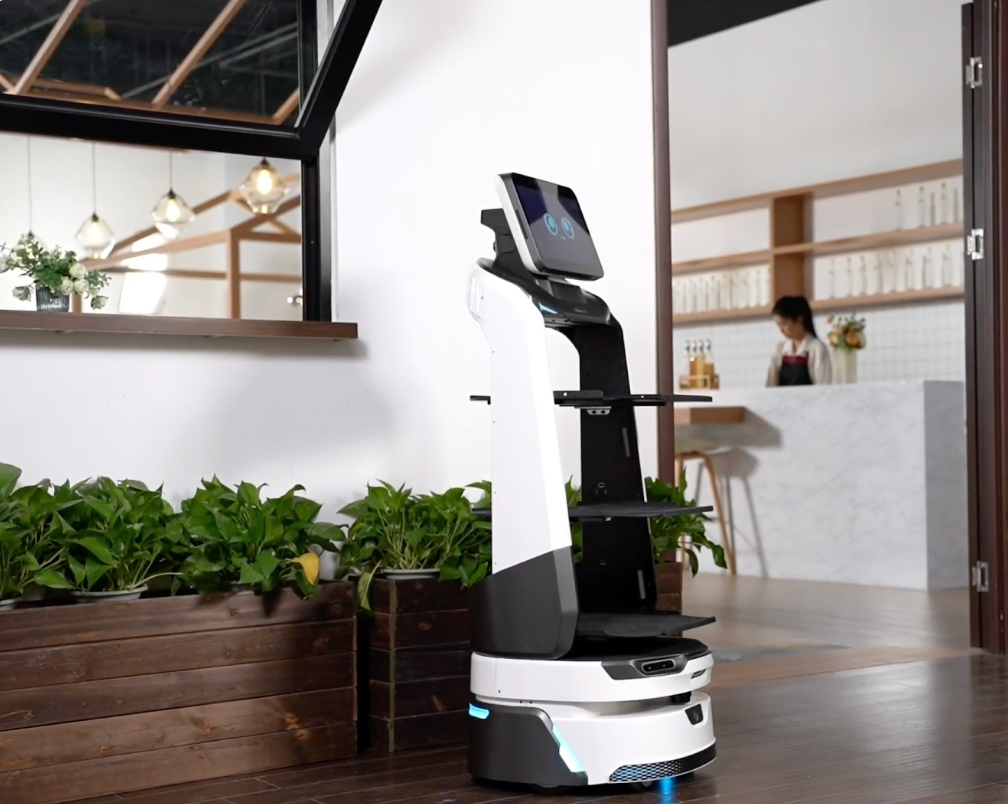
The OrionStar LuckiBot Pro is designed to deliver the full set of generic robot waiter capabilities for high-volume buffet areas, with hardware specifications optimized to match the repetitive, high-demand transport workflows of fast casual operations. According to manufacturer data, the unit offers up to 60 kg of total payload capacity, up to 12 hours of continuous cruising time on a single charge, and 240-degree 3D all-around obstacle recognition powered by triple RGBD cameras and LiDAR under standard laboratory test conditions, which supports stable, low-vibration transport even during peak hours when foot traffic in buffet zones is at its highest.

Benefits for fast casual operators, buffet line managers, franchise owners

Based on publicly available operational statistics from global food service brand pilot programs, actual performance varies depending on in-store operational workflows.

  • Redirection of frontline staff to guest-facing tasks By taking over repetitive plate and tray transport runs, robot waiters free up existing staff to focus on greeting guests, restocking buffet stations, and resolving guest requests. A published labor model for a high-volume casual dining operation assumes 34 food-runner hours per week, of which 16 hours can realistically be redeployed or avoided.
  • Increased venue throughput and table turnover Industry deployments show that robot waiter support can lift table turnover rates by 5-12% by eliminating transport bottlenecks, ensuring food and clean serviceware reach their destinations faster during peak service.
  • Reduced staff injury and sick leave risk Automating the transport of heavy loads of plates and serviceware eliminates the repeated heavy lifting that contributes to long-term musculoskeletal strain, lowering associated sick leave rates and reducing unplanned scheduling gaps.
  • Significantly lowered labor turnover costs By reducing the volume of high-turnover food running tasks, operators can cut annual recruitment, onboarding, and training costs that typically run $1,500-3,000 per turnover event for frontline service roles.
  • Consistent, predictable service quality across all operating hours Robot waiters operate reliably for up to 13 active hours per day, 7 days a week, eliminating the variance in service speed that comes with variable staff energy levels across long, busy shifts.
  • Measurable long-term labor cost savings Real-world pilot data shows that properly deployed robot waiters can deliver 80% or higher ROI over a three-year operating period, by covering the equivalent of 40-60% of a food runner’s weekly labor hours at a fraction of the fully loaded staff cost.

Real-world applications

Buffet Line

The buffet line is the highest-traffic transport hub in fast casual buffet areas, where staff are constantly restocking serving dishes, refilling utensil holders, and removing empty trays from stations. Robot waiters can run pre-configured cruise routes between the kitchen pass and each buffet station, automatically delivering fresh batches of food and clean serviceware without requiring staff to leave guest contact points. This eliminates gaps in station restocks that often lead to long guest lines and complaints about empty buffet items during peak hours.

Self-service Counter

Self-service counters are often staffed by a single team member who must handle checkout, restock, and spill cleanup tasks all at once during rush periods. Robot waiters can automatically transport pre-packaged drinks, disposable cutlery, and condiment refills to the counter on a scheduled or on-demand basis, removing the need for the on-duty staff member to leave the counter unattended to retrieve supplies from the back of house.

Tray Return Station

Tray return stations quickly pile up with dirty plates and used serviceware during peak dining windows, creating cross-contamination risks and unsightly clutter that degrades the guest experience. Robot waiters can run scheduled collection routes to pick up full stacks of dirty trays from the return station and transport them directly to the dishwashing area, keeping the station clear and reducing manual handling of heavily soiled serviceware.

Dining Hall

The dining hall sees constant movement of guests, strollers, and wheelchairs that makes manual transport of food and trays slow and prone to spills. Robot waiters use their 3D perception systems to navigate around moving guests and small dropped obstacles, delivering pre-ordered items and collecting dirty trays from vacated tables without requiring staff to weave through crowded aisles. This ensures bussing tasks are completed promptly, so vacated tables can be reset for new guests faster.

Integration with other smart systems

Robot waiters deployed in fast casual buffet areas can sync natively with existing venue systems including point-of-sale (POS) platforms, kitchen display systems (KDS), and IoT inventory management tools to create a fully automated transport workflow without requiring full replacement of existing tech stacks. Tasks such as food delivery to buffet stations and dirty tray collection can be triggered automatically when a new order is marked complete in the KDS or a table is marked as vacated in the POS, eliminating the need for manual staff input to launch robot runs. Operators can also link robot transport data directly to their inventory platform to track the exact volume of food and serviceware moved between kitchen, storage, and buffet stations, to refine digital par levels and reduce over-ordering or stockout risks.

Supporting ESG and sustainability goals

  • Reduced manual handling of shared buffet serviceware lowers the number of times guests and staff touch the same tray, utensil and serving surfaces, supporting food safety and hygiene programs without requiring additional single-use disposable serviceware that increases plastic and paper waste. The unit does not disinfect or sterilize on its own; it reduces repeated manual contact.
  • Automating heavy transport tasks cuts down on repeated physical strain for frontline staff, reducing long-term musculoskeletal injury rates and creating safer, more sustainable working environments that lower staff sick leave and reduce turnover of skilled team members.
  • Optimized transport routes powered by fleet management software eliminate redundant trips between storage, kitchen, and buffet stations, cutting down on unnecessary movement that reduces food waste from delayed transport of perishable buffet items, which typically accounts for 4-10% of total fast casual inventory.

When combined, these automation-enabled improvements help fast casual operators meet their public ESG targets for employee welfare, food safety, and waste reduction without major overhauls to their existing buffet operating model.

Closing

Robot waiters are reshaping how fast casual restaurants operate their buffet areas, by taking over the most repetitive, labor-intensive transport tasks that have long created operational bottlenecks and pushed frontline teams away from guest-facing work. As adoption across global markets in Europe, the US, and Asia continues to grow, the OrionStar LuckiBot series provides a range of purpose-built models to match different venue sizes, layout geometries, and throughput requirements, for operators looking to explore service automation options for their own buffet zones.

All performance data on this page comes from controlled laboratory test scenarios, actual performance varies depending on environmental factors such as store layout and pedestrian density.