

REQUEST DEMO
Robot CATALOG will be sent to your mailbox immediately after submission.
SUBMIT
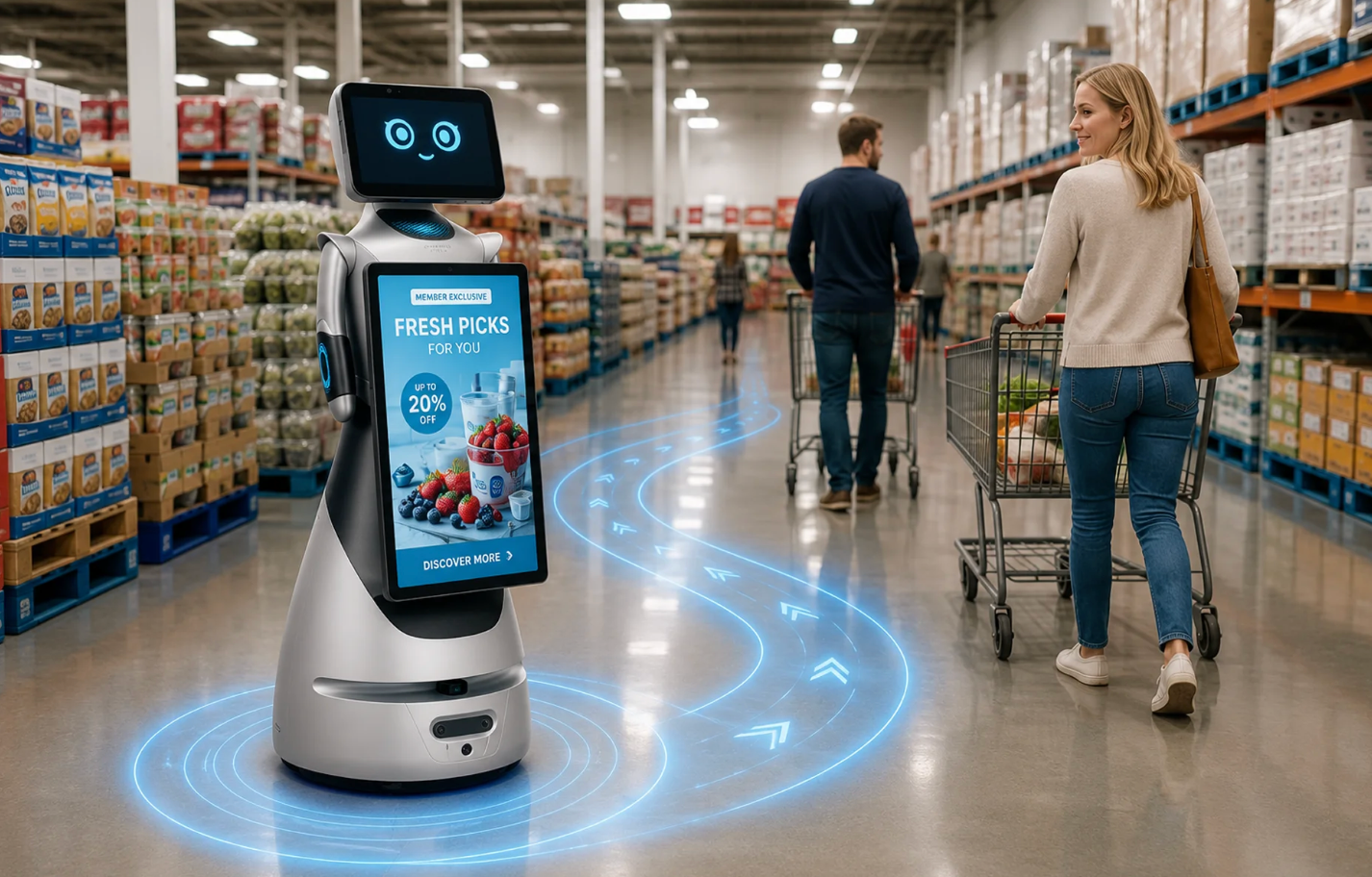
Specialty store brands running pop up event spaces regularly face overlapping operational challenges, from the structural difficulty of recruiting and training short-term temporary staff, to inconsistent customer experience across different activation cycles, rising labour costs, and strict cross-market data privacy compliance rules for public-facing retail deployments, all of which create unnecessary friction for teams looking to deliver memorable, measurable brand experiences to visitors. AI retail robots have emerged as a purpose-built solution to address these pain points, designed to take over repetitive frontline customer engagement tasks without requiring the same level of on-site staffing investment that traditional pop up operations demand.
All deployments using anonymized visitor interaction data (voice-to-text query keywords, dwell time statistics, non-identifiable navigation mapping data) in EU markets must have workflows verified for GDPR compliance, with clear on-site visitor transparency notices and a documented retention period for the collected data.
The OrionStar GreetingBot AD operationalizes all these core AI retail robot capabilities to fit the unique constraints of pop up event spaces, with design choices tailored to temporary high-footfall retail environments. According to manufacturer data, its LiDAR navigation system delivers centimeter-level positioning accuracy under standard indoor test conditions, supporting mapping areas up to 50,000 m² for large multi-zone pop up venues, and its 20 Ah battery supports 8-10 hours of continuous runtime under standard test conditions, which can cover most full-day pop up activation shifts without mid-day charging interruptions. The robot’s signature 21.5-inch FHD chest-mounted display removes the need to deploy separate temporary digital signage units for promotions and event updates, while its 6-mic circular 360° sound source localization array supports far-field voice interaction in the noisy, crowded conditions common at popular pop up events.
The entrance of a pop up event is the most high-traffic, high-visibility point of the entire activation, where staff are often pulled away to help with setup, check-in, or unexpected visitor issues leaving no one to greet new arrivals. The AI retail robot can be stationed at the entrance to proactively greet every visitor, share key event rules and opening promotions, and direct people to high-priority zones, ensuring no new guest walks in unacknowledged even when the human team is stretched thin.
Product display zones are designed to showcase new specialty goods to visitors, but overstretched staff often cannot spend enough time with every guest to explain product features and answer detailed questions. The AI retail robot can position itself alongside display units to answer preloaded product questions, play demo videos on its large on-board screen, and capture visitor interest while human staff focus on more complex high-intent sales conversations.
Long lines and wait times at pop up checkout points often lead to frustrated visitors abandoning their purchases before completing the transaction, dragging down overall activation sales performance. The AI retail robot can move along the queue to share promotional updates, answer payment-related questions, and display estimated wait times on its built-in screen, reducing perceived wait time and cutting friction for waiting customers.
Interactive demo zones are designed to let visitors test new products, but they often require dedicated staff to walk each guest through demo steps, which quickly becomes unmanageable when large crowds arrive at the same time. The AI retail robot can deliver pre-recorded demo walkthroughs on its large display, answer common demo-related questions, and guide visitors through self-service demo steps, freeing human staff to handle custom requests and troubleshooting for more complex use cases.
AI retail robots for pop up event spaces can integrate seamlessly with existing temporary venue systems including pop-up POS platforms, real-time inventory tracking tools, and central fleet management dashboards, to synchronize customer interaction data with sales and performance metrics in real time. Most modern units support both edge processing for offline operation in low-connectivity temporary spaces, and Wi-Fi 6 or 4G connectivity to upload anonymized interaction data to brand marketing teams remotely, eliminating the need for on-site technical support to manage content updates or performance reports across a multi-city pop up activation schedule. The robot’s large on-board display can also be synced to the same content management system that powers other temporary digital signage in the venue, ensuring all promotional and event information is consistent across every customer touchpoint.
Taken together, these automation-enabled ESG benefits let specialty store brands run lower-waste, more ethically staffed pop up activations without sacrificing the high customer engagement that makes temporary events a core part of modern retail strategy.
AI retail robots are gradually reshaping how specialty store teams design, operate, and measure customer engagement across pop up event spaces, turning the historic limitations of temporary staffing, inconsistent experience, and limited data collection into measurable operational strengths for brands running short-cycle retail activations. The OrionStar GreetingBot series offers a range of purpose-built models with different display sizes and capability sets, to accommodate activation use cases of varying scale and venue type for teams looking to explore this category of retail automation.