

REQUEST DEMO
Robot CATALOG will be sent to your mailbox immediately after submission.
SUBMIT
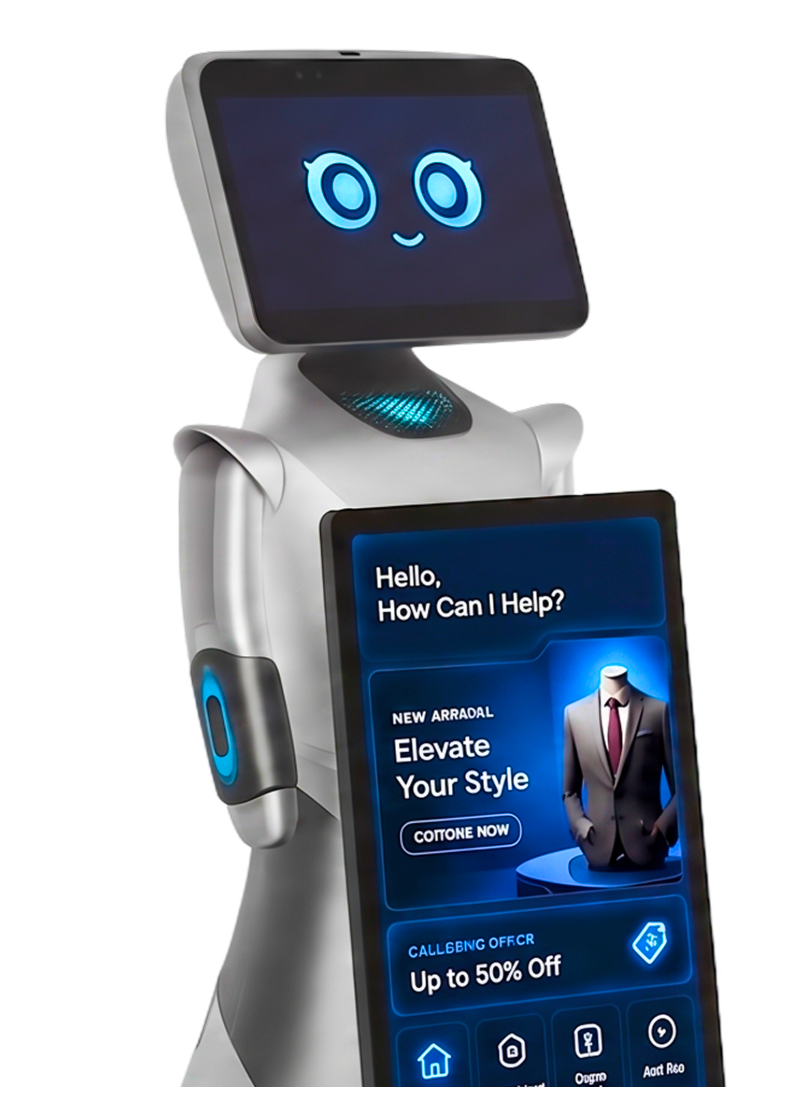
In the competitive landscape of brand retail, securing customer attention at window display areas and storefront entrances has become increasingly difficult due to persistent staffing shortages, rising operational costs, and the pressure of footfall-to-sales conversion, all while navigating complex data compliance regulations. With retail teams stretched thin and online competition intensifying, maintaining consistent visual merchandising and high-quality first impressions at the physical threshold is a structural challenge that frequently results in lost revenue. To bridge this gap, forward-thinking retailers are deploying greeting robots as a dynamic solution to automate customer attraction, deliver interactive brand messaging, and alleviate the frontline labor strain without compromising the in-store experience.
The OrionStar GreetingBot AD demonstrates how these generic capabilities function in a physical retail environment by merging conversational AI with mobile digital signage. According to manufacturer data, the unit combines a 14-inch head touch screen with a 21.5-inch FHD chest-mounted display, allowing it to process interactive touch queries while simultaneously broadcasting high-visibility brand content. To support prolonged shifts at busy store entrances, the robot relies on a larger 20 Ah lithium ternary battery designed to deliver up to 8 to 10 hours of runtime depending on workload and ambient conditions. Furthermore, it navigates complex retail layouts using a multi-sensor array that supports mapping areas up to 50,000 square meters while actively avoiding customer interference in tight aisles.
Traditional window displays often fail to adapt to real-time foot traffic or engage shoppers who briefly glance and keep walking. Greeting robots positioned in these zones use proactive people detection to trigger dynamic, eye-catching visual content on their large screens exactly when a pedestrian is near. This bridges the gap between passive visual merchandising and active customer attraction.
The primary threshold of a brand store is a high-pressure zone where unstaffed doors frequently result in lost conversion opportunities. By serving as an always-on first point of contact, the robot welcomes shoppers, answers immediate navigational questions, and directs attention to ongoing seasonal campaigns. This guarantees every entering customer receives a consistent brand greeting even during peak holiday rushes.
When brands launch new collections, capturing shopper attention and delivering detailed product education in-store is critical. The robot can be stationed adjacent to the new inventory to broadcast high-definition video demonstrations while using conversational AI to explain product features. Customers can then use the interactive touch screen to explore colors, sizes, or matching accessories without waiting for a human sales associate.
Converting anonymous shoppers into registered loyalty members requires proactive prompting that staff often lack the time to execute during busy periods. A greeting robot can autonomously invite browsing customers to join the brand's loyalty program, displaying the QR code or sign-up form directly on its chest screen. This frictionless approach capitalizes on the customer's curiosity and provides a dedicated, engaging channel for loyalty enrollment.
To deliver genuine operational value, greeting robots are increasingly integrated directly into the brand store's broader technological ecosystem. By connecting via REST or webhook APIs to point-of-sale platforms like Oracle Retail Xstore or Shopify POS, retailers can cross-reference the robot's front-door engagement metrics against actual transaction data to determine accurate footfall-to-conversion rates. Furthermore, the robot functions as a mobile extension of the store's digital signage network and visual merchandising task-instruction layer, updating promotional content in real time to match current campaigns. As it navigates the aisles, the unit also gathers anonymized traffic pattern data, which feeds into the retailer's existing footfall analytics and IoT platforms to map out peak dwell zones and optimize future floor plans.
Automating front-of-store engagement with privacy-first, accessible, and digitally driven technology directly supports a brand retail organization's broader commitments to sustainable operations and rigorous consumer data protection.
As brand retail environments face escalating labor constraints and the continuous demand for higher physical conversion rates, greeting robots are fundamentally changing how stores operate their critical entry zones. By blending autonomous mobility, multi-modal interaction, and real-time digital merchandising, these platforms ensure that every shopper receives a consistent and engaging first impression from the moment they cross the threshold. For retail organizations looking to align hardware with their specific spatial and operational requirements, the OrionStar GreetingBot series offers several models suited to different scenario needs. Ultimately, integrating intelligent frontline automation enables brand stores to maintain high-quality customer service while allowing human associates to focus on personalized selling and operational excellence.