

REQUEST DEMO
Robot CATALOG will be sent to your mailbox immediately after submission.
SUBMIT
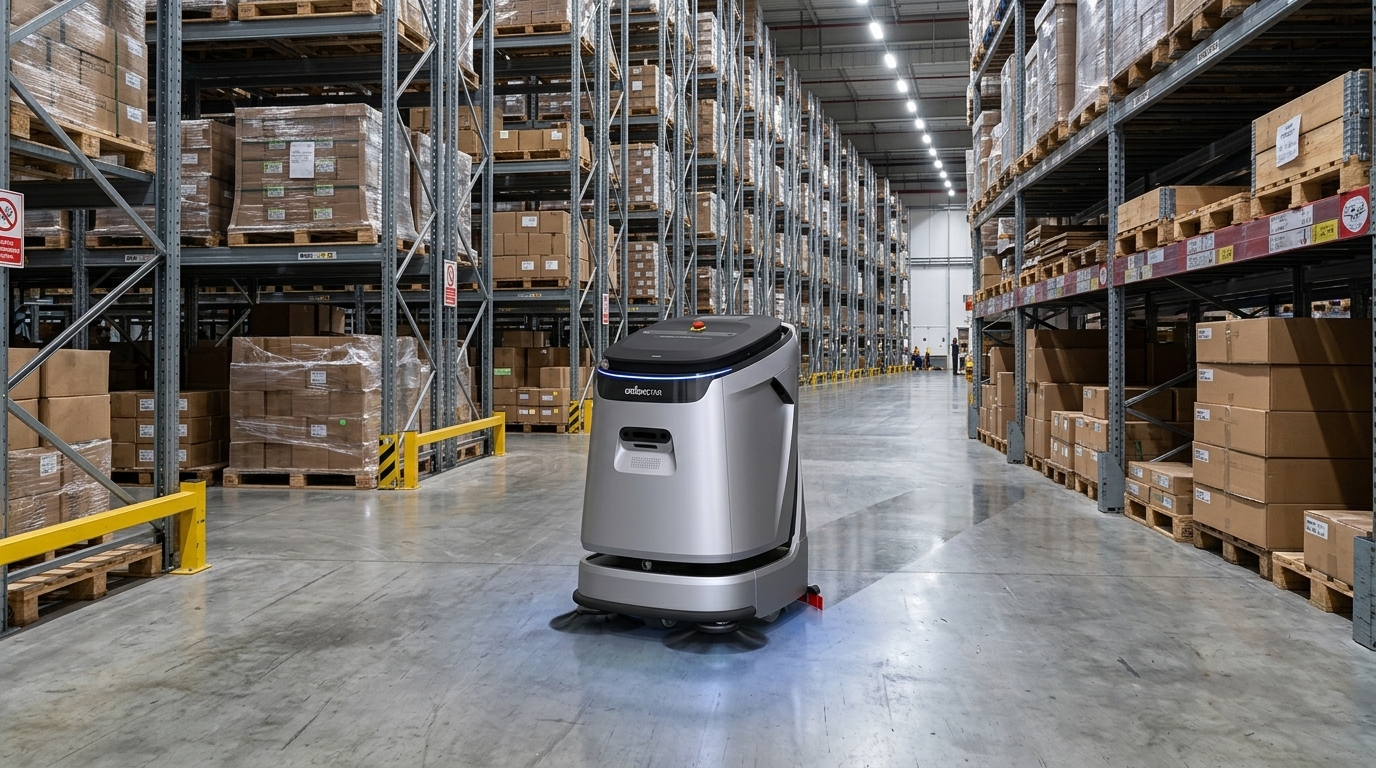
For our OrionStar CleaniBot C5 procurement file, distinguish the documented body size and cleaning width from witnessed route fit and configured-station acceptance. A source fact helps define the purchase-critical checks; it does not close an untested site gate.
A procurement file should make it easy for an operations leader to answer one question: is there enough evidence to buy this configuration for this site? That is different from asking whether a robot looks capable in a general demonstration. A go decision needs a defined use case, a named configuration, a practical ownership model, and written answers to unresolved questions.
Use a hold decision whenever a claim is broad but the site implication is unknown. For example, a cleaning mode count does not establish that a robot can clean every floor type in a building, and a large-commercial positioning statement does not establish that it can navigate a particular mall, warehouse, airport, or cafeteria. A hold is useful: it prevents a general capability statement from becoming an unverified site promise.
For facility service companies, keep the buying decision separate from any future service contract. The product packet can identify who will operate, replenish, inspect, and maintain the machine, but it should not assume response times, service levels, labor savings, or commercial terms that have not been quoted and accepted.
CleaniBot C5’s 820 × 680 × 1130mm body and 550mm main cleaning width answer different purchase questions. The body dimensions inform storage and transit review; the main width informs pass planning. Request configuration-matched route observations before signing off fit. C5 is a candidate for recurring broad-area work when those cleaning passes and the service return match the scope—not because a body specification or a demonstration proves building-wide acceptance.
Do not turn a capability into an outcome. “Supports” means a feature is presented as available under the stated conditions; it does not mean the feature will work without supervision in every building, on every floor, or with every cleaning program.
| Claim to retain | What it can support in a shortlist | Decision limit to record | Pre-purchase evidence to request |
|---|---|---|---|
| CleaniBot C5 is identified as a large-capacity scrubber for large commercial settings. | product positioning for larger commercial environments. | This positioning does not prove fit for a particular facility, route, or operating schedule. | A written proposed configuration and a site-specific explanation of intended tasks. |
| C5 supports scrubbing, vacuuming, sweeping, dust mopping, and wastewater recovery. | A task-based conversation about which listed work the site wants the robot to perform. | The listed tasks do not confirm floor compatibility, cleaning result, or unattended operation at the site. | A task map that links each proposed task to the relevant floor area and operating conditions. |
| With a suitable configured workstation, C5 supports automatic charging, clean-water refill, wastewater discharge, and wastewater-tank self-cleaning. | A workstation may be relevant where the operating plan needs those supported functions. | The workstation must be suitably configured, and these functions do not mean zero maintenance. | The workstation configuration, utility requirements, daily responsibilities, and exceptions list. |
| OrionStar CleaniBot S55 Pro is positioned as a compact commercial cleaning robot with six modes. | A preliminary option where compact positioning and mode variety are relevant to the site. | Six modes do not establish all-floor compatibility or prove suitability for a specific space. | The proposed mode use by area, floor-material confirmation, and the operating restrictions. |
| C5 body: 820 × 680 × 1130mm; main cleaning width: 550mm. | Use body dimensions for storage/transit review and main cleaning width for pass planning. | Neither figure establishes doorway clearance, turning space or accepted productivity. | Configuration-matched full-route observations and the assigned site acceptance owner. |
Create a room- and zone-level scope before selecting a model. A shopping mall may have open circulation areas, storefront thresholds, food-zone conditions, and changing pedestrian patterns. An airport may add restricted areas, irregular operating windows, and coordination with other teams. Warehouses can introduce aisles, loading activity, dust, and changing obstructions. Cafeterias may require frequent response to soil events and clear ownership of water and waste routines.
The practical question is not simply whether an autonomous cleaning robot is suitable for a venue category. It is whether the proposed robot, configuration, and workflow are suitable for the defined zones in that venue. Mark areas that are in scope, excluded, conditional, or still unverified. This avoids presenting one machine as the answer for every part of a large building.
Consider CleaniBot C5 when the planned scope includes the cleaning tasks it supports and the facility is considering a large-commercial candidate. Verify each actual floor surface, the transitions between zones, the locations for water and wastewater work, access during operating hours, and the person responsible for routine intervention. Consider CleaniBot S55 Pro when compact positioning and its six-mode offering are relevant, then verify the exact surfaces, route constraints, and selected modes rather than assuming broad compatibility.
Your evidence packet should contain records that represent the proposed use, not a claim that a single observation proves all future conditions. Keep the records simple enough for an operations manager to read: date, location or representative zone, proposed task, configuration used, observations, exceptions, and open follow-up questions.
This is not a trial-design exercise or a promised performance test. It is a procurement record of what was shown, what was discussed, and what still needs confirmation. If the supplier demonstration occurred elsewhere, label it as representative only. Do not relabel it as proof of performance in your own facility.
| Representative record | What to capture | What it cannot establish alone |
|---|---|---|
| Floor-task observation | Zone type, apparent floor condition, proposed cleaning task, and any operator intervention discussed. | Results across every floor material, shift, or traffic pattern. |
| Route and access review | Storage location, access points, thresholds, congestion points, and areas excluded from the proposal. | That every future route condition will remain unchanged. |
| Water and waste workflow review | Where clean water, wastewater, charging, and routine care are expected to occur. | That a workstation can be installed or that maintenance is unnecessary. |
| Staff handover discussion | Named roles for startup, checks, consumables, cleaning, issue escalation, and end-of-shift ownership. | A warranty, service level, or labor outcome unless stated in the quotation. |
A model name is not a complete purchase definition. Ask for a configuration sheet that identifies the exact machine, included equipment, selected options, workstation status, installation assumptions, training or handover items, and any site work expected before use. Keep a revision number on each version so stakeholders do not approve an earlier proposal by mistake.
Record CleaniBot C5’s separate 45L tanks as onboard facts, and separately identify whether charging/refill/discharge/self-cleaning station functions are included in the quoted and delivered setup. Attach utility responsibilities, operator checks and unresolved use holds to that configuration revision. This turns the shortlist into an accountable supply decision: buy the configuration that supports the intended recurring task and retain use holds where the site cannot yet provide its dependencies. Delivery alone does not close those holds.
Do not assume it is included, compatible, or necessary because it was mentioned in conversation. Ask which water-service alternatives are available for the exact quoted configuration and how filling, wastewater handling and daily inspection would work. Availability and inclusion need confirmation in the proposal.
Commercial terms should be handled by the quoted documents, not inferred from marketing language. Ask for the complete warranty wording, what is included or excluded, the process for requesting support, the responsibilities of the buyer, and any optional support offerings. If a response time, replacement arrangement, maintenance visit, or training commitment matters to your decision, request that it be stated in the applicable quotation or agreement.
For multi-site operators and facility service companies, identify whether ownership sits with the building owner, service provider, or another party. Then align the quotation recipient, warranty holder, daily operator, maintenance contact, and decision-maker for changes. This reduces the common problem of a robot arriving without a clear person accountable for its routine care.
Do not treat delivery as final acceptance. The handover packet should identify what was delivered, which configuration was accepted, where supporting documents are stored, and which role owns daily operation. It should also preserve open items so a buyer does not mistakenly sign off on an assumption that remains unresolved.
We suggest a single final signoff page with three outcomes: accepted for the defined scope, accepted with listed open items and a hold on affected use, or not accepted pending clarification. The signoff is an internal operating decision, not a claim that the robot will achieve a particular performance level.
Before requesting a final quotation, provide the supplier with the facility type, priority zones, floor materials, intended tasks, operating windows, traffic conditions, storage location, available utilities, and the roles that will operate and maintain the equipment. Ask the supplier to distinguish confirmed product capability from assumptions that require site confirmation.
For CleaniBot C5, ask whether the proposed configuration includes a suitable workstation and which supported workstation functions apply to that configuration. For CleaniBot S55 Pro, ask which of its six modes are being proposed for the identified areas and what surface or operating checks are still required. Ask these as configuration questions, not as requests for guarantees about the site.
Use the completed checklist to compare proposals on clarity as well as capability. The most useful response is one that clearly states the proposed scope, exclusions, dependencies, ownership tasks, and documents needed before a go decision.
There is no universal choice by venue name alone. Start with the specific zones, floor materials, traffic conditions, intended tasks, storage plan, and water and wastewater workflow. A large-commercial candidate may be relevant for some large settings, but the site still needs configuration and suitability checks.
A robot may support multiple listed tasks, but each task should be matched to the actual floor areas and operating conditions. CleaniBot C5 supports scrubbing, vacuuming, sweeping, dust mopping, and wastewater recovery; that does not by itself confirm results or suitability for every site surface.
No. With a suitable configured workstation, CleaniBot C5 supports automatic charging, clean-water refill, wastewater discharge, and wastewater-tank self-cleaning. The buyer should still define inspection, cleaning, exception handling, and facility-side utility responsibilities.
Compare the proposed cleaning scope and site constraints rather than using size as a proxy for fit. CleaniBot S55 Pro is positioned as compact and supports six modes, while CleaniBot C5 is positioned for large commercial settings. Confirm the selected configuration, actual surfaces, access conditions, and task scope for either option.
Keep a final internal packet containing the claims and source table, proposed configuration, representative observation records, quotation and warranty questions, facility dependencies, named owners, and unresolved items. Sign off only on the defined scope and clearly retain any conditions that still require confirmation.
