

REQUEST DEMO
Robot CATALOG will be sent to your mailbox immediately after submission.
SUBMIT
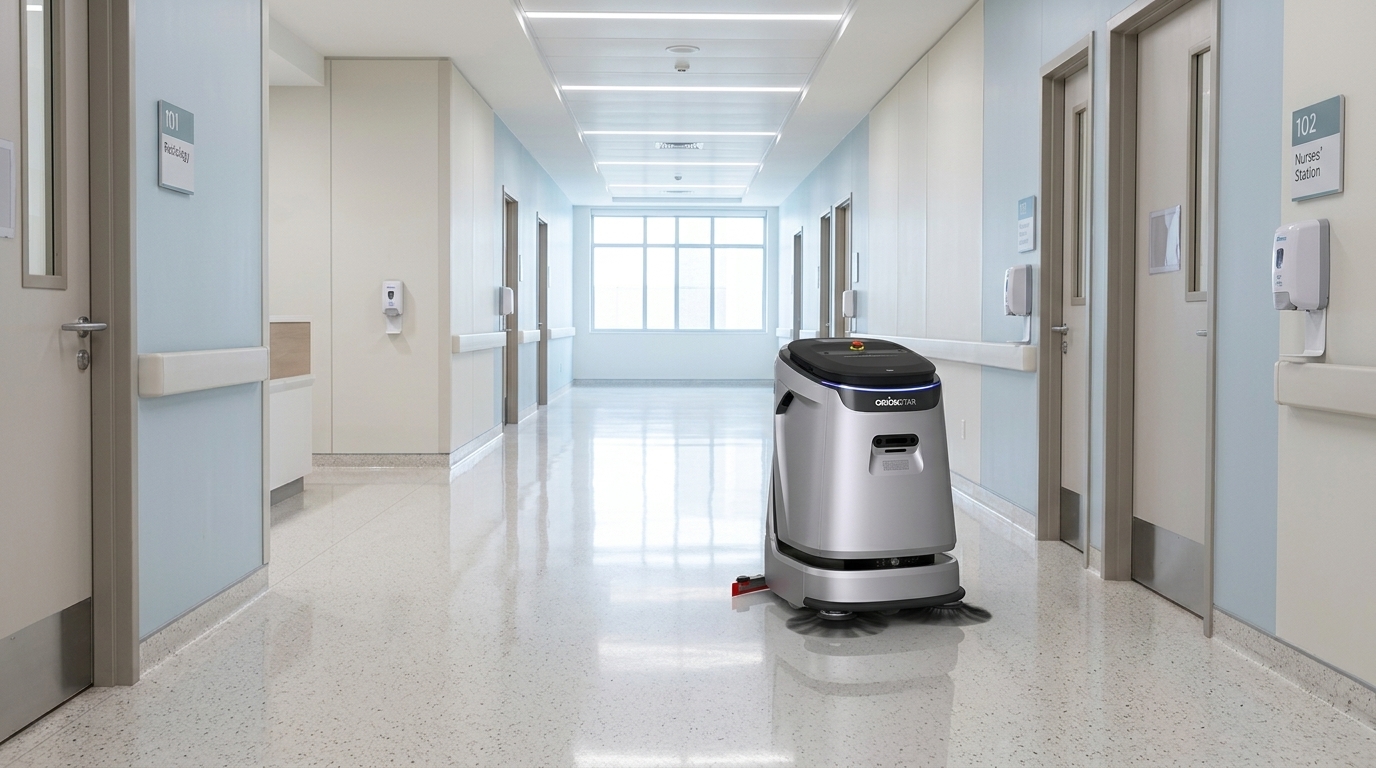
For a European OrionStar CleaniBot C5 proposal, identify whether the configured workstation includes charging, refill, discharge and tank self-cleaning, then request the matching installation, operating and responsibility documents. These capabilities define review scope; they are not certification or GDPR evidence.
A cleaning robot may be commercially attractive without being ready for a particular facility, country, configuration, or operating model. Procurement should therefore separate product positioning from evidence that relates to the exact unit, software release, accessories, workstation, intended tasks, and local deployment conditions being considered.
We suggest asking for a controlled documentation pack early, then having the relevant local functions review it. This approach helps a facility service company avoid treating marketing language, a product family name, or a demonstration as proof of suitability.
Request documents in a form that identifies the product configuration under discussion. If a supplier refers to optional equipment, integrations, cameras, connectivity, charging equipment, water handling, or a workstation, ask whether each item is included in the proposed configuration and whether separate documentation applies.
Name the target country and ask which legal entity will sell the equipment, accept contractual obligations, and provide service there. Request the declarations and supporting documents applicable to the exact model, software version, accessories, and workstation being quoted; ask the supplier to identify their scope, date, and version. Ask which instruction and warning languages are available for the intended users and have qualified local reviewers determine what is required. None of these requests confirms that the proposed configuration already meets those requirements. For each proposed CleaniBot C5 workstation function, record whether it is included in the quotation and identify the matching installation and operating documents. This prevents a robot-only evidence pack from being accepted for a workflow that also depends on charging or water equipment.
Ask where local service is available, who performs installation and maintenance, which tasks remain with the buyer, and what warranty, response, parts, and escalation terms are actually included in the contract. Do not infer local coverage or a service commitment from the brand name or a general European sales offer.
The most useful procurement question is not simply which robot is suitable. It is what work the facility expects the robot to perform, where, when, under whose supervision, and with what fallback process. A concise intended-use brief gives local reviewers a practical basis for evaluating the proposed deployment instead of reviewing an abstract product category.
Write down the cleaning tasks, floor zones, operating hours, public access conditions, manual handoff points, cleaning chemicals or consumables, storage location, charging arrangement, and the people who will intervene when a route cannot be completed. Include areas that are explicitly out of scope, such as stairs, restricted zones, temporary works, or surfaces not confirmed for the proposed setup.
For large commercial settings, CleaniBot C5 is positioned as a large-capacity scrubber. That positioning can justify adding it to a shortlist, but it does not establish that it fits a mall, airport, office campus, or contractor portfolio. Ask to see how the proposed setup is intended to handle the specific floor types, access routes, service spaces, and changing occupancy at your site.
| Site question | Evidence or observation to request | Accountable reviewer to involve |
|---|---|---|
| What areas and cleaning tasks are in scope? | A written intended-use statement tied to the proposed configuration and a zone list. | Operations lead and facilities manager |
| Who may encounter the robot? | Operating plan for public, staff-only, contractor, and restricted areas. | Site operations and health-and-safety lead |
| What happens when normal operation is interrupted? | Supplier guidance and local procedure for stopping, recovering, moving, or isolating the unit. | Operations lead and trained operator |
| What surfaces and route conditions exist? | A site survey record covering surface transitions, obstructions, slopes, thresholds, and temporary changes. | Facilities manager and cleaning supervisor |
| What support systems are needed? | Installation requirements for storage, power, water, drainage, connectivity, and any proposed workstation. | Facilities, IT, and cleaning supervisor |
Do not ask a supplier for a broad reassurance that a robot is “compliant.” Ask for materials that let the buyer and qualified local reviewers understand the intended operating conditions, operator responsibilities, residual risks, instructions, warnings, inspection needs, and configuration dependencies. The review should focus on the actual facility workflow, not only the machine in an empty demonstration area.
For high-traffic locations such as shopping malls, airports, entrances, concourses, and mixed-use commercial buildings, the operating plan matters as much as the cleaning task. Establish who authorizes operating windows, who monitors changing conditions, how temporary hazards are reported, and when the robot must be removed from service. A quieter period may be useful operationally, but it should not be treated as a substitute for a site-specific review.
Ask whether supplier instructions distinguish between normal use, setup, transport, charging, cleaning, maintenance, and fault handling. Also ask what training is expected for cleaning staff, supervisors, and any third parties who may move or service the equipment. Your local safety and operational reviewers should decide whether the proposed process is adequate for the site.
A procurement team should treat data handling as a set of questions to be answered for the exact proposed arrangement. Do not infer privacy outcomes from a robot’s appearance, a general product category, or a statement that a system is automated. Ask what information may be captured or generated during operation, why it is used, where it moves, who can access it, and what controls are available to the customer.
Create a simple data-flow map that starts at the robot and includes any operator device, local network, support channel, workstation, management interface, storage location, and third-party connection proposed for the deployment. Mark each unknown clearly. This gives privacy, information-security, procurement, and operations teams a shared list of questions rather than an unsupported conclusion.
Ask the supplier to identify the available configuration choices that could affect data handling. If the supplier proposes a connected service or support access, request a written explanation of the purpose, access roles, security responsibilities, retention behavior, locations, subcontractor involvement, and available contractual materials. Qualified local reviewers can then determine what further review is needed.
Ask for the locations where operational information is processed and stored, the retention periods for each relevant data category, and how support access, deletion, subcontractors, and transfers are handled in the proposed arrangement. Request the contractual and data-processing documents needed by your privacy, IT, and legal reviewers. Record missing answers and version mismatches; these are questions about the offered setup, not statements about this product’s actual data practices.
| Data-flow question | What to request from the supplier | Internal reviewer |
|---|---|---|
| What information can the proposed setup collect or create? | A configuration-specific inventory of data categories, logs, images if applicable, maps if applicable, and account information. | Privacy and information security |
| Where does information travel or remain available? | A data-flow diagram covering devices, networks, support tools, storage, and integrations. | IT and information security |
| Who can access it and for what purpose? | Role descriptions, access-control explanation, and support-access process. | IT, privacy, and operations |
| How can the customer manage the arrangement? | Available administrative controls, deletion or export options if offered, and change-management steps. | Privacy, IT, and procurement |
| What contractual documents are available? | Relevant supplier terms, data-processing materials if offered, and a contact for unanswered questions. | Procurement and qualified local legal review |
Operational fit is often where an otherwise promising shortlist changes. Review the route plan alongside the cleaning team’s real work: replenishment, wastewater handling, consumable changes, daily inspections, storage, manual cleaning of the equipment, access restrictions, and response to interruptions. Assign inspection and maintenance responsibilities explicitly rather than assuming automation removes them.
CleaniBot C5 supports scrubbing, vacuuming, sweeping, dust mopping, and wastewater recovery. These supported tasks can help a buyer frame task-specific questions, but they do not confirm results on every surface or in every traffic condition. Ask which task is proposed for each zone and request confirmation of the applicable surface, consumable, and maintenance guidance.
If the C5 quotation includes a configured workstation, map charging to the proposed electrical/installation documents and refill, discharge and tank self-cleaning to the water-handling instructions and site responsibility review. Ask which configuration and document versions apply; supported functions do not establish regulatory conformity. C5 is a conditional candidate when these service functions address the intended recurring floor-care workflow and the proposed setup can be documented and reviewed locally. Capability helps define what to review; only configuration-specific evidence can close the purchase-critical questions.
OrionStar CleaniBot S55 Pro is positioned as a compact commercial cleaning robot and supports six cleaning modes. This can make it a candidate where compact positioning is relevant, but neither the six-mode count nor compact positioning proves compatibility with a particular floor, route, cleaning standard, or public-area workflow. Ask the supplier to relate the proposed mode and setup to the intended zone.
A reusable matrix keeps the commercial decision connected to unresolved evidence. Give each row an owner, record the document or observation requested, and distinguish confirmed supplier information from site assumptions. This is not a certification decision or legal conclusion; it is a disciplined way to determine what needs qualified local review before deployment.
| Decision area | Buyer question | Decision status to record |
|---|---|---|
| Configuration | Is the exact proposed product, accessory, workstation, and software arrangement identified? | Confirmed, pending, or not proposed |
| Intended use | Are tasks, zones, users, exclusions, and operating windows written down? | Confirmed, pending, or needs site revision |
| Safety operations | Are local roles, training, stop conditions, and escalation paths assigned? | Reviewed by site owner or pending |
| Data handling | Is there a complete data-flow map and supplier response for the proposed arrangement? | Reviewed by privacy and IT or pending |
| Facilities readiness | Are storage, utilities, access, cleaning-team handoffs, and maintenance responsibilities defined? | Ready, conditional, or unresolved |
| Commercial accountability | Does the quotation identify included configuration, documentation, support boundaries, and open assumptions? | Confirmed, pending, or clarification required |
Before requesting final commercial terms, compile a short site pack: floor plans or zone descriptions, intended tasks, operating hours, public-access patterns, surface inventory, available utilities, storage options, network constraints, cleaning-team workflow, and internal reviewer contacts. Share only what is appropriate for procurement and review purposes.
Ask the supplier to respond against that site pack rather than offering broad assurances. Ask: Which configuration is proposed? What intended use and exclusions apply? Which documents correspond to this configuration? What must the site provide? What operator and maintenance tasks remain? What data flows or connected components are involved? Which assumptions require confirmation by our facilities, IT, privacy, safety, and qualified local reviewers?
This question set supports a more useful shortlist for facility service companies, malls, airports, and commercial buildings because it makes unknowns visible. It does not replace supplier documentation, local procedures, or qualified review of the final deployment.
Record the intended country of deployment and ask which entity sells, contracts for, installs, and services the proposed setup there. Confirm the division of responsibilities in the quotation and agreement rather than assuming that one contact provides every local service.
Ask for the declarations and instructions applicable to the exact quoted model, software, accessories, and workstation, including their scope, issue date, and version. Ask the supplier to explain any exclusions or pending documents, then have qualified local reviewers assess the evidence. A marketing statement is not a substitute for this configuration review.
Identify the languages needed by operators, maintenance staff, and local reviewers. Ask which installation, operation, warning, and maintenance documents are available in those languages and which versions match the quoted configuration. Have qualified local reviewers determine whether the supplied set is adequate for the intended country and use.
Ask who installs, trains, maintains, supplies parts, and receives support requests in the target country. Request included and excluded services, buyer duties, escalation routes, and any quoted warranty or response commitments in writing. Do not assume availability or response times until the applicable agreement states them.
Ask which information the proposed arrangement collects, where it is processed and stored, how long it is retained, who can access it, and what deletion, support-access, subcontractor, and transfer arrangements apply. Request the relevant contractual and data-processing materials for qualified privacy, IT, and legal review; do not infer compliance from unanswered questions.
