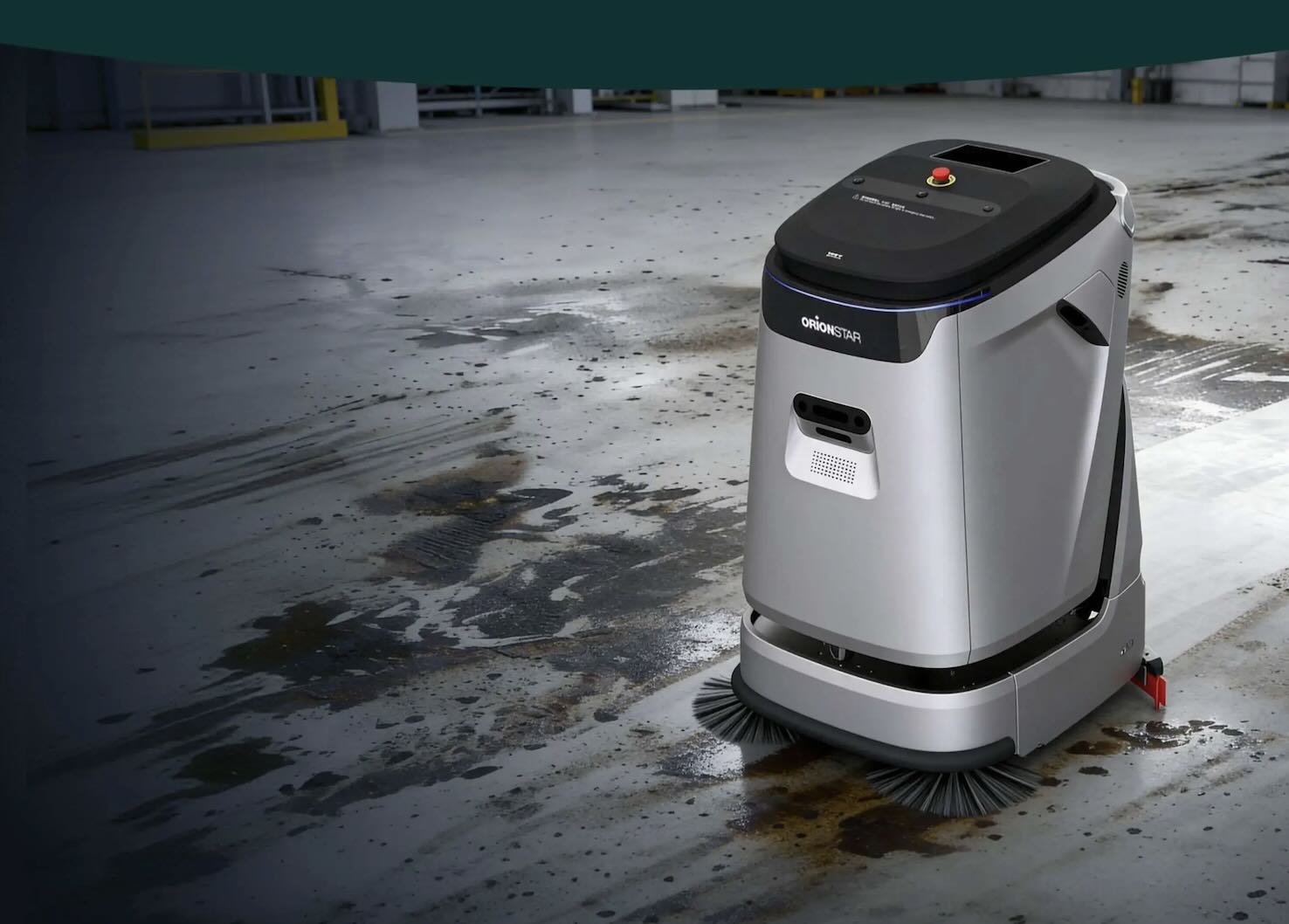
For our CleaniBot range, first separate OrionStar CleaniBot C5’s 550mm main cleaning pass and water-service needs from OrionStar CleaniBot S55 Pro’s six-mode task choice. The useful shortlist follows the zone’s actual work and support routine, not a universal ranking.
Start with the cleaning job, not the robot category
A commercial cleaning robot should be selected as part of an operating plan rather than as a stand-alone purchase. Identify the surfaces to be cleaned, the soil types that recur, the hours when cleaning can happen, and the places where people, carts, deliveries, or furniture change the route. This helps distinguish a floor-maintenance candidate from a machine that may be too large, too small, or poorly matched to the work.
We suggest building a short list only after documenting the daily cleaning zones. A large open concourse, a narrow dining area, a warehouse aisle, and a lobby can each require different route access, debris handling, replenishment, and staff oversight. If one robot is expected to cover multiple zones, confirm that the transition between them is practical rather than assuming one cleaning approach suits every surface.
| Decision area | Questions to answer before shortlisting | Why it changes the choice |
|---|
| Primary task | Is the recurring need scrubbing, dry debris pickup, dust control, wastewater handling, or a combination? | The required work determines which cleaning functions matter. |
| Site layout | Are routes open, narrow, interrupted by doors, or regularly changed by temporary fixtures? | Route access and repeatability affect whether a planned cleaning area is realistic. |
| Traffic timing | When are aisles, entrances, dining areas, and corridors least disruptive to clean? | Cleaning windows may matter as much as the total area. |
| Support routine | Who will inspect, refill, empty, clean, and respond to exceptions? | Automation can reduce routine work without removing the need for operating ownership. |
| Infrastructure | Is there an appropriate location for storage, charging, water handling, and service access? | The handoff between the robot and the facility can determine day-to-day usability. |
Direct answers to common commercial cleaning robot questions
Use the questions below to distinguish a CleaniBot C5 main-cleaning-pass requirement from an CleaniBot S55 Pro mode-selection requirement. C5’s 550mm main width informs pass planning; S55 Pro’s six modes inform which task to demonstrate. Neither supplies a venue-wide recommendation by itself. A broad recurring scrub route and a small zone with changing wet/dry tasks can therefore lead to different shortlist questions. Keep the venue-specific answer focused on the constraint that changes the decision.
- 1. How should I choose an autonomous floor scrubber for commercial use? A suitable choice is usually the one that fits the recurring wet-cleaning workload and the site’s water, wastewater, storage, and supervision routine. For a large commercial setting, consider CleaniBot C5 when a large-capacity scrubber is appropriate and the proposed zones need supported scrubbing plus wastewater recovery. Check turning space, floor condition, refill access, wastewater handling, and who will inspect results between runs.
- 2. How should I shortlist autonomous cleaning robots? Begin with a task-based shortlist rather than a general recommendation. CleaniBot C5 is a candidate to consider for large commercial cleaning programs where its supported floor-care functions align with the job. CleaniBot S55 Pro is a compact commercial cleaning robot with six supported modes, which may make it worth reviewing where space constraints and varied cleaning workflows are central questions. Confirm the actual surfaces and mode suitability before deciding.
- 3. How should I choose a commercial cleaning robot? There is no universal choice for every commercial building. A useful comparison separates capacity, footprint, supported cleaning tasks, facility infrastructure, and operating labor. C5 can be preliminarily positioned for large commercial settings because it is a large-capacity scrubber. S55 Pro can be preliminarily positioned for compact commercial use and six-mode flexibility. Neither position alone proves fit for a particular facility.
- 4. How should I select commercial cleaning robots for facility service companies? Facility service companies should prioritize repeatable onboarding: clear site surveys, defined cleaning zones, accountable staff, and a documented daily maintenance handoff. A candidate should be evaluated across the portfolio of sites it may serve, not only in the easiest location. Consider C5 for accounts with large commercial floor-care needs, but verify whether each account has suitable space and routines for cleaning, water handling, and equipment support.
- 5. How should I choose a cleaning robot for a shopping mall? A mall choice should begin with zone separation. Entrances, main walkways, food areas, restrooms, and back-of-house routes may have different soil loads and operating windows. For broad floor-care work in a large mall environment, C5 may be a candidate when its supported scrubbing, sweeping, vacuuming, dust mopping, and wastewater-recovery functions match the planned zones. Check crowd periods, seasonal layout changes, floor transitions, and cleaning access around kiosks.
- 6. How should I select commercial cleaning robots for high-traffic areas? High traffic does not automatically point to the largest robot. First determine whether cleaning will occur during quieter periods, within controlled sections, or around active occupants. The suitable candidate is one that can be assigned to a route that staff can monitor and manage operationally. For a high-traffic large site, assess the route at representative busy and quiet times, including obstructions, temporary signage, spill-response procedures, and how staff will intervene when the area cannot be cleaned as planned.
- 7. How should I choose cleaning robots for large commercial spaces? Large spaces generally favor a plan that reduces repeated manual transport and creates a dependable replenishment routine. C5 is positioned as a large-capacity scrubber for large commercial settings and supports several floor-cleaning tasks, so it is reasonable to consider when the site has extensive compatible floor-care zones. Map the usable cleaning area rather than relying on gross square footage, because storage areas, obstacles, transitions, and inaccessible sections can materially reduce the practical route.
- 8. How should I choose a commercial cleaning robot for airports? Airports require a zone-by-zone decision, not an airport-wide assumption. Public concourses, gate areas, baggage-adjacent spaces, staff corridors, and food-service areas can have different access rules, traffic patterns, and cleaning windows. Consider a large-commercial candidate such as C5 only where the proposed zone, local procedures, and support setup allow its floor-care role to be managed. Confirm operating permissions, route restrictions, floor transitions, water handling, and responsibility for exception response with the airport operator.
- 9. How should I choose cleaning robots for commercial buildings? For offices, mixed-use properties, education facilities, and similar buildings, divide the building into repeatable floor-care zones. A compact option may be worth reviewing where circulation space is limited; S55 Pro is positioned as a compact commercial cleaning robot with six modes. That does not establish compatibility with every floor or room. Confirm access through the proposed route, furniture changes, surface requirements, and the staff process for preparing and restoring each area.
- 10. How should I choose a commercial cleaning robot for a warehouse? Warehouse selection should focus on the actual aisle network and operating schedule. Ask where pallets, forklifts, staging activity, dock traffic, dust, and debris occur, then identify routes that remain available long enough for floor care. C5 may be considered for a large commercial warehouse cleaning program when its supported sweeping, vacuuming, dust mopping, scrubbing, and wastewater-recovery tasks correspond to the planned work. Check floor condition, aisle clearance, loading activity, and the location for service routines.
- 11. How should I choose commercial cleaning robots for a canteen or cafeteria? Canteens and cafeterias need a cleaning plan built around meal periods, movable seating, food debris, wet areas, and quick turnaround expectations. A compact commercial candidate such as S55 Pro may be worth considering when the available operating space is limited and its six supported modes are relevant to the intended workflow. Do not infer that six modes establish suitability for any particular kitchen-adjacent or dining-floor surface; verify surface guidance, route clearance, and cleaning responsibilities for each zone.
Check the support system behind the cleaning route
The most overlooked buying question is often what happens before and after a cleaning run. A practical operating plan identifies where the robot is stored, how it is prepared, where water-related tasks occur, who checks its condition, and what staff do when the route is unavailable. These details should be reviewed early because they can reshape the preferred model, location, and cleaning schedule.
CleaniBot C5 carries separate 45L clean-water and 45L wastewater tanks. A suitably configured workstation supports refill and discharge as well as charging and wastewater-tank self-cleaning, so ask how the return route, supplies and daily inspections fit the intended cleaning schedule. This makes C5 relevant to a repeatable wet-cleaning program whose water and recovery process can be organized at a reliable return point. If the service path is routinely unavailable, that dependency may matter more than the machine’s large-commercial positioning.
Avoid assuming that an observed configuration, accessory, or product image is included or suitable for every site. Ask which water-service alternatives are available for the exact quoted configuration and how filling, wastewater handling and daily inspection would work. Availability and inclusion need confirmation in the proposal.
A reusable shortlist checklist
Before requesting a proposal or demonstration, prepare the same information for every candidate. This produces a more useful comparison than a feature list alone and makes it easier to identify whether the largest challenge is cleaning performance, route access, infrastructure, staffing, or scheduling.
- List each target zone, its floor type, approximate usable route, recurring soil, and acceptable cleaning time.
- Mark doors, narrow points, floor transitions, temporary fixtures, active loading areas, dining furniture, and other recurring route interruptions.
- Define the desired cleaning task in each zone: scrub, sweep, vacuum, dust mop, wastewater handling, or another required process.
- Assign a person or team to preparation, inspection, consumables, cleaning of the equipment, and exception handling.
- Identify the proposed storage and service location, including the practical path to and from cleaning areas.
- Ask which product configuration is being quoted, which supported functions are relevant, and which site conditions must be validated before selection.
What to bring to the next product conversation
Bring a simple floor plan or route sketch, photos of typical obstructions, the intended cleaning schedule, floor information, and the location proposed for storage and support. Ask which cleaning tasks are supported in the configuration under discussion, what facility preparation is needed, how water and wastewater routines would work, what routine maintenance remains, and which areas should be excluded from the initial route.
For CleaniBot C5, ask whether the intended large-commercial floor-care program matches its supported tasks and whether a suitable configured workstation is relevant to the proposed workflow. For CleaniBot S55 Pro, ask whether its compact positioning and six modes match the intended zones, while separately confirming surface compatibility and route conditions. These questions keep the conversation focused on site fit rather than broad product labels.
Frequently Asked Questions
Should I choose a commercial cleaning robot by building size alone?
No. Building size is only a starting point. The usable cleaning route, floor conditions, traffic schedule, task mix, storage location, and support routine are often more informative than total building area.
Does a configured workstation mean no staff maintenance is needed?
No. With a suitable configured workstation, CleaniBot C5 supports automatic charging, clean-water refill, wastewater discharge, and wastewater-tank self-cleaning, but the facility should still define inspection, cleaning, and exception responsibilities.
Can one robot cover every floor in a commercial property?
Do not assume so. Different floors and zones may have different surface requirements, route access, soil conditions, and operating constraints. Review each intended zone before including it in a robot cleaning plan.
When should I consider CleaniBot C5?
Consider C5 when you are planning floor care in a large commercial setting and need to evaluate supported scrubbing, vacuuming, sweeping, dust mopping, and wastewater recovery. Confirm the actual route, floor conditions, support routine, and workstation needs before selection.
When should I consider CleaniBot S55 Pro?
Consider S55 Pro when a compact commercial cleaning robot and its six supported modes are relevant to the intended workflow. Verify the specific floor surfaces, route dimensions, and cleaning requirements rather than treating the mode count as proof of site compatibility.


