

REQUEST DEMO
Robot CATALOG will be sent to your mailbox immediately after submission.
SUBMIT
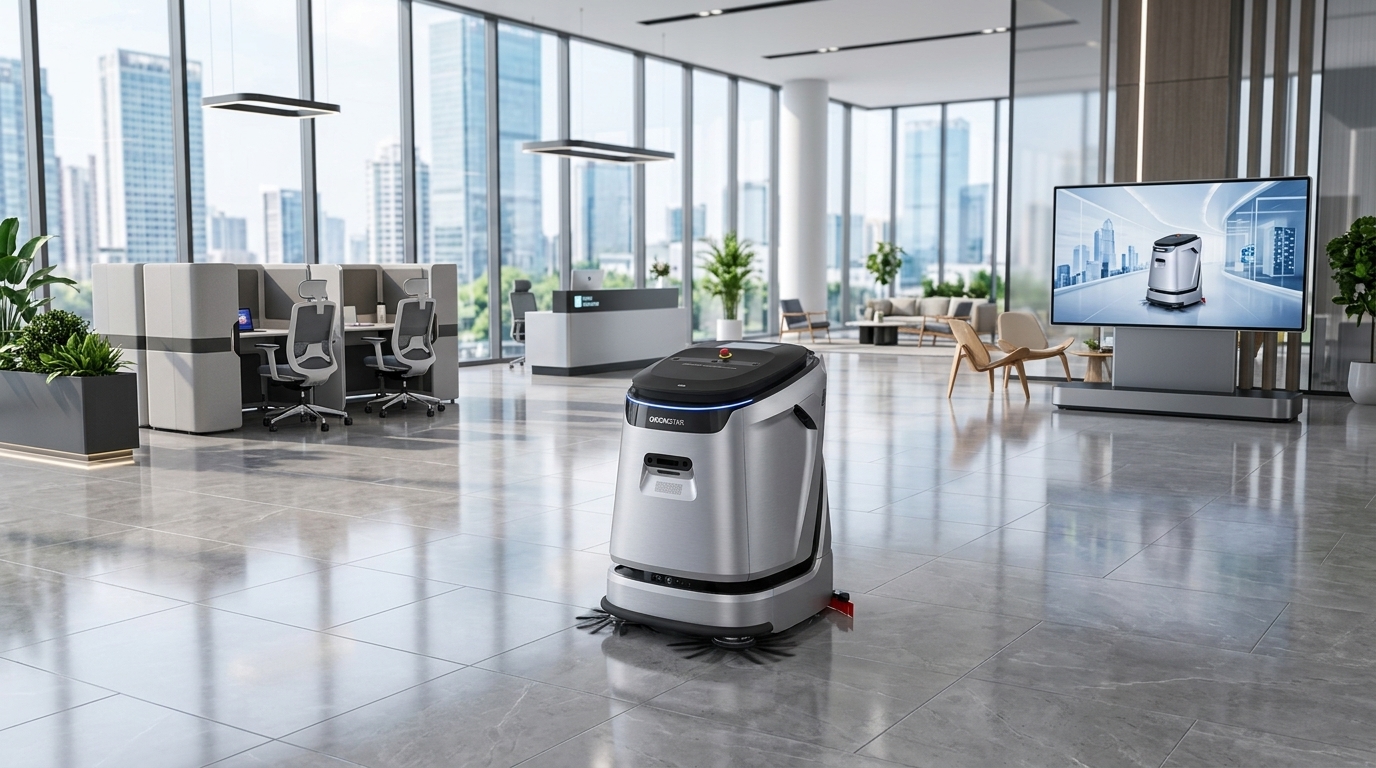
Start with the cleaning result: our OrionStar CleaniBot C5 offers a 550mm main cleaning width and 840mm width including side brushes, while OrionStar CleaniBot S55 Pro offers six distinct modes to match to a zone’s task. Do not treat sweeping width as wet-scrubbing width or a mode count as floor approval.
A cleaning robot is a work tool for a defined floor task. The most useful buying question is not “Which robot is suitable?” but “What must be cleaned, how often, and what result must be ready for the next user?” A lobby may need frequent dry debris pickup between busy periods, while a hard-floor corridor may need wet soil removal and water recovery. A stockroom may have irregular obstructions that make a fixed repeatable route less suitable than manual cleaning.
Separate your facility into task zones before comparing platforms. A task zone is an area with a similar floor surface, soil type, traffic pattern, access window, and finish expectation. This prevents a common mistake: selecting one machine based on the largest visible area even though smaller, more complex areas consume most of the cleaning labor.
Wet and dry work should be treated as different decisions. Dry debris work can include sweeping, vacuuming, or dust mopping. Wet work can include scrubbing and the recovery of used water. Do not assume that a robot positioned for commercial use is appropriate for every floor material, coating, seam condition, ramp, drain layout, or spill type. Confirm the actual floor surfaces, cleaning chemistry, and operating conditions before assigning any machine to a route.
Use the following sequence to narrow the category before you compare named models. The output is a preliminary machine type, not a guarantee that a specific robot fits the site.
The right platform may be the one that covers the most important recurring task without adding unnecessary process complexity. For example, a site that mostly needs dry debris removal should not begin with a wet-scrubbing requirement merely because wet cleaning sounds more comprehensive. Conversely, a facility with persistent hard-floor soil may need a wet-work process rather than repeated dry passes.
For CleaniBot C5, the main cleaning width is 550mm and the width including side brushes is 840mm. Match the 550mm main pass to the proposed scrub route and evaluate side-brush debris collection separately; the 840mm figure is not an 840mm wet-cleaning deck. A site with recurring wet soil should compare the main cleaning pass; a site dominated by loose dry matter has a different collection question. This is why C5’s task bundle can be useful across a mixed program without making every quoted width interchangeable.
| Observed facility need | Planning question | Preliminary task direction | What to verify before choosing |
|---|---|---|---|
| Routine loose debris on hard floors | Is dry collection the main result required? | Sweeping or vacuuming workflow | Debris type, floor transitions, route access, and how exceptions are handled |
| Frequent dust on presentational floors | Is appearance maintenance needed between deeper cleans? | Dust-mopping workflow | Surface finish, traffic timing, edge work, and manual touch-up needs |
| Recurring soil or residue on hard floors | Is wet cleaning required to achieve the expected floor condition? | Scrubbing workflow | Surface compatibility, approved chemistry, water handling, drainage, and drying expectations |
| Wet cleaning that produces used water | Must wastewater be collected and handled as part of the process? | Scrubbing plus wastewater recovery | Wastewater procedure, refill point, discharge point, and staff responsibilities |
| Large, repeatable commercial floor routes | Does the site need a broad task bundle across dry and wet floorcare? | C5 may be an option to evaluate because it supports scrubbing, vacuuming, sweeping, dust mopping, and wastewater recovery | Confirm the floor tasks, operating route, water and wastewater process, and local site conditions |
| Multiple task types in a compact commercial environment | Are several cleaning approaches needed across defined zones? | CleaniBot S55 Pro may be an option to evaluate because it supports six cleaning modes | Confirm what each mode does in the offered configuration and whether the relevant floors and tasks are compatible |
Autonomous cleaning is most practical when the task is repeatable. A route is more likely to be suitable for scheduled autonomous work when its floor boundaries are stable, access is predictable, the cleaning window is known, and the required outcome is consistent. The goal is to assign repeatable floor coverage to the robot while preserving a practical manual plan for work that changes from day to day.
Manual work remains important. A person may need to prepare the route, remove temporary obstacles, treat spills, clean narrow edges, inspect difficult areas, replenish supplies, and resolve changes in the environment. Build these responsibilities into the operating plan instead of treating them as failures of automation.
We suggest writing each zone’s work as a simple handoff: what is prepared before the run, what the robot is expected to cover, what must be checked afterward, and when staff take over. This makes it easier to distinguish a stable scheduled route from a route that should remain manual until the space becomes more predictable.
| Work type | Usually better suited to | Why | Owner to assign |
|---|---|---|---|
| Open, repetitive floor coverage | Scheduled autonomous work | The route and expected result can be defined in advance | Route preparer and post-run checker |
| Daily changes in furniture, deliveries, or displays | Manual work or a closely managed run | The cleaning path may change without warning | Area owner and cleaning attendant |
| Spills and urgent spot cleaning | Manual response | The location, substance, and response time are unpredictable | On-duty cleaning staff |
| Edges, corners, and intricate zones | Manual completion where needed | Coverage expectations may differ from open-floor work | Cleaning attendant |
| Water and wastewater support steps | Defined staff workflow | These steps require a clear site process even when cleaning routes are repeatable | Assigned operator |
Once the task categories are clear, model names become more useful. OrionStar’s CleaniBot line includes CleaniBot C5 and CleaniBot S55 Pro. Treat them as candidates to match against a written site task map, rather than as interchangeable answers for every commercial floor.
Consider C5 when the facility has a large commercial setting and the required work aligns with its supported five-part task bundle: scrubbing, vacuuming, sweeping, dust mopping, and wastewater recovery. A concrete site check is to walk the proposed route and document where clean water is obtained, where wastewater is managed, where the machine is stored, and which floor sections actually require wet scrubbing rather than dry maintenance.
Use S55 Pro’s Standard Scrub and Power Scrub as separate wet-task options to test; distinguish them from Standard Sweep & Vac, Eco Sweep & Vac, Sweep, Vac & Mop and Standard Dust Mop. Choose a mode by the required floor result rather than assuming more modes mean a universal solution. That distinction makes S55 Pro a candidate where one defined commercial program needs different wet and dry routines, rather than a reason to add wet work to a dry-only route. Verify the selected mode’s floor result before assigning the zone.
If a suitable configured workstation is part of a C5 proposal, it can support automatic charging, clean-water refill, wastewater discharge, and wastewater-tank self-cleaning. That can change the support workflow, but it does not mean the site has no maintenance duties. Confirm the workstation configuration, placement, utility access, cleaning responsibilities, and procedures for the actual building.
Use this checklist for every candidate platform. It is designed to keep the buying conversation focused on task fit and operating reality rather than general product impressions.
A productive product conversation begins with a zone map and a task list, not simply a request for a general product ranking. Bring photos or notes on representative floors, describe the dry and wet tasks separately, and identify the operating windows for each area. State clearly whether the goal is recurring open-floor coverage, wet scrubbing with wastewater recovery, dust maintenance, or a mixed program.
For CleaniBot C5, ask how its supported task bundle maps to the actual route. For CleaniBot S55 Pro, ask which of its six modes are relevant to your zones rather than treating six modes as a universal fit. Ask which water-service alternatives are available for the exact quoted configuration and how filling, wastewater handling and daily inspection would work. Availability and inclusion need confirmation in the proposal.
There is no universal choice for every facility. The right candidate matches the dominant floor task, whether work is dry or wet, the repeatability of the route, and the site’s water, wastewater, storage, and staffing process. Start with a zone-by-zone task map before comparing products.
Choose based on the required cleaning result. Sweeping or vacuuming may fit routine dry debris, while dust mopping may fit appearance maintenance. If the floor requires wet soil removal, evaluate a scrubbing workflow and any needed wastewater-recovery process. Verify the actual floor surface and operating conditions before selection.
Consider C5 when a large commercial setting has recurring tasks that align with scrubbing, vacuuming, sweeping, dust mopping, and wastewater recovery. Check the proposed routes, floor needs, clean-water process, wastewater process, storage location, and manual support responsibilities before deciding.
S55 Pro supports six cleaning modes, which can make it a candidate for a varied commercial task plan. The count alone does not confirm that a particular mode suits your flooring or cleaning requirement. Ask which modes are included in the offered configuration and match them to specific zones.
No. With a suitable configured workstation, CleaniBot C5 supports automatic charging, clean-water refill, wastewater discharge, and wastewater-tank self-cleaning. Staff still need a defined process for site upkeep, inspection, supplies, exceptions, and the conditions around the workstation.
