

REQUEST DEMO
Robot CATALOG will be sent to your mailbox immediately after submission.
SUBMIT
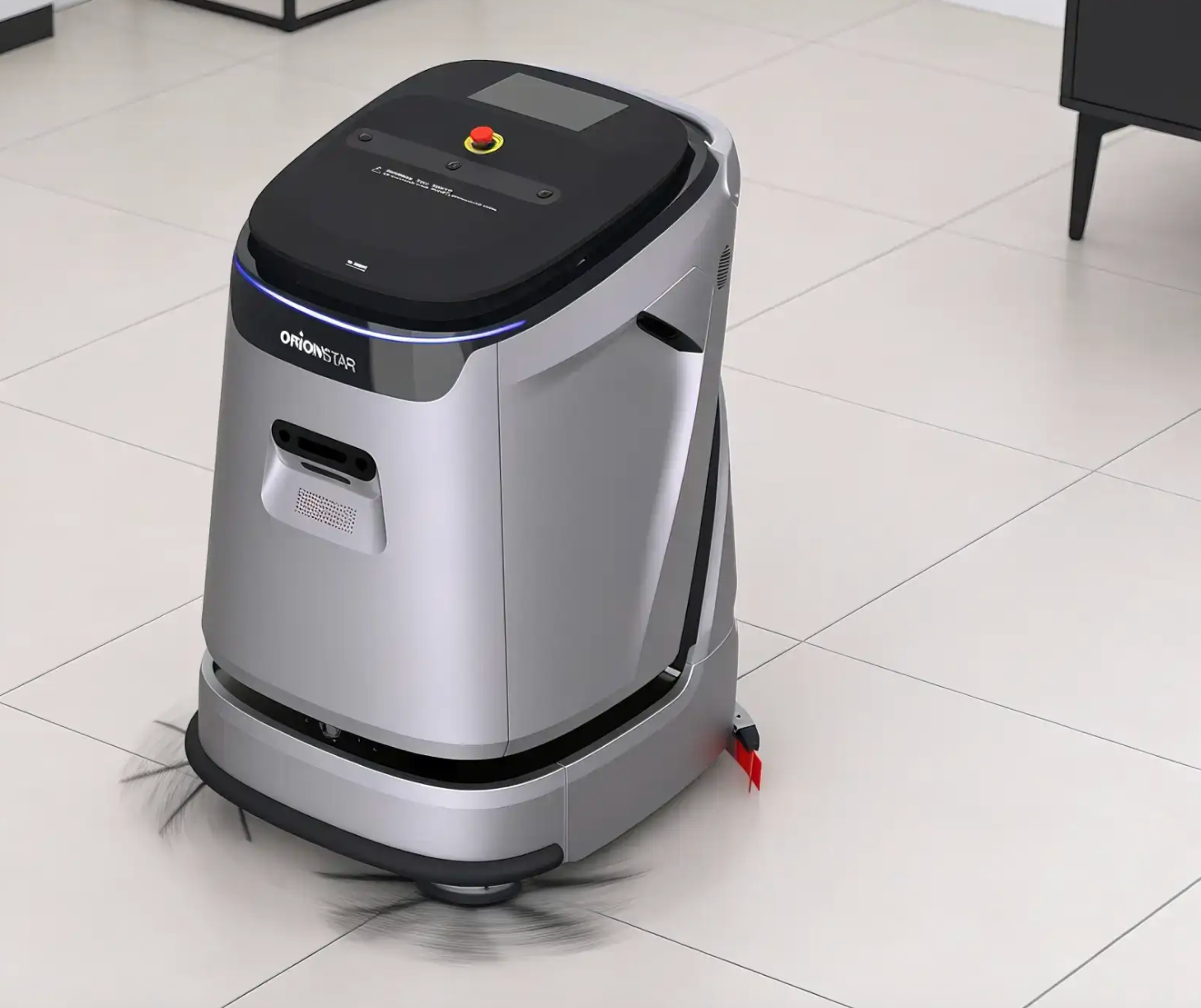
For our cleaning robots in occupied areas, start with a released route, clear stop conditions and staff ownership. OrionStar CleaniBot C5’s body envelope helps survey shared-space pinch points; neither physical size nor cleaning modes proves pedestrian recognition or collision prevention.
High-traffic cleaning is an operations-planning problem before it is a robot-selection problem. A facility can have wide corridors and still be difficult to clean during opening hours if queues form unpredictably, carts are staged in travel lanes, doors create pinch points, or temporary displays change the usable route. Build the plan around what people and facility equipment actually do in each space, rather than around a presumed ability to move through any occupied area.
Changing public-space conditions require human judgment and a defined stop process. A spill, crowd, delivery or moved cart can change a route after it begins. Assign observation and pause decisions to staff; do not assume a robot can reliably recognize every pedestrian or vehicle or prevent every collision.
Instead, define where the robot is intended to work, when that work is appropriate, who observes the area, and what happens when normal conditions no longer apply. This approach gives managers a usable answer to the question behind “How should we choose a robot for high traffic?”: a suitable candidate is one that can be assigned to a controlled operating role, not the one described with the broadest safety language.
Avoid dividing the site only by department or square footage. Divide it by operating condition. An airport concourse before a departure bank is different from the same concourse after the bank; a mall corridor beside a food court behaves differently at lunch than in the first hour after opening. The same physical surface can require different cleaning rules at different times.
Create a simple zone map with routes that are suitable for routine work, routes that need active observation, and routes that should be excluded when occupied. Include crossings, entrances, elevator lobbies, checkout lines, security points, loading thresholds, narrow turns, wet-weather entry areas, service doors, and places where a queue can suddenly form. Mark temporary conditions too, such as seasonal displays, construction barriers, promotions, or event furniture.
| Zone condition | Planning question | Operating approach | Trigger to stop or change the plan |
|---|---|---|---|
| Low, predictable traffic | Can people and movable items be kept outside the planned route during the task? | Use a defined route and a scheduled cleaning window; verify access before starting. | Unexpected obstruction, spill, or change to the route. |
| Occupied but managed corridor | Who is responsible for watching traffic and pausing work when needed? | Use shorter route segments, active staff oversight, and a clear pause location. | Queue growth, congested crossing, or staff unable to oversee the area. |
| Peak pedestrian flow | Can cleaning move to an adjacent zone or a quieter time? | Defer the route, use a manual method, or clean only an isolated area under local control. | Any condition that prevents clear separation between traffic and the work area. |
| Mixed pedestrian and equipment traffic | Are delivery movements, carts, or facility vehicles expected? | Coordinate with the responsible team and avoid using the route until the movement window ends. | Unplanned vehicle or equipment movement, blocked sightlines, or altered access. |
The most practical way to reduce complexity is to avoid asking a robot and a dense flow of people to share the same route whenever alternatives exist. Schedule cleaning in short windows around known peaks: before opening, after a rush, during a tenant transition, after a flight wave, or when a section can be temporarily released for work. A short, repeatable route in a quiet interval is usually easier to supervise than one long route through changing traffic.
Zone separation does not necessarily mean closing a whole floor. It can mean selecting one side of a corridor, cleaning a lobby perimeter before its center, assigning entrances one at a time, or placing a route behind a temporary work boundary approved by the facility team. The point is to make the work area legible to the people operating around it and to preserve an obvious path for normal movement.
For malls, plan around opening, lunch, weekend promotions, cleaning of food-adjacent areas, and tenant deliveries. For airports, plan around passenger banks, gate changes, security activity, baggage movements, and cleaning windows released by terminal operations. For other commercial sites, use the same principle: let the current operating state decide whether a route runs, pauses, moves, or is reassigned.
A usable plan answers who may start work, who can pause it, and who decides what happens next. These responsibilities should be clear even when the same person handles several roles. If a route becomes occupied, the responsible person should not have to improvise whether to continue, wait, relocate, or switch to a manual task.
Write stop conditions in ordinary operational language. Examples include an unexpected crowd, an active queue crossing the route, a spill requiring local response, a blocked aisle, a delivery in progress, a wet-weather entry surge, a damaged floor condition, or a route that no longer matches the approved layout. Stopping is not a failure of the plan; it is the planned response to a changed condition.
Escalation should also be specific. The route observer may pause work, but a facilities lead may decide whether to reopen the route after a layout change. A cleaning supervisor may redirect the task, while a tenant or terminal contact may control access to a shared area. Record the contact path and the fallback task so staff are not left waiting without direction.
| Role | Before work | During work | When an exception occurs |
|---|---|---|---|
| Cleaning supervisor | Confirms the planned zone, task, route, and available staff. | Checks that work remains within the approved operating window. | Reassigns work, selects a fallback task, or escalates to the facility contact. |
| Route observer or assigned attendant | Reviews current traffic and access conditions. | Watches the operating area and acts on defined pause conditions. | Stops or pauses work and reports the condition using the agreed contact path. |
| Facility or operations contact | Identifies known events, access restrictions, and layout changes. | Coordinates shared-space activity when needed. | Decides whether the area is released, restricted, or requires a revised plan. |
| Maintenance contact | Confirms the robot is ready for the assigned task. | Handles routine operational support within the local process. | Receives equipment-related issues and keeps them separate from traffic decisions. |
Before making a route routine, trial it under representative occupied conditions. A quiet after-hours demonstration does not answer how the route works when a reception line forms, doors open repeatedly, staff push carts through an intersection, or a temporary display narrows the path. The purpose of the trial is not to prove a guarantee; it is to identify where the operating plan needs boundaries, observation, shorter route segments, or a different schedule.
During the trial, have the responsible team watch the route from the perspective of pedestrians, nearby staff, and facility operations. Note where people naturally cut across the route, where sightlines are poor, where floor conditions change, and where the task interrupts normal flow. Then decide whether the route should remain, be shortened, be moved to a different time, or be reserved for unoccupied periods.
Maintain an exception plan for each route. It should state the immediate action, the temporary alternative, the notification contact, and the condition for restarting. For example, if an entry zone becomes crowded during rain, pause that route and move the cleaning team to a preselected interior zone until the entrance is released and the local team confirms the route can resume.
Product selection should follow the route plan, not replace it. Begin with the required cleaning tasks, the size and layout of the intended area, the available support process, and the times when routes can be released. Then narrow the shortlist with an on-site review of floors, access, turning areas, storage, charging arrangements, water and wastewater handling, and the people who will operate or supervise the work.
CleaniBot C5’s body is 820 × 680 × 1130mm. Use that envelope in the occupied-route walk to identify pinch points, waiting locations and withdrawal paths, then let the site define additional clearance and stop rules for actual traffic. That gives C5 a defined role on broad released routes where normal circulation and withdrawal can be maintained, rather than a blanket role in every busy corridor. If the occupied condition leaves no practical way to pause or withdraw, change the window or retain manual work.
Place a configured C5 service-return loop outside the released public cleaning segment where practical, and test return access at planned service times. Automatic refill/discharge/charging support does not override the same pause and access controls used on the cleaning route. A workable service route strengthens C5’s candidacy for repeat work, but not if its return journey conflicts with a crowd or delivery crossing. A released cleaning zone and an available service path must both exist for the planned assignment.
Consider OrionStar CleaniBot S55 Pro when a compact commercial cleaning robot is being considered for a defined route and its six supported cleaning modes are relevant to the planned task. Six modes do not establish compatibility with every floor, finish, contamination type, or operating condition. Verify the actual surfaces, route geometry, cleaning objective, local procedures, and occupied-hour limits before selecting a role for it.
| Preliminary candidate | Relevant published positioning or capability | Concrete site check before assignment |
|---|---|---|
| CleaniBot C5 | Positioned as a large-capacity scrubber for large commercial settings; supports scrubbing, vacuuming, sweeping, dust mopping, and wastewater recovery. | Confirm the actual floor tasks, broad-area route, traffic separation plan, storage and handling process, and whether the route should run only in released windows. |
| CleaniBot C5 with a suitable configured workstation | Supports automatic charging, clean-water refill, wastewater discharge, and wastewater-tank self-cleaning with that workstation configuration. | Confirm the offered configuration, available utilities, local water and wastewater process, access, maintenance responsibilities, and what staff will do when the area or station is unavailable. |
| CleaniBot S55 Pro | Positioned as a compact commercial cleaning robot and supports six cleaning modes. | Confirm the specific surfaces and cleaning task, route width and turns, occupied-route boundaries, and whether the mode selected is appropriate for the local operating procedure. |
A productive product conversation begins with operating facts rather than a request for a blanket safety promise. Prepare a current floor plan, photos or notes of route changes, expected traffic by time window, floor types, cleaning objectives, storage location, utility availability where relevant, and the names of the people responsible for cleaning, facilities, and shared-space operations.
Ask which product role fits the defined cleaning task; what setup is being considered; what daily operator actions remain; whether a workstation configuration is relevant; how the proposed route should be trialed while occupied; what conditions should trigger a pause; and how exceptions will be handed back to the responsible facility team. These questions keep selection connected to the actual operating environment rather than unsupported assumptions about sensing or collision avoidance.
The suitable preliminary choice depends on the mall’s cleaning tasks, floor types, route layout, tenant activity, delivery periods, and ability to separate cleaning from customer traffic. Start by assigning candidate robots to defined zones and times, then confirm the actual surfaces, access, supervision, and exception process. A large-commercial candidate such as CleaniBot C5 may be relevant where its supported task range matches the plan, but site fit still needs to be checked.
High traffic alone is not a product specification. Look for a candidate that can be given a controlled operating role: a defined route, a suitable time window, a named observer or supervisor, clear stop conditions, and a fallback task. Do not rely on a general claim that a robot will safely manage every pedestrian, vehicle, or changing obstruction.
It may be possible to plan limited work during opening hours when the facility can release a defined area, provide observation, and apply clear pause rules. The operating plan should account for changing queues, entrances, deliveries, events, spills, and temporary layout changes. Trial the proposed route under representative occupancy before making it routine.
Plan by passenger and operations patterns rather than by terminal size alone. Separate concourses, gate approaches, entry zones, security-adjacent areas, and service routes by when they can be released. Coordinate with the responsible terminal or facilities contacts, define stop conditions for crowding or operational changes, and retain a fallback route or manual task.
No. With a suitable configured workstation, CleaniBot C5 supports automatic charging, clean-water refill, wastewater discharge, and wastewater-tank self-cleaning. The facility still needs local procedures for inspection, cleaning quality, supplies, route changes, exceptions, and maintenance responsibilities.
