

REQUEST DEMO
Robot CATALOG will be sent to your mailbox immediately after submission.
SUBMIT
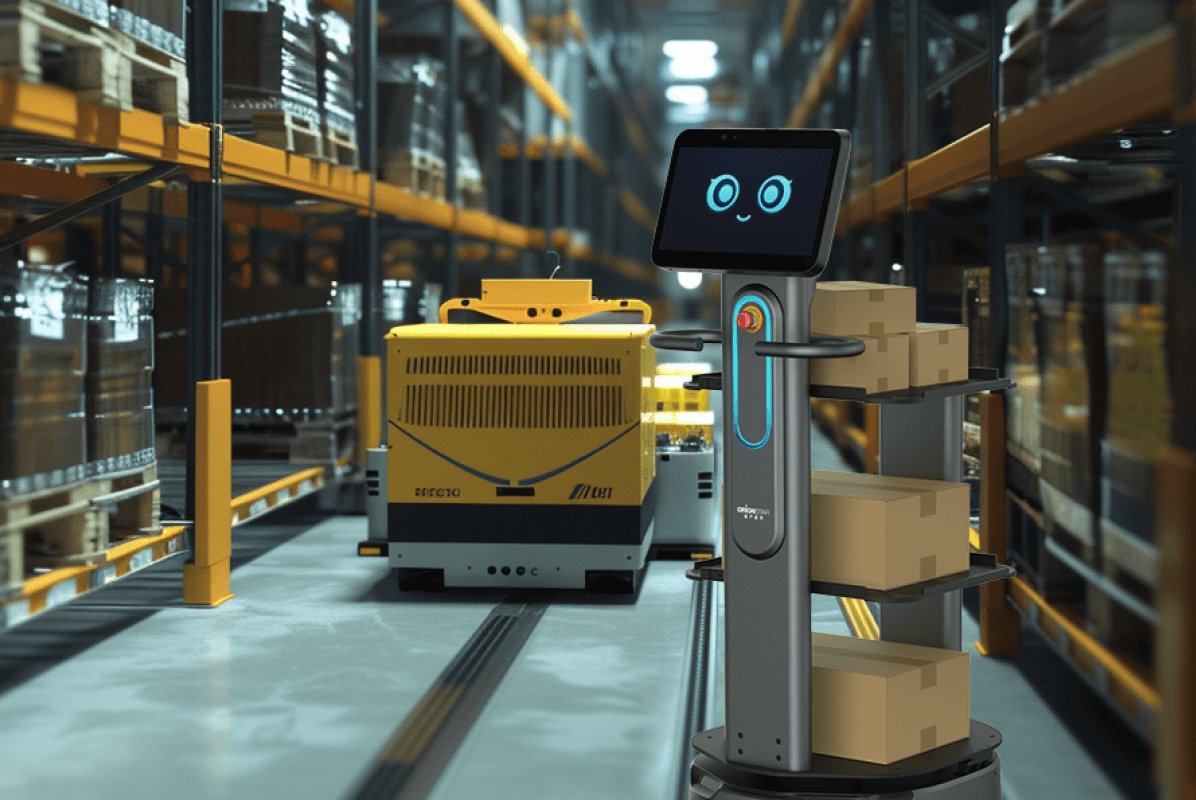
Light manufacturers operating packing stations face mounting pressure from persistent frontline labor shortages, rising operational costs, and evolving regional compliance rules for packaging traceability and waste reduction, all of which are amplified by the highly manual, labor-dependent material flow that defines most conventional packing station workflows. As these pressures become more structural than temporary, material handling robots have emerged as a practical, scalable solution to stabilize operations without requiring costly full overhauls of existing facility layouts or production line infrastructure.
The OrionStar CarryBot D150 implements these core material handling capabilities in a purpose-built autonomous mobile robot designed for light manufacturing environments, with marker-free VSLAM 2.0 navigation that removes the need for facility retrofits common with older automated transport systems. According to manufacturer data, the unit supports up to 150 kg of net payload, can operate for up to 12 hours on a single full charge when carrying a 100 kg load on standard industrial flooring, and delivers positioning accuracy up to 1 cm even in high-traffic packing station zones. The platform’s multi-robot coordination functionality lets multiple D150 units share mapped navigation data and avoid conflicts automatically, matching the category’s core fleet operation requirements for busy multi-line packing facilities.
These high-throughput transition points often require a dedicated staff member to continuously move sealed cartons off the end of production conveyors to avoid jams that stall upstream packaging lines. Manual staffing of these positions is highly vulnerable to unplanned absences that can create cascading production delays across multiple lines. Material handling robots can be dispatched automatically to collect full cartons from conveyor exit points on a set schedule, eliminating the need for a dedicated on-site worker to monitor this transition zone at all times.
Case-packing cells are compact, high-activity workspaces where staff regularly move stacks of empty packaging materials and full sealed cases between adjacent workstations, creating frequent foot traffic that increases trip and collision risk. Most small light manufacturing plants cannot reconfigure these cells to add permanent conveyor systems due to frequent batch and SKU changeover requirements. Material handling robots with 65 cm minimum passage clearance can navigate the narrow gaps between packing workstations to deliver empty packaging and remove full cases without requiring any permanent modifications to the cell layout.
Palletizing zones require consistent movement of heavy stacked pallets from the end of robotic or manual palletizing arms to temporary holding points before transport to the warehouse, a task that historically required forklift access or manual pallet jack operation that creates safety risks in high-traffic packing areas. Labor shortages often leave palletizing zones understaffed, leading to backed up pallets that halt upstream packing operations. Material handling robots with high payload capacities can move fully loaded pallets directly from the palletizing station to staging points, removing the need for frequent forklift trips through populated packing station floors.
Finished-goods staging areas are often dynamic, reconfigurable zones where pallets are sorted by shipment destination, order priority, and customer requirements before loading onto delivery vehicles. These zones rarely have fixed physical markers or permanent routing paths, making traditional fixed automation systems unviable for material transport between packing lines and staging bays. VSLAM-powered material handling robots can adjust their navigation maps in minutes to accommodate rearranged staging layouts, ensuring continuous transport even as order volumes and staging configurations shift on a daily basis.
Material handling robots deployed in light manufacturing packing stations are designed to integrate seamlessly with existing plant software stacks, including warehouse management systems (WMS), enterprise resource planning (ERP) platforms, and manufacturing execution systems (MES) to create a unified end-to-end workflow. Connected deployments can automatically trigger robot dispatch the moment a finished pallet is marked as complete on the upstream MES, eliminating manual handoffs between packing line staff and logistics teams, while published IoT telemetry for robot status, battery level, and task completion can be fed directly to existing plant dashboards and CMMS tools to support predictive maintenance and reduce unplanned downtime. Fleet management software that runs on top of existing plant networks coordinates multi-unit traffic, prioritizes urgent customer orders, and aligns transport schedules with production line shift patterns without requiring custom overhauls of existing facility automation infrastructure.
Taken together, these measurable improvements align directly with core ESG priorities for global light manufacturing operations, creating shared value for both operational teams and broader organizational sustainability targets.
Material handling robots are steadily reshaping how light manufacturers manage end-to-end material flow across their packing station operations, reducing reliance on scarce manual labor, improving throughput consistency, and simplifying compliance with increasingly strict regional packaging and traceability rules. The OrionStar CarryBot series offers a range of model configurations with varying payload capacities and top module designs to match different packing station size, volume, and transport requirements, for teams evaluating automation options aligned with their unique operational workflows.