

REQUEST DEMO
Robot CATALOG will be sent to your mailbox immediately after submission.
SUBMIT
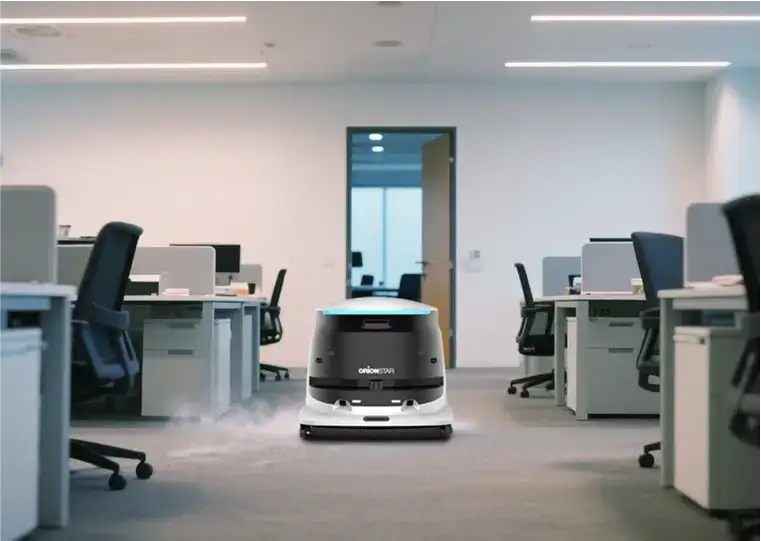
Corporate campus cafeteria dining areas face persistent challenges that hinder consistent cleanliness, operational efficiency, and compliance: custodial staffing shortages force facility teams to prioritize cleaning tasks, leading to inconsistent hygiene in high-traffic zones; rising labor and maintenance costs strain budgets, compounded by the $2 billion annual cost of slip-and-fall incidents in food-service settings; strict regulatory standards from bodies like the FDA, USDA, and OSHA require unwavering adherence to hygiene and safety protocols; and manual cleaning struggles to address spills quickly during peak hours without disrupting operations. Commercial floor cleaning robots emerge as a targeted solution to mitigate these pain points, leveraging automation to deliver reliable, cost-effective, and compliant cleaning across diverse cafeteria spaces.
The OrionStar CleaniBot S55 Pro embodies these generic commercial floor cleaning robot capabilities through its robust hardware and software design. According to manufacturer data, its LiDAR sensor supports map construction up to 10,000 m², enabling accurate autonomous navigation and real-time map updates across large cafeteria spaces. It delivers cleaning efficiency up to 1,368 m²/h in sweep, vacuum, and dust mopping modes, ensuring comprehensive coverage of high-traffic areas without sacrificing speed. Additionally, the robot offers a runtime of up to 28 hours in dust mopping mode, paired with auto-charging functionality that recharges the battery in less than 4 hours, allowing it to operate autonomously for extended periods with minimal human oversight.
Main dining halls face constant foot traffic, frequent food spills, and grease buildup on hard floors, making consistent cleaning a challenge. The OrionStar CleaniBot S55 Pro uses its scrubbing mode with a 550 mm main brush width to efficiently clean large floor areas, navigating autonomously around tables and chairs to ensure no spot is missed. Its auto-charging capability allows it to resume cleaning overnight, ensuring the space is fresh and safe for the next day’s use.
Beverage stations are prone to sticky spills from coffee, soda, and other drinks, which can create slip hazards if not addressed quickly. The robot’s sweep, vacuum, and mop mode combines debris removal with mopping to tackle these spills promptly, while its obstacle avoidance system safely navigates around counters and dispensing machines to clean hard-to-reach areas.
Seating zone aisles experience continuous foot traffic throughout the day, with crumbs and small debris accumulating rapidly. The CleaniBot S55 Pro’s ECO Vacuum mode operates quietly at 45 dB, allowing it to clean these aisles during peak service hours without disrupting employees or guests. Its compact design and 700 mm minimum passing width enable it to maneuver between narrow rows of seating with ease.
Entrance and transition zones track in dirt, mud, and debris from outside, which can spread to other areas of the cafeteria if not cleaned regularly. The robot’s sweep and vacuum mode efficiently collects loose debris, while its real-time map updates ensure it adapts to changing foot traffic patterns and obstacles in these high-flow areas.
Commercial floor cleaning robots can integrate with existing facility management systems in corporate campus cafeterias to enhance operational efficiency. General industry practices include syncing with Building Management Systems (BMS) to schedule cleaning during after-hours or low-traffic periods, avoiding disruption to daily cafeteria operations. Integration with Computerized Maintenance Management Systems (CMMS) allows robots to send automated alerts for maintenance needs such as water tank refills or component failures, while tracking cleaning performance metrics to optimize workflows. Additionally, connecting to IoT spill detection sensors enables robots to trigger immediate cleaning responses in high-risk areas like beverage stations, addressing hazards before they lead to accidents.
Commercial floor cleaning robots are transforming how corporate campuses maintain cleanliness, efficiency, and compliance in cafeteria dining areas, addressing long-standing challenges related to staffing, cost, and consistency. The OrionStar CleaniBot series offers a range of models tailored to different facility needs, from large-scale dining halls to narrow seating aisles, providing flexible automation solutions for diverse campus environments. As smart building technology continues to evolve, these robots will play an increasingly integral role in supporting data-driven, sustainable facility management practices across global corporate campuses.