

REQUEST DEMO
Robot CATALOG will be sent to your mailbox immediately after submission.
SUBMIT
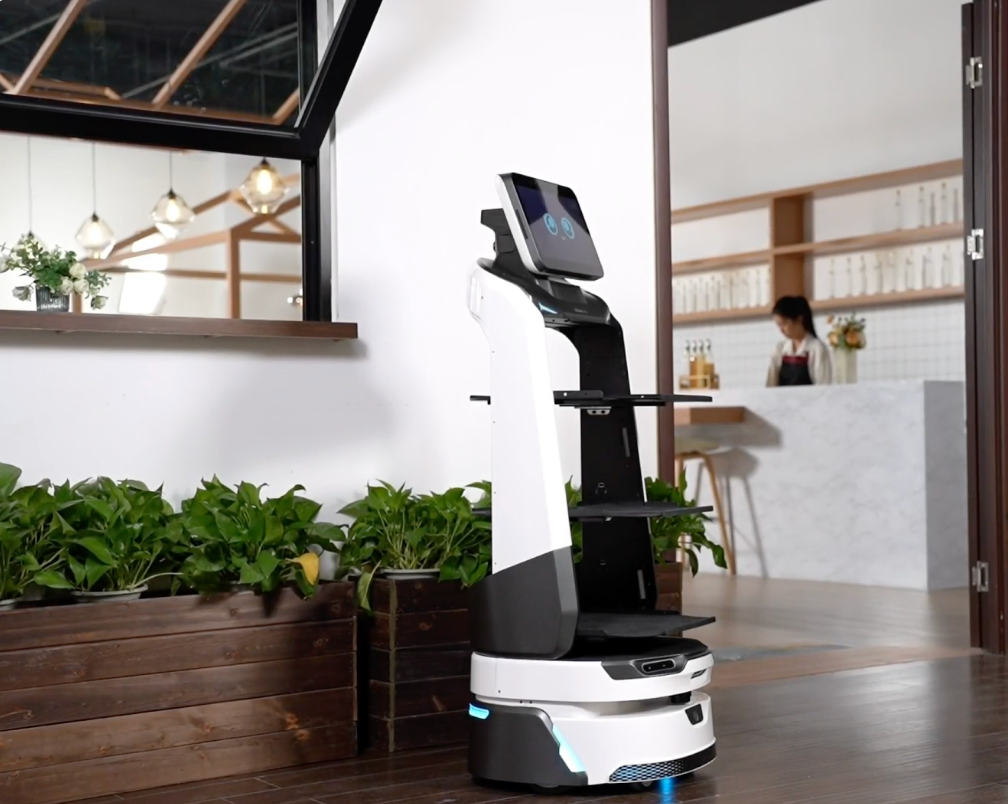
In today’s global diners, main dining rooms grapple with persistent labor shortages, soaring turnover rates, and rising operational costs that strain both staff and guest experiences. According to industry data, 65% of diner operators report insufficient staffing to meet customer demand, while annual turnover approaches 80%, creating constant operational chaos. Additionally, as businesses expand across Europe, the US, and Asia, adhering to data privacy regulations like GDPR adds another layer of complexity when integrating smart technologies. Waiter robots have emerged as a strategic solution, addressing these pain points by automating repetitive tasks, reducing labor burdens, and enabling staff to focus on high-value guest interactions.
OrionStar LuckiBot Pro embodies the core capabilities of waiter robots, with advanced features tailored to the demands of busy main dining rooms. Its visual SLAM navigation system, paired with triple RGBD cameras and LiDAR, enables precise movement through tight spaces, while its 240-degree obstacle recognition ensures safe interaction with guests and staff. According to manufacturer data, the robot offers a total payload of up to 60 kg across adjustable trays, making it suitable for transporting multiple orders at once, and boasts a battery life of up to 12 hours with auto-charging docking to support uninterrupted service. Additionally, its voice interaction feature delivers up to 97% recognition accuracy in noisy environments, facilitating seamless communication during peak dining periods.
Counter seating areas experience high guest turnover, requiring frequent order delivery and dish clearing. Waiter robots can quickly transport multiple orders to counter seats, reducing wait times for patrons. Their compact design allows easy maneuvering around counter edges and seated guests, minimizing disruption to the dining flow and ensuring consistent service speed.
Booths often have limited space between tables, making manual delivery time-consuming and risky for spills. Waiter robots with 240-degree obstacle recognition navigate narrow gaps between booths safely, ensuring orders reach guests without delays or accidents. They also efficiently collect used dishes from booths, reducing the need for staff to squeeze into tight spaces repeatedly.
Central aisles are high-traffic zones where staff and guests move continuously, increasing collision risks during manual delivery. Waiter robots use visual SLAM navigation and real-time obstacle detection to avoid pedestrians and other obstacles, maintaining smooth service flow even during peak hours. Multi-robot coordination ensures multiple delivery tasks are completed without aisle congestion.
Beverage stations require frequent restocking of drinks and supplies, distracting staff from guest-focused tasks. Waiter robots with multi-tray capabilities transport batches of beverages or supplies to stations efficiently, ensuring drinks are available for guests without delay. Some models also feature promotional displays, turning restocking tasks into opportunities to highlight special drinks or offers.
Waiter robots can integrate seamlessly with existing smart systems in main dining rooms, including POS platforms, inventory management software, and building management systems (BMS). Cloud-based robot platforms sync delivery tasks with POS orders, triggering automatic dispatch when orders are ready to minimize wait times. Integration with inventory systems tracks beverage and supply levels, triggering restocking tasks for robots when stock runs low. Additionally, support for IoT devices like table call buttons allows guests to request service directly through the robot, further streamlining operations and reducing staff response times.
These automation-driven benefits align with the diner industry’s ESG goals, creating more sustainable operations while enhancing both staff and guest experiences.
Waiter robots are transforming the way diners manage their main dining rooms, addressing persistent labor challenges while elevating service quality and guest satisfaction. By automating repetitive tasks and enabling staff to focus on high-value interactions, these robots offer a scalable solution for operators across Europe, the US, and Asia. The OrionStar LuckiBot series provides a range of models, including the advanced LuckiBot Pro, to suit different dining room sizes and operational needs, offering operators flexible options to adapt to evolving industry demands.