

REQUEST DEMO
Robot CATALOG will be sent to your mailbox immediately after submission.
SUBMIT
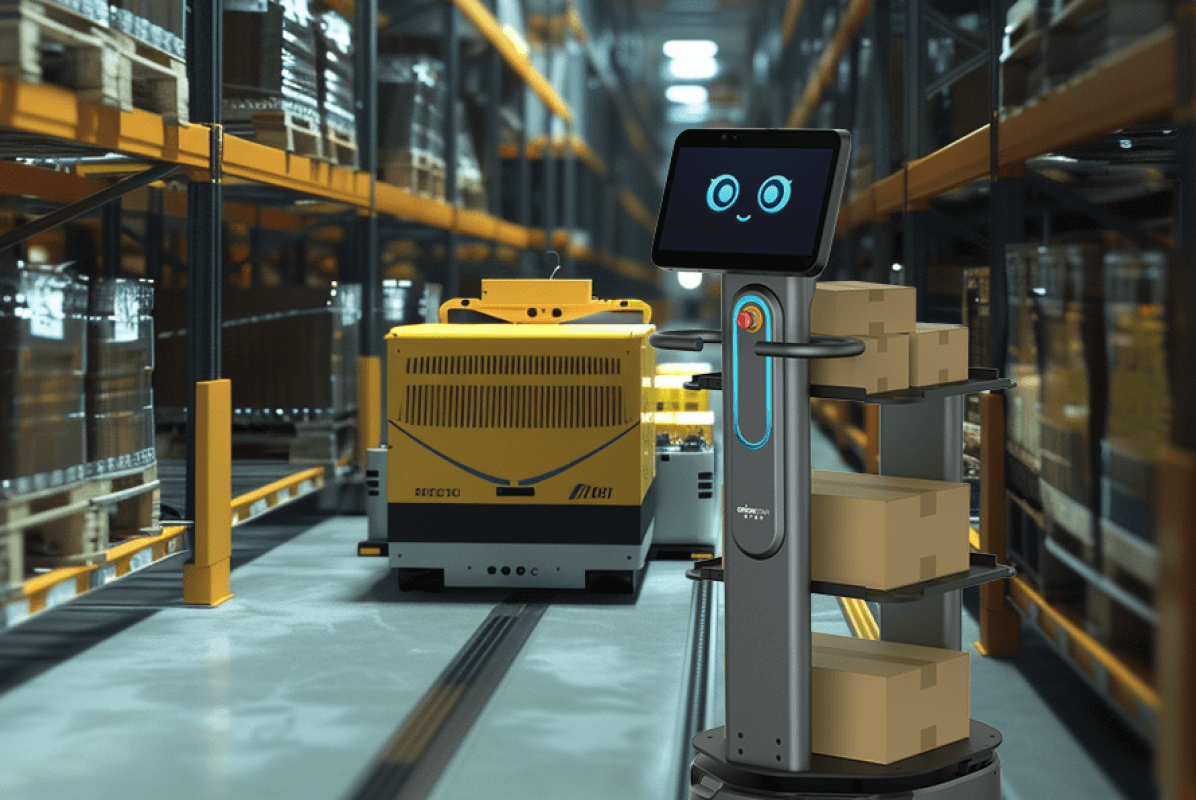
Industrial facilities worldwide face persistent bottlenecks in buffer zone material handling, from growing labor shortages that strain production continuity to rising operational costs associated with manual pallet and work-in-process (WIP) transfers, alongside strict compliance requirements like GDPR for data-driven operations. Industrial Autonomous Mobile Robots (AMRs) have emerged as a scalable, efficient solution to address these interconnected challenges, redefining how materials move across critical staging and transfer areas.
The OrionStar CarryBot D150 embodies the core capabilities of industrial AMRs, leveraging VSLAM+ navigation to navigate complex buffer zone layouts without pre-installed infrastructure, while its multi-layer safety protection system includes 360-degree obstacle detection to avoid workers and equipment. According to manufacturer data, it supports a payload of up to 150kg, making it suitable for transferring pallets and heavy WIP materials, and features auto-charging functionality that allows it to resume operations within minutes of reaching low battery levels.
WIP staging areas often face bottlenecks when transferring partially assembled components between production lines, with manual handling leading to delays and misplaced items. Industrial AMRs like the CarryBot D150 autonomously pick up WIP containers from designated staging points and deliver them to the next production line, adhering to pre-defined timelines to maintain flow. This reduces the risk of production hold-ups and ensures components are available when needed, supporting consistent output.
Inter-line transfer zones require frequent, cross-line material movement that can disrupt workflow if managed manually, especially during peak production hours. AMRs navigate these high-traffic zones using dynamic routing, avoiding congestion and adjusting paths in real-time as production schedules change. By automating these transfers, facilities can cut cross-line delivery times by up to 20% while reducing worker exposure to busy industrial traffic.
Finished goods buffer lanes need organized, efficient storage and retrieval to meet shipping deadlines, with manual pallet handling often leading to mislabeled or misplaced inventory. Industrial AMRs transport finished goods pallets from production lines to designated buffer lanes, scanning barcodes to ensure accurate tracking and placement. This streamlines the transition from production to shipping, reducing order fulfillment lead times by an average of 15%.
Pallet staging bays face challenges with space optimization and quick turnaround for dock-to-line transfers, as manual pallet movement can lead to cluttered areas and delayed loading. AMRs autonomously move empty and loaded pallets between staging bays and docks, using precise navigation to maximize space utilization and minimize wait times for truck loading. This improves dock efficiency and reduces the risk of pallet damage during handling.
Industrial AMRs integrate seamlessly with existing smart factory systems including Manufacturing Execution Systems (MES), Warehouse Management Systems (WMS), and Enterprise Resource Planning (ERP) platforms. Through standardized APIs, AMRs receive real-time production schedules and inventory data from these systems to adjust task priorities and routing, while feeding back material flow metrics to enable data-driven decision-making. This integration creates a unified intralogistics ecosystem, eliminating silos between production and warehouse operations and enhancing overall facility efficiency across global markets.
Overall, the adoption of industrial AMRs in buffer zones aligns with industrial facilities’ ESG objectives, creating more efficient, sustainable, and worker-centric operations across Europe, the US, and Asia.
Industrial AMRs are fundamentally transforming how industrial facilities manage material flow within buffer zones, addressing longstanding challenges related to labor, cost, and efficiency. The OrionStar CarryBot series offers a range of models tailored to different payload capacities and operational needs, providing flexible solutions for diverse buffer zone scenarios. As facilities continue to embrace smart manufacturing, these robots will play an increasingly critical role in optimizing intralogistics and supporting seamless production operations worldwide.