

REQUEST DEMO
Robot CATALOG will be sent to your mailbox immediately after submission.
SUBMIT
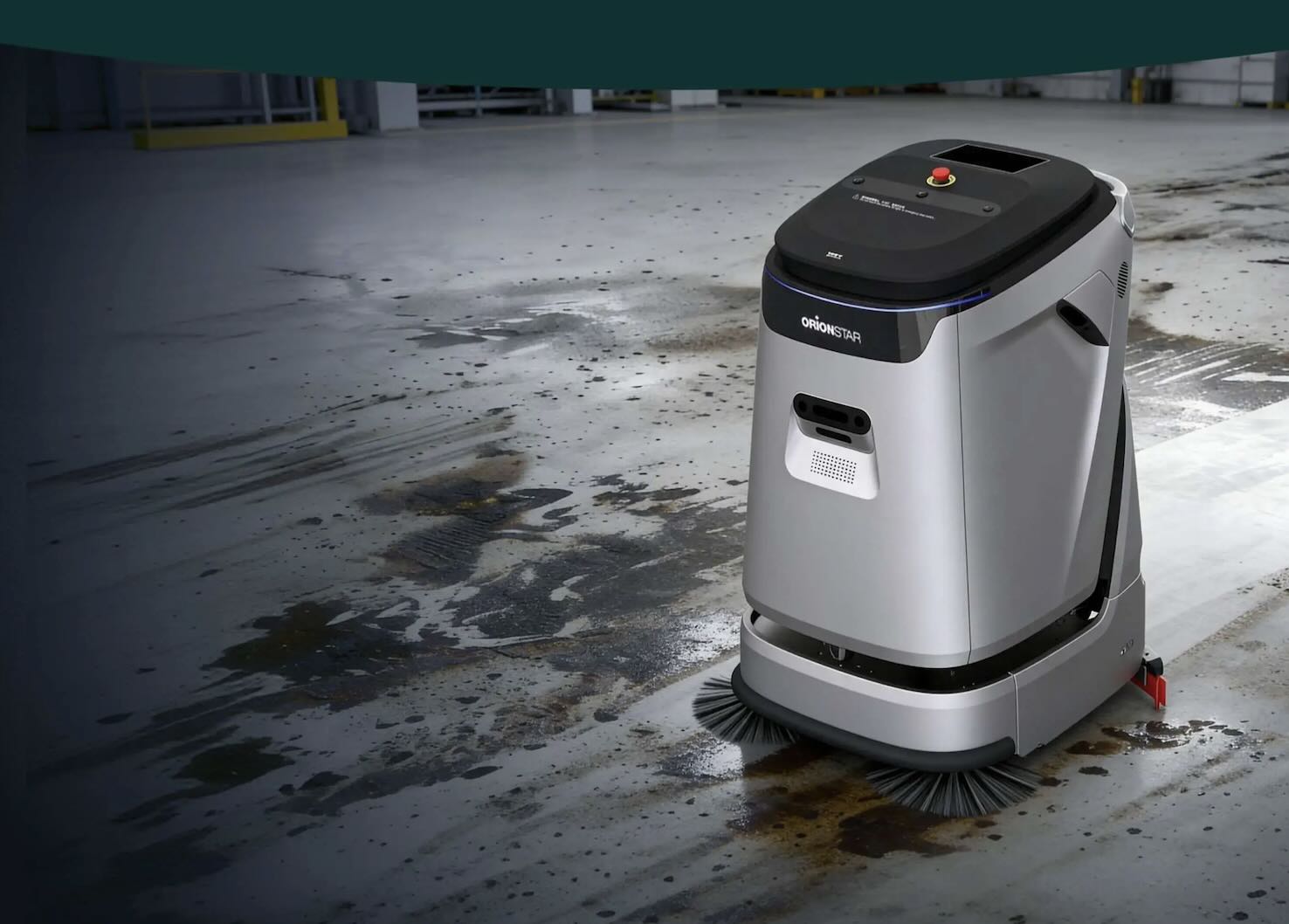
Big-box retailers rely on their loading docks as critical hubs for receiving and distributing inventory, but these high-traffic zones face persistent cleaning challenges: manual cleaning is labor-intensive, costly, and often inconsistent, with spills of oil, debris, and packaging materials posing safety hazards and compliance risks. Additionally, tight labor markets make it difficult to maintain consistent cleaning schedules, while evolving privacy regulations like the EU’s GDPR, California’s CCPA, and other regional data protection laws require careful handling of any data collected during cleaning operations. Commercial cleaning robots have emerged as a scalable, efficient solution to address these pain points, combining advanced navigation and automation to deliver reliable, compliant cleaning without overburdening staff.
The OrionStar CleaniBot S55 Pro embodies the core capabilities of commercial cleaning robots tailored for loading dock environments. Its LiDAR navigation system supports map construction of up to 10,000 m² according to manufacturer data, enabling automatic positioning and real-time map updates across truck bays and staging lanes. The robot’s autonomous path planning adapts to dynamic dock conditions around parked trucks and stacked pallets, while its auto-charging functionality returns the unit to its charging dock between shifts, with mode-specific runtimes ranging from 3.5 hours for power scrubbing to 28 hours for dust mopping under defined test conditions. These features translate to reliable, autonomous cleaning that supports the pace of busy loading dock operations.
Truck bays are prone to oil spills, tire debris, and packaging waste that accumulate quickly during frequent truck arrivals and departures. Manual cleaning here is time-consuming and often delayed due to scheduling conflicts, leading to slippery surfaces and safety risks. The OrionStar CleaniBot S55 Pro navigates around parked trucks and uses its robust cleaning mechanism to remove stubborn spills, ensuring the area remains safe and compliant between shipments.
Staging lanes experience constant foot traffic from warehouse staff and movement of pallet jacks, leading to tracked-in dirt and debris that can damage inventory and create trip hazards. These narrow spaces are difficult to clean with traditional equipment, which may struggle to maneuver around obstacles. Commercial cleaning robots use LiDAR navigation to navigate tight lanes, delivering precise cleaning without disrupting ongoing logistics operations.
Dock doors are high-traffic transition points between the warehouse and outdoor environments, where rain, snow, and mud are frequently tracked in, creating wet, slippery surfaces. Manual cleaning here requires frequent attention to prevent accidents, but staffing shortages often lead to delayed maintenance. Autonomous cleaning robots can be scheduled to clean dock doors during off-peak hours, ensuring the area remains dry and safe for staff and equipment movement.
Pallet staging zones are cluttered with stacked pallets, making it hard for manual cleaners to reach all areas, leading to accumulated dust and debris that can attract pests and damage stored inventory. Commercial cleaning robots use obstacle avoidance to navigate around pallets, reaching under and between stacks where space allows, delivering thorough cleaning of accessible areas and reducing the risk of inventory contamination and pest infestations.
Commercial cleaning robots can integrate seamlessly with existing smart systems in big-box retailer loading docks, including Building Management Systems (BMS), Computerized Maintenance Management Systems (CMMS), and IoT sensors. Where compatible systems are available, commercial cleaning robots can integrate with existing Building Management Systems (BMS) to adjust cleaning schedules based on facility conditions like foot traffic patterns or weather, such as increasing cleaning frequency at dock doors during rainy days. Integration with CMMS allows operational teams to track cleaning tasks, schedule maintenance for the robots, and align cleaning activities with broader facility maintenance plans. Where compatible IoT sensor systems are deployed in loading docks, sensors can trigger robot cleaning sessions when spills or debris are detected, helping ensure timely response to potential safety hazards with minimal human intervention.
Commercial cleaning robots are transforming how big-box retailers maintain their loading docks, addressing longstanding challenges related to labor, cost, compliance, and safety through advanced automation and smart technology. The OrionStar CleaniBot series offers a range of models tailored to different loading dock subspaces and operational needs, providing scalable solutions for retailers across Europe, the US, and Asia seeking to enhance their facility maintenance practices.