

REQUEST DEMO
Robot CATALOG will be sent to your mailbox immediately after submission.
SUBMIT
Building management in commercial buildings faces mounting pressures, from persistent labor shortages driving up maintenance costs to stringent compliance requirements for preventive maintenance and tenant satisfaction demands that grow more rigorous each year. Manual cleaning and inspection processes often fall short, leaving critical assets unchecked and reactive repairs draining budgets. Commercial cleaning robots have emerged as a data-driven, efficient solution to address these gaps, offering consistent, scalable cleaning while supporting broader facility management goals.
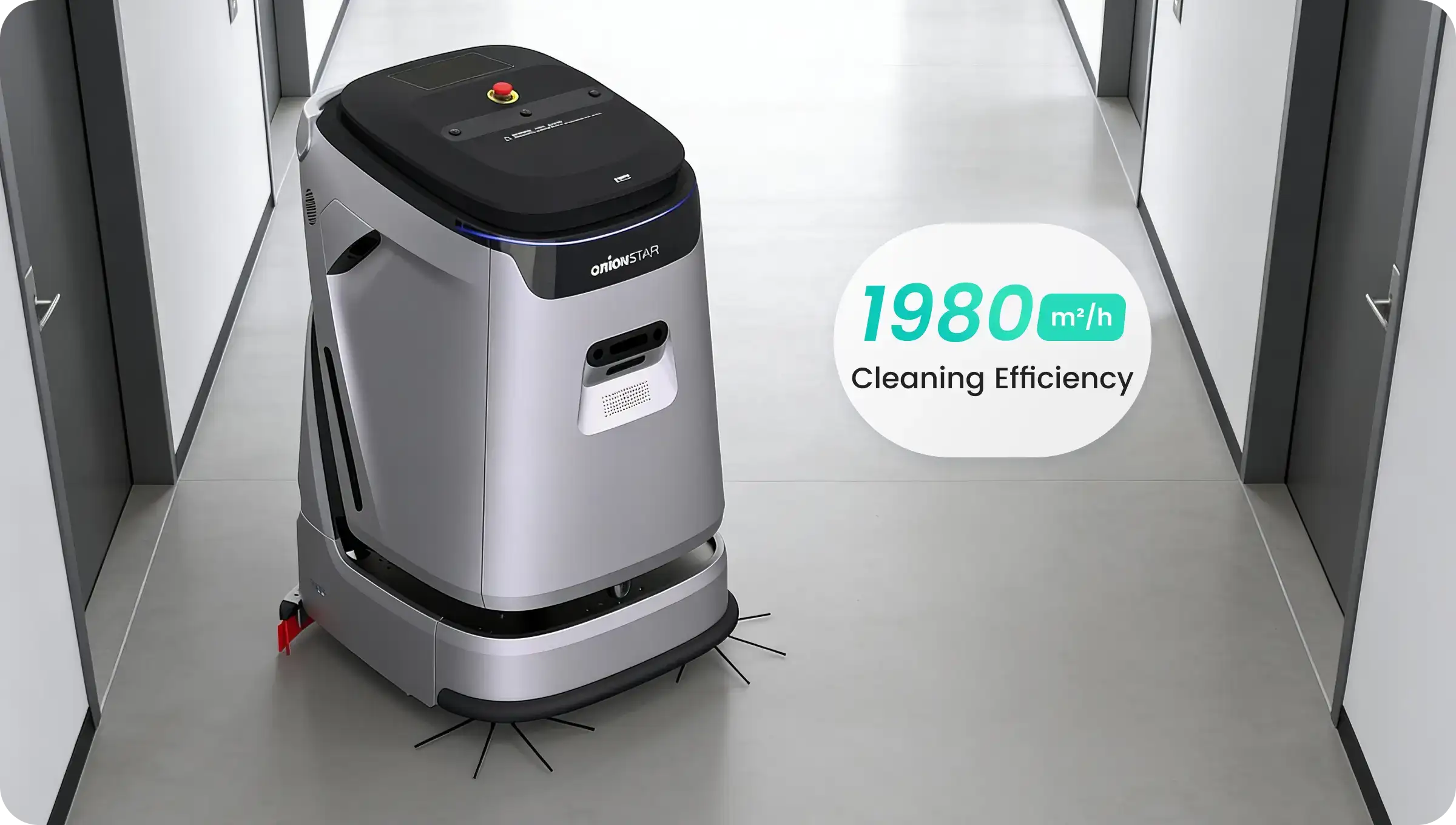
The OrionStar CleaniBot C5 embodies the core capabilities of commercial cleaning robots, with features designed to tackle the demands of large commercial buildings. Leveraging autonomous path planning, it can map areas up to 10,000 m² and optimize routes for efficient coverage, according to manufacturer data. Its auto-charging and docking system supports continuous multi-shift operation with a scrubbing runtime of up to 3 hours and fast charging in around 1.5 hours. With a maximum cleaning area capacity of up to 1,980 m² per hour, it delivers consistent, high-volume cleaning performance that aligns with the scalable needs of building management teams, while its obstacle avoidance system ensures safe movement through busy spaces.
High-traffic lobbies face constant dirt accumulation from foot traffic, requiring frequent cleaning to maintain a professional appearance. Commercial cleaning robots like the OrionStar CleaniBot C5 can operate during off-peak hours or alongside staff, using high scrubbing pressure to remove stubborn stains and debris without disrupting visitors. Their low noise level (less than 68 dB(A)) ensures they don’t disturb lobby activities, delivering consistent cleaning that meets tenant and visitor expectations.
Corridors often have narrow pathways and frequent foot traffic, making manual cleaning time-consuming and disruptive. Autonomous cleaning robots navigate these spaces using obstacle avoidance technology, ensuring safe movement around people and furniture. They can cover long stretches of corridor efficiently, reducing the time staff spend on repetitive mopping and scrubbing, and their auto-charging capability allows them to resume cleaning without manual intervention.
Parking areas are prone to oil stains, tire marks, and debris, which are challenging to clean manually and can pose safety hazards. Commercial cleaning robots with heavy-duty scrubbing capabilities, like the CleaniBot C5’s 25 kg downward scrubbing pressure, can remove tough oil and grime in one pass. Their ability to climb small obstacles up to 15 mm and manage slopes makes them suitable for multi-level parking structures, ensuring comprehensive coverage that reduces the risk of slips and falls.
Shared common spaces like break rooms or conference areas require regular cleaning to maintain hygiene and meet tenant standards. Cleaning robots can be scheduled to clean these spaces between uses, using flexible modes (scrubbing, dust-mopping) to address different types of dirt. Their data logs provide proof of cleaning, helping building managers demonstrate compliance with hygiene protocols and respond quickly to tenant requests.
Commercial cleaning robots integrate seamlessly with existing smart building systems like Building Management Systems (BMS), Computerized Maintenance Management Systems (CMMS), and IoT platforms. Anomaly detections from cleaning robots can auto-generate work orders in CMMS, complete with location data and sensor readings, ensuring maintenance crews address issues promptly without manual reporting delays. Portfolio dashboards consolidate cleaning robot status alongside HVAC, elevator, and fire panel data, providing a unified view of building health. Open APIs and standard connectivity protocols (Wi-Fi, 4G, LoRa) allow facility platforms to subscribe to cleaning events, battery state, and route completion data, enabling condition-based cleaning schedules that replace wasteful fixed cadences with data-driven, efficient maintenance.
In summary, commercial cleaning robots play a key role in advancing building management’s ESG goals by reducing resource waste, providing verifiable sustainability data, and optimizing energy usage across commercial buildings.
Commercial cleaning robots are transforming the way building management teams maintain commercial buildings, addressing labor shortages, reducing costs, and improving compliance while supporting ESG and tenant satisfaction goals. By combining autonomous operation, real-time monitoring, and seamless system integration, these robots offer a scalable solution to the evolving challenges of facility maintenance. The OrionStar CleaniBot series provides a range of models tailored to different commercial spaces, from high-traffic lobbies to large parking areas, giving building managers flexible options to meet their specific cleaning needs.