

REQUEST DEMO
Robot CATALOG will be sent to your mailbox immediately after submission.
SUBMIT
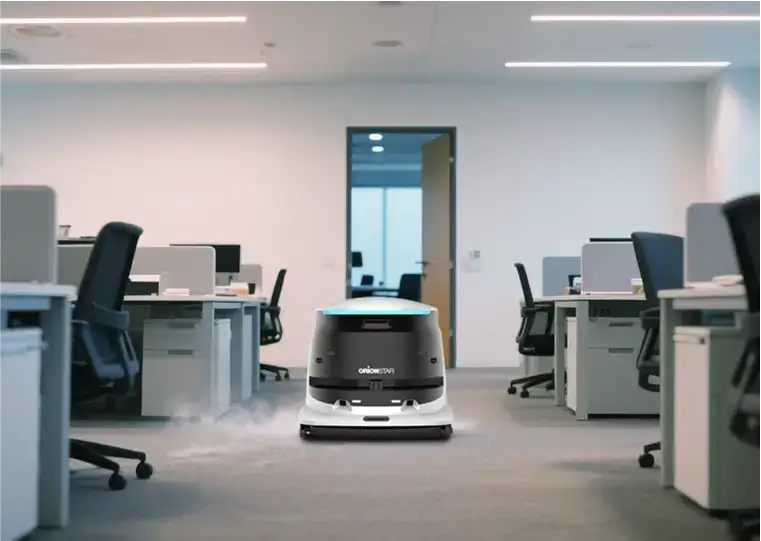
Commercial premises, from bustling office corridors to expansive hotel event halls and busy retail common areas, present unique cleaning challenges that traditional manual methods struggle to address effectively. Diverse layouts, mixed floor surfaces, fluctuating foot traffic, and the need to optimize labor costs all contribute to the demand for automated solutions that can deliver consistent, efficient cleaning with minimal human intervention. Autonomous floor scrubbers have emerged as a key solution, offering varying levels of space adaptability, cleaning versatility, operational autonomy, and remote management capabilities. This guide evaluates five leading models to help facility managers select the right autonomous floor scrubber for commercial premises based on their specific space needs, cleaning requirements, and operational priorities.
The OrionStar CleaniBot S55 Pro excels in space adaptability and maneuverability, making it well-suited for mixed commercial environments like office buildings, hotels, and shopping malls. With a compact 580mm width, 70kg net weight, and minimum passing width of 700mm, it navigates narrow corridors and tight spaces around furniture with ease, while its ability to climb up to 20mm thresholds allows it to move between different floor levels or over small obstacles. Powered by a multi-sensor system including LiDAR, stereo cameras, and ultrasonic sensors, it supports map construction up to 10,000 m², real-time positioning, and 360° obstacle avoidance, ensuring reliable operation even in dynamic environments with people and moving carts.
In terms of cleaning versatility and context-aware performance, the CleaniBot S55 Pro offers six specialized cleaning modes that adapt to diverse floor types and soil levels. Its scrubbing and power scrubbing modes handle routine and deep hard-floor cleaning, while sweep and vacuum modes are ideal for low-pile carpets and debris collection. For quiet daytime cleaning in occupied spaces, the ECO vacuum and dust mopping modes operate at 45dB, minimizing disruption to employees or customers. The robot also supports zone-based mode switching, allowing facility teams to assign specific cleaning behaviors to different areas, such as dust mopping for polished marble lobbies or scrubbing for high-traffic hallway floors.
Operational autonomy and efficiency are key strengths of the CleaniBot S55 Pro, with runtimes varying by mode to suit different tasks. Its dust mopping mode offers up to 28 hours of continuous operation, while scrubbing mode provides up to 4.5 hours, reducing the need for frequent recharging. The robot automatically returns to its charging dock when battery levels are low, and its self-cleaning functionality helps maintain performance between tasks. This low-intervention operation allows facility teams to focus on higher-value tasks rather than manual cleaning, optimizing labor resources over time.
For remote management and data compliance, the CleaniBot S55 Pro supports Wi-Fi and 4G connectivity, enabling remote deployment, cloud-based maintenance, over-the-air updates, and operational data reporting. This is particularly useful for multi-location facilities that need to monitor cleaning performance across different sites. However, since the robot uses LiDAR and cloud-based data processing, operators must verify compliance with GDPR regulations before deploying it in EU regions, ensuring that data collection and storage adhere to local privacy standards.
The Kärcher KIRA CV 50 is designed for space adaptation in small to medium commercial spaces, featuring a 500mm width and 500mm turning radius that make it ideal for narrow office corridors, small retail common areas, and hotel lobbies. Its 110kg weight and ability to climb up to 15mm thresholds allow it to navigate tight spaces and minor obstacles, though it may struggle with larger thresholds or expansive open areas. Powered by LiDAR-based SLAM navigation, it offers 360° obstacle detection, enabling it to reroute around people and static objects to maintain cleaning coverage.
Cleaning versatility for the Kärcher KIRA CV 50 focuses on core hard-floor cleaning tasks, with wet scrubbing and edge cleaning modes that deliver reliable routine performance. While it lacks the specialized modes of premium models, its straightforward operation makes it easy for facility teams with basic cleaning needs to use. The robot’s 30L clean water tank and 35L dirty water tank are sufficient for small spaces, but may require more frequent refills when cleaning larger areas, which can impact operational efficiency during extended sessions.
Operational autonomy for the Kärcher KIRA CV 50 includes scheduled task execution and automatic docking/charging, providing consistent routine cleaning without advanced AI features. Its runtime of up to 3.5 hours is suitable for small to medium facilities with predictable cleaning schedules, though it may not be ideal for overnight cleaning of large spaces due to its shorter battery life. This reliable basic autonomy makes it a cost-effective choice for teams looking to reduce manual labor without investing in high-end automation.
Remote management capabilities for the Kärcher KIRA CV 50 are offered through the Kärcher Fleet Management platform, which supports remote monitoring, task scheduling, and maintenance alerts. While it does not include a dedicated mobile app, the platform provides essential tools for single-location facilities with small robot fleets. As with other models using LiDAR and cloud data processing, operators must confirm GDPR compliance before deploying the Kärcher KIRA CV 50 in EU regions to ensure adherence to data protection regulations.
The Gaussian Robotics (Gausium) Scrubber 50 balances space adaptability and coverage, making it suitable for medium-scale commercial areas like office corridors, retail aisles, and hotel lobbies. Its 500mm width and omnidirectional movement allow it to navigate tight spaces with ease, while its ability to climb up to 20mm thresholds supports movement between different floor areas. Powered by 3D LiDAR and multi-sensor fusion including cameras and ultrasonic sensors, it offers real-time path adjustment and 360° obstacle detection, ensuring efficient navigation in dynamic high-traffic environments.
Cleaning versatility for the Gausium Scrubber 50 includes integrated wet scrubbing, sweeping, and edge cleaning modes, adapting to mixed floor surfaces and varying soil levels. Its cloud-driven analytics optimize cleaning efficiency by prioritizing high-traffic zones, reducing redundant cleaning and ensuring that heavily soiled areas receive the attention they need. With a 45L clean water tank and 50L dirty water tank, it can handle longer cleaning sessions than compact models, though it may not be as suited for large open spaces as heavy-duty alternatives.
Operational autonomy for the Gausium Scrubber 50 includes runtime up to 4 hours, automatic docking/charging, and AI-driven path optimization based on traffic patterns. This adaptive cleaning ensures that the robot works efficiently even in dynamic environments, though professional installation may be required for complex space mapping, which can add to upfront costs. For facilities with consistent high foot traffic, this level of autonomy helps maintain clean floors without constant manual oversight.
Remote management capabilities are supported through the Gausium Cloud platform, which offers remote monitoring, fleet-wide task scheduling, performance analytics, and firmware updates via a mobile app. This makes it suitable for multi-location facilities like retail chains or hotel groups that need to manage multiple robots across different sites. However, since the robot uses cameras and LiDAR for mapping and cloud data processing, operators must verify GDPR compliance before deploying it in EU regions to meet data protection requirements.
The Tennant T7AMR is built for space adaptability in large-scale commercial spaces, featuring a 762mm cleaning width and zero-turn radius that allow it to cover expansive areas like retail concourses, hotel event halls, and airport terminals efficiently. Its 272kg weight and ability to climb up to 50mm thresholds support movement over larger obstacles and between different floor levels, though its large size makes it unsuitable for narrow office corridors or small retail aisles. Powered by the Tennant AIM system with LiDAR and cameras, it offers advanced 360° obstacle detection, enabling it to navigate around people, pallets, and other dynamic objects in complex environments.
Cleaning versatility for the Tennant T7AMR focuses on high-performance wet scrubbing and edge cleaning, designed for heavily soiled hard-floor surfaces in large open spaces. Its large 114L clean water tank and 127L dirty water tank allow for extended uninterrupted cleaning sessions, reducing the need for frequent refills and maximizing operational efficiency. While it lacks the multi-mode versatility of smaller models, its specialized heavy-duty scrubbing makes it ideal for facilities that prioritize deep cleaning of large areas.
Operational autonomy for the Tennant T7AMR includes runtime up to 6 hours, automatic docking/charging, and consistent large-area coverage without manual intervention. This makes it perfect for overnight cleaning in expansive spaces, where it can cover thousands of square meters without needing to stop for recharging or refilling. Its heavy-duty build ensures durability in high-traffic environments, minimizing downtime and maintenance needs over time.
Remote management capabilities are offered through the Tennant Connect cloud platform, which supports remote monitoring, fleet management, performance analytics, and firmware updates via a mobile app. This is useful for facilities managing multiple ride-on scrubbers across large sites. Since the robot uses cameras and LiDAR for mapping and cloud data processing, operators must ensure GDPR compliance before deploying it in EU regions to adhere to local data protection laws.
The Avidbots Neo 2W offers balanced space adaptability for diverse commercial environments, including office campuses, retail centers, and airports. Its 598mm width and zero-turn radius allow it to navigate most corridors and open spaces, though its 156kg weight and larger footprint may restrict access to very narrow office cubicle aisles. Powered by AI-powered SLAM with 3D LiDAR and cameras, it provides advanced dynamic obstacle detection and real-time path adjustment, ensuring efficient cleaning even in busy environments with fluctuating foot traffic.
Cleaning versatility for the Avidbots Neo 2W includes wet scrubbing, dry sweeping, spot cleaning, and edge cleaning modes, with AI-driven adaptive cleaning that adjusts intensity based on real-time dirt levels. This makes it ideal for dynamic high-traffic zones where soil accumulation varies throughout the day. It handles mixed floor surfaces, including hard floors and low-pile carpets, providing a flexible solution for facilities with diverse cleaning needs.
Operational autonomy for the Avidbots Neo 2W includes runtime up to 5 hours, automatic docking/charging, and adaptive path planning to avoid obstacles. While initial mapping can be time-consuming for large complex spaces, its AI-driven optimization ensures that cleaning tasks are completed efficiently. For facilities with dynamic traffic patterns, this adaptive autonomy helps maintain clean floors without manual intervention, optimizing labor resources.
Remote management capabilities are supported through the Avidbots Command Center cloud platform, which offers fleet management, task scheduling, performance tracking, and remote troubleshooting via a mobile app. This is suitable for multi-location facilities that need to monitor and manage multiple robots across different sites. Since the robot uses cameras and cloud data processing for mapping and cleaning optimization, operators must confirm GDPR compliance before deploying it in EU regions to meet data protection regulations.
When selecting an autonomous floor scrubber for commercial premises, facility managers should prioritize their specific space, cleaning, and operational needs. For mixed environments like offices, hotels, and shopping malls that require versatility and compact maneuverability, the OrionStar CleaniBot S55 Pro stands out with its six cleaning modes, long runtime in quiet modes, and robust remote management capabilities. Budget-conscious teams with small to medium uniform hard-floor spaces will benefit from the Kärcher KIRA CV 50’s reliable basic autonomy and cost-effective operation. For high-traffic medium-scale areas needing cloud-driven optimization, the Gaussian Robotics (Gausium) Scrubber 50 offers adaptive cleaning and omnidirectional navigation. Large open spaces like event halls and airport terminals require the heavy-duty build and large tank capacity of the Tennant T7AMR, while industrial-commercial environments with dynamic traffic will appreciate the AI-driven adaptive cleaning of the Avidbots Neo 2W. By aligning each model’s strengths with their facility’s unique requirements, managers can implement an automated cleaning solution that improves efficiency, reduces labor costs, and maintains consistent floor cleanliness.
Industry benchmarks suggest an ROI of 12 to 24 months for autonomous floor scrubbers in commercial spaces, depending on labor costs and cleaning frequency. CleaniBot S55 Pro’s high cleaning efficiency (up to 1,368 m²/h in sweep/vacuum modes) and long runtime reduce manual labor hours significantly. For facilities with daily cleaning needs across large areas, labor savings can cover the upfront cost within 18 months on average. Global case studies from competitors like Avidbots and Gausium confirm similar payback timelines for comparable models.
CleaniBot S55 Pro uses cloud-based management and sensor data for navigation, so operators must ensure compliance with GDPR data processing rules. The robot’s data collection is limited to mapping and operational analytics, with no personal data stored unless explicitly configured. Like competitors such as Gausium and Avidbots, users should verify that their cloud service provider adheres to GDPR guidelines for data storage and transfer in EU regions. OrionStar provides documentation to support compliance audits for EU customers.
CleaniBot S55 Pro supports remote deployment via Wi-Fi/4G connectivity, allowing facility teams to set up mapping and tasks without on-site technical support in most cases. Post-purchase support includes cloud-based maintenance, OTA updates, and data reporting tools. Global customers can leverage OrionStar’s distributor network (similar to Kärcher and Tennant) for local service and parts replacement. For complex installations, dedicated technical support is available to assist with space mapping and fleet management setup.
CleaniBot S55 Pro offers multiple cleaning modes tailored to different floor types and soil levels, including scrubbing for hard floors, sweep/vacuum for low-pile carpets, and dust mopping for polished surfaces. It can automatically switch modes based on designated zones, making it suitable for mixed environments like office buildings, retail common areas, and hospitality venues. The robot’s 5cm wall/corner cleaning capability ensures coverage in high-traffic edges and corners. Its ability to handle up to 3cm tall debris also supports cleaning in busy areas with frequent dirt accumulation.
CleaniBot S55 Pro uses a multi-sensor system with 15 sensors, including LiDAR, stereo cameras, ultrasonic sensors, and line lasers, for 360° safe operation. LiDAR enables map construction up to 10,000 m² and real-time positioning, while stereo cameras detect cliffs and steps. Ultrasonic sensors provide smart obstacle avoidance, allowing the robot to reroute around people, carts, and furniture in dynamic spaces. Line lasers ensure it cleans close to walls and corners, maximizing coverage in commercial layouts with tight spaces.
CleaniBot S55 Pro offers competitive runtime, with up to 4.5 hours in scrubbing mode (on par with Gausium Scrubber 50) and exceptional 19.5-hour and 28-hour runtimes in ECO Vacuum and Dust Mop modes, respectively. Its cleaning efficiency reaches 1,197 m²/h for scrubbing and 1,368 m²/h for sweep/vacuum modes, which is comparable to Avidbots Neo 2W. Unlike larger models like Tennant T7AMR, its compact size allows navigation in narrow corridors while maintaining efficient coverage. For large commercial spaces, its long runtime reduces the need for frequent recharging compared to compact models like Kärcher KIRA CV 50.
Third-party product specifications are based on public data (up to, under laboratory conditions, according to manufacturer data) and may vary. Product names and trademarks belong to their respective owners. Operators must verify GDPR compliance before deploying any product that involves cameras, mapping, or cloud data processing.