

REQUEST DEMO
Robot CATALOG will be sent to your mailbox immediately after submission.
SUBMIT
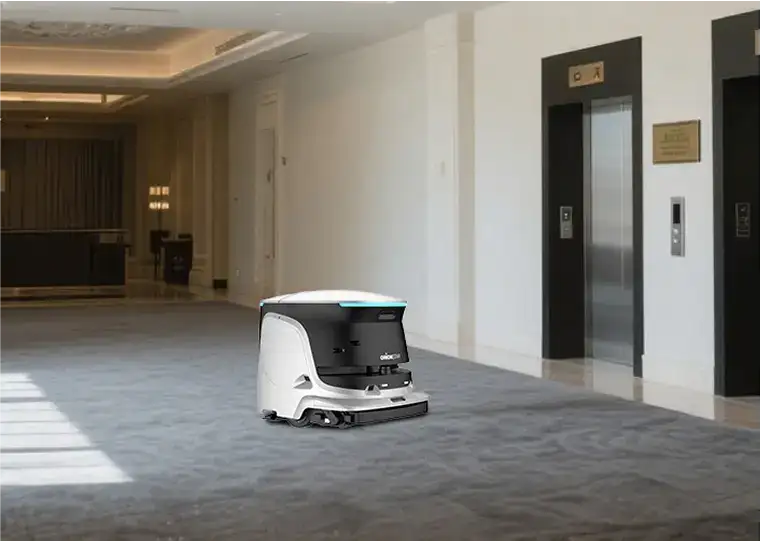
Hospitality venues face unique cleaning challenges that demand a careful balance between efficiency and guest experience. From polished stone lobbies and tiled corridors to carpeted banquet halls and sticky food-service areas, mixed floor types require specialized cleaning methods that can be deployed without disrupting daily operations. Noise levels are critical, as cleaning must often occur during guest-facing hours in quiet zones like restaurants or occupied corridors, while overnight deep cleans can accommodate higher noise outputs. Variable space layouts, from narrow hotel hallways to expansive conference centers, call for robots that can maneuver tight corners or cover large open areas efficiently. Additionally, data privacy compliance—especially with regulations like GDPR in the EU—must be prioritized for robots using camera or LiDAR-based navigation systems that may capture personal information. Selecting the right automatic floor scrubber requires evaluating these factors to align with a venue’s specific needs and operational schedule.
OrionStar CleaniBot S55 Pro is a compact, multi-mode hybrid solution ideal for mid-sized hospitality venues such as hotels, banquet areas, and exhibition halls, where flexibility across mixed floor types and quiet operation are key. Its hybrid cleaning architecture combines sweeping, scrubbing, vacuuming, mopping, dust mopping, and ECO vacuum modes, allowing operators to switch seamlessly between tasks based on floor type and soil level. For example, the dust mopping mode is designed for delicate polished surfaces like marble lobbies, while the power scrubbing mode tackles heavily soiled hard floors in banquet halls post-event. According to manufacturer data, the robot delivers cleaning efficiency up to 1,368 m²/h in sweep, vacuum, dust mop, and combined modes, and up to 1,197 m²/h in scrubbing modes, with runtime extending up to 28 hours in dust mopping mode for extended maintenance cleaning.
Noise levels are a standout feature of the CleaniBot S55 Pro, aligning perfectly with hospitality scheduling needs. It operates at 45 dB in dust mopping mode and 55 dB in scrubbing mode, making it quiet enough for daytime use in guest-facing areas like lobbies or corridors without causing disturbance. Its compact 70 kg body and 650 mm width allow it to navigate narrow hallways and fit through standard passenger elevators, making it suitable for boutique hotels and mid-scale resorts. The robot uses a multi-sensor navigation system including LiDAR, stereo cameras, and ultrasonic sensors for 360° obstacle avoidance and safe operation around guests and furniture. For EU deployments, operators must verify GDPR compliance, as the robot’s camera and mapping capabilities may capture personal data that requires adherence to data protection regulations.
Gaussian Robotics Ecobot Scrubber 75 is a heavy-duty dedicated wet scrubber designed for large hospitality venues like convention centers, resort ballrooms, and expansive hotel lobbies where high-throughput cleaning and minimal downtime are priorities. Its cleaning architecture combines simultaneous scrubbing and sweeping, making it effective for floors that mix fine dust with sticky residue, such as lobby entrances or banquet halls after events. The 270° rotational scrub deck allows it to reach tight corners along pillars and conference room perimeters, maximizing cleaning coverage in large open spaces. According to manufacturer data, it offers a theoretical cleaning efficiency up to 3,000 m²/h, with practical efficiency ranging from 700–1,400 m²/h depending on obstacles and layout, and features a 75 L clean water tank to reduce the need for frequent refills during long cleaning shifts.
The Scrubber 75’s noise profile ranges from 55–70 dBA, per manufacturer-reported data, making its lower noise levels suitable for daytime use in semi-occupied areas like conference centers during setup, while higher levels are better reserved for overnight deep cleans. However, its 400 kg net weight and large footprint require careful consideration of floor load ratings, especially in older hotel buildings, and may necessitate freight elevator access. The robot uses a combination of 3D LiDAR, 2D LiDAR, and 3D cameras for navigation and obstacle avoidance, ensuring safe operation around event crews and moving guests. EU operators must confirm GDPR compliance, as its camera-based sensing and cloud fleet management platform involve data processing that must align with regional privacy rules. Gausium publishes UI and marketing materials in multiple languages including English, German, Spanish, Japanese, and Chinese, though on-device voice prompts are not publicly specified.
Avidbots Neo 2 is an enterprise-grade dedicated wet scrubber suited for large hospitality venues that prioritize deep hard-floor cleaning and comprehensive fleet reporting, such as premium resorts and conference centers. Its cleaning architecture focuses on high-throughput wet scrubbing of hard floors like concrete, tile, and terrazzo, with automatic adjustment of cleaning pressure and water flow based on brush wear and soil level. According to manufacturer data, it offers a theoretical cleaning efficiency up to 3,900 m²/h and speeds up to 1.35 m/s, making it ideal for overnight deep cleans of large ballrooms or back-of-house areas where noise restrictions are minimal. The robot also supports an optional electrostatic disinfection add-on for enhanced cleaning in high-traffic zones.
Noise levels are a key consideration for the Neo 2, as it operates at 75 dBA with cylindrical cleaning heads and up to 83 dBA at maximum output, making it best suited for off-peak or overnight cleaning to avoid disrupting guests. Its large ride-on-class footprint and 600+ kg gross weight require freight elevator access and verification of floor load capacity. The robot uses a proprietary AI autonomy platform with a 360° sensor suite including 2D LiDAR and 3D cameras for navigation and obstacle avoidance, and offers a web-based Command Center for real-time fleet monitoring and proof-of-clean reporting—valuable for hospitality operators needing to meet brand standards or auditor requirements. EU operators must ensure GDPR compliance for its camera-based mapping and cloud data processing, as these features involve capturing and storing environmental data that may include personal information. Multilingual support is limited to English for its UI and training materials, with localized documentation available through distributors on request.
Pudu Robotics CC1 is a compact hybrid multi-mode robot designed for small to mid-sized hospitality venues like boutique hotels, restaurants, and mid-size banquet halls with mixed-surface flooring. As a 4-in-1 solution, it combines sweeping, scrubbing, vacuuming, and dust mopping capabilities in one chassis, eliminating the need for multiple single-purpose machines and reducing operational complexity. Its high-suction vacuum mode (17,000 Pa) is effective for particulate pickup in entry mats and low-pile carpets, while its scrubbing mode handles hard floors in dining areas or kitchen back-of-house spaces. Modular accessory kits allow operators to switch configurations without sending hardware back to integrators, adding flexibility for changing cleaning needs.
While consolidated noise specifications are not publicly available, the CC1’s compact 75 kg body and approximate 66 cm width make it maneuverable enough to navigate narrow hotel corridors and fit through standard passenger elevators. It uses a hybrid Visual SLAM + LiDAR SLAM navigation system, allowing it to adapt to varying lighting conditions from dim banquet rooms to sunlit atriums, with anti-collision and anti-drop sensors for safe operation around guests and furniture. EU operators must verify GDPR compliance before deployment, as its visual SLAM technology uses cameras that may capture personal data. Pudu distributes the CC1 globally, with UI and operator documentation available in multiple languages, though on-device voice prompts are not publicly specified. Its multi-mode architecture makes it a strong fit for venues where space and budget limit the deployment of multiple specialized robots.
SoftBank Robotics Whiz is a dry vacuum sweeper—important to note that it is not a wet scrubber—designed for routine dust and debris pickup in hospitality venues, particularly guest corridors, carpeted banquet halls, and pre-function spaces. Its dry-only cleaning architecture makes it ideal for areas where wet cleaning would disrupt guests or damage flooring, and it complements wet scrubbers for full coverage of mixed-surface venues. According to published data, it offers cleaning productivity ranging from 465–557 m²/h, with a hot-swappable battery that allows for continuous operation without waiting for charging. Its teach-and-repeat route learning feature enables staff to program the robot by walking a desired path once, making it easy to deploy in consistent layouts like hotel corridors.
Whiz operates at 62 dBA in normal mode, making it quiet enough for daytime use in guest-facing areas without causing disturbance. Its compact 30 kg body and 47 cm width allow it to navigate narrow corridors and fit through standard guest room doors, making it suitable for small boutique hotels and mid-scale resorts. It uses BrainOS-powered navigation with a sensor suite including 2D/3D cameras and LiDAR for obstacle avoidance and cliff detection, ensuring safe operation around guests and furniture. EU operators must confirm GDPR compliance, as its camera-based sensing may capture personal data. Whiz is offered via a Robot-as-a-Service (RaaS) model, which minimizes upfront capital expenditure and includes ongoing maintenance—an attractive option for small to mid-sized properties looking to test automation without significant investment. Multilingual support is limited to an English-primary interface, with localized UI coverage varying by market.
Selecting the right automatic floor scrubber for hospitality venues depends on aligning a robot’s capabilities with a property’s size, layout, cleaning needs, and operational schedule. For boutique hotels and small restaurants with mixed surfaces and daytime cleaning requirements, compact hybrid solutions like OrionStar CleaniBot S55 Pro or Pudu Robotics CC1 offer the flexibility and quiet operation needed to balance efficiency and guest experience. Large conference centers and resorts with expansive open spaces can benefit from heavy-duty wet scrubbers like Gaussian Robotics Ecobot Scrubber 75 or Avidbots Neo 2, which deliver high-throughput cleaning ideal for overnight deep cleans. For venues needing routine dry vacuuming in carpeted or hard-floor areas, SoftBank Robotics Whiz serves as a complementary solution, particularly for properties preferring a RaaS model to reduce upfront costs. Regardless of the choice, operators must prioritize noise levels to avoid disrupting guests and verify GDPR compliance for any robot using camera or mapping technology to ensure adherence to regional data privacy regulations.
The TCO of automatic floor scrubbers varies by model and deployment strategy, but case studies like SoftBank Whiz at Garden City Hotel show they can reduce labor hours by up to 80% over time, offsetting upfront costs. Robot-as-a-Service (RaaS) models lower initial capital expenditure, making them accessible for small to mid-sized properties such as boutique hotels or restaurants. Direct purchase options offer long-term savings for large venues like resorts or conference centers that require high-throughput units like Gausium Scrubber 75 or Avidbots Neo 2. Additionally, reduced labor costs often outweigh maintenance and operational expenses over a 2-3 year period for most hospitality properties.
Deployment options include direct purchase, lease, and Robot-as-a-Service (RaaS). RaaS, offered by SoftBank Whiz, is ideal for small to mid-sized properties as it minimizes upfront costs and includes ongoing maintenance. Direct purchase is more cost-effective for large venues such as resorts or conference centers that need high-throughput units like Gausium Scrubber 75 or Avidbots Neo 2 for extensive cleaning tasks. Lease models provide a flexible middle ground, suitable for properties with fluctuating cleaning needs or those looking to test automation before committing to a full purchase.
All surveyed automatic floor scrubbers use camera-based navigation or sensing, which requires GDPR compliance for EU deployments. Operators should verify that vendors provide clear data processing agreements, ensure data minimization such as anonymizing captured images, and define retention windows for any guest or staff data. Models like Pudu CC1 and SoftBank Whiz, which use visual SLAM or camera sensors, need explicit GDPR validation before deployment in guest-facing areas. Vendors should also demonstrate compliance with data protection principles like lawful basis for processing and secure data storage.
Pudu CC1 is the only surveyed model with 4-in-1 capabilities (sweeping, scrubbing, vacuuming, dust mopping), making it ideal for mixed-surface venues with polished stone lobbies, carpeted corridors, and hard-floor banquet halls. CleaniBot S55 Pro offers multiple cleaning modes, including sweep & vacuum for low-pile carpets and dust mopping for delicate polished surfaces, adapting to different floor types within a single property. SoftBank Whiz is a dry vacuum sweeper suitable for carpeted areas but lacks wet scrubbing, so it complements wet scrubbers like Gausium Scrubber 75 for full coverage of mixed surfaces.
Noise levels vary significantly by model and cleaning mode. CleaniBot S55 Pro operates at 45 dB in dust mopping mode and 55 dB in scrubbing mode, making it quiet enough for daytime use in lobbies or common areas. Gausium Scrubber 75 has a noise range of 55-70 dBA, with lower levels suitable for guest hours and higher levels better reserved for overnight deep cleans. Avidbots Neo 2’s 75 dBA operating noise is best suited for off-peak times, while SoftBank Whiz’s 62 dBA is acceptable for daytime vacuuming in corridors without disrupting guests.
All surveyed models use multi-sensor navigation systems to avoid obstacles and ensure safe operation in crowded spaces. CleaniBot S55 Pro uses 15 sensors including LiDAR, stereo cameras, and ultrasonic sensors for 360° coverage, detecting steps, guests, and furniture in busy lobbies. Gausium Scrubber 75 combines 3D/2D LiDAR and 3D cameras to navigate around dynamic obstacles like event setup crews or moving guests in banquet halls. Pudu CC1 uses hybrid visual SLAM + LiDAR SLAM to adapt to varying lighting conditions, from dim banquet rooms to sunlit atriums, maintaining safe and consistent navigation.
Third-party product specifications are based on up to, under laboratory conditions, and according to manufacturer data, and may vary in real-world use. Product names and trademarks are the property of their respective owners. For any product involving cameras, voice recording, mapping, or cloud data processing, operators must verify GDPR compliance before deployment in applicable regions.