

REQUEST DEMO
Robot CATALOG will be sent to your mailbox immediately after submission.
SUBMIT
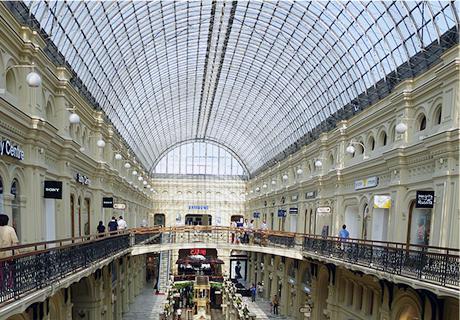
Big-box stores face persistent cleaning challenges in cart corrals and adjacent high-traffic zones, where constant customer foot traffic, cart movement, and tracked-in dirt demand frequent, consistent upkeep. Structural janitorial labor shortages—with turnover rates approaching 200% and $1 billion in annual industry losses from unfillable vacancies—stretch in-house crews thin, especially during seasonal peaks when customer experience matters most. Labor also accounts for 60–80% of total cleaning budgets, making manual cleaning increasingly unsustainable, while retailers must uphold strict health and safety compliance without disrupting daily operations. Commercial cleaning robots emerge as a targeted solution to address these pain points, combining automation, smart navigation, and multi-mode cleaning to deliver efficient, consistent upkeep for cart corrals.
The OrionStar CleaniBot S55 Pro translates the generic capabilities of commercial cleaning robots into practical functionality for big-box store cart corrals. It uses LiDAR navigation to construct maps up to 10,000 m² (according to manufacturer data), enabling autonomous path planning that adapts to dynamic environments like cart corrals with moving carts and customer foot traffic. Its multi-mode cleaning system supports scrubbing, sweeping, vacuuming, and dust mopping, with cleaning efficiencies reaching up to 1,368 m²/h in sweep and vacuum modes to quickly cover large high-traffic areas. Additionally, the robot features auto-recharging functionality, operating for up to 28 hours in dust mopping mode before automatically returning to its dock for a full charge in less than 4 hours, minimizing downtime for continuous cleaning operations. Its 15-sensor system provides 360° obstacle avoidance, ensuring safe operation around people and carts in busy retail spaces.
Cart corrals see constant foot traffic and cart movement, leading to accumulated dirt, debris, and occasional spills that require frequent cleaning throughout the day. Commercial cleaning robots like the OrionStar CleaniBot S55 Pro use multi-mode cleaning to address both loose debris and stuck-on grime, while autonomous path planning navigates around parked carts to ensure full coverage. Their auto-recharging feature allows them to resume cleaning cycles without manual intervention, keeping corrals consistently clean even during peak customer hours.
Store entrances adjacent to cart corrals are high-traffic zones where dirt, moisture, and debris from outside are tracked in, increasing slip-and-fall risks and requiring multiple daily cleanings. Robots with multi-sensor obstacle avoidance can safely operate alongside incoming and outgoing customers, using scrubbing and mopping modes to remove moisture and debris quickly. Their quiet operation ensures cleaning does not disrupt customer flow, while data reporting helps managers schedule cleanings during peak dirt accumulation periods.
Indoor parking lot perimeters near cart corrals often accumulate dirt, leaves, and debris brought in by carts and customers, and can be challenging to clean due to wide open spaces and occasional vehicle traffic. Commercial cleaning robots offer high cleaning efficiency, with the CleaniBot S55 Pro reaching up to 1,368 m²/h in sweep and vacuum mode, allowing it to cover large perimeter areas quickly. LiDAR navigation ensures the robot stays within designated zones, avoiding vehicles and other obstacles while maintaining consistent cleaning quality.
Main aisles close to cart corrals are high-traffic paths where dirt from carts spreads into the store, requiring regular cleaning to maintain a polished customer experience. Robots can switch between cleaning modes based on zone assignments, using dust mopping for polished aisle floors and scrubbing for high-soil areas near cart pickup points. Their compact design and minimum passing width of 700 mm (per manufacturer data) allow them to navigate narrow aisles alongside customers and store fixtures without causing disruptions.
Commercial cleaning robots integrate seamlessly with existing smart systems in big-box stores, including Building Management Systems (BMS), Computerized Maintenance Management Systems (CMMS), and broader IoT ecosystems. Via Wi-Fi/4G connectivity, robots can share operational data such as cleaning coverage, run time, and consumable usage with facility dashboards, enabling centralized management of cleaning tasks alongside other store operations. This integration also supports cloud-based maintenance, over-the-air updates, and automated task scheduling, aligning cleaning workflows with broader retail automation initiatives focused on cleaning, inventory, and customer service. Additionally, sensor-generated data from robots can feed into ESG reporting pipelines, providing verifiable metrics for sustainability goals like water and energy efficiency.
In summary, commercial cleaning robots support big-box stores’ ESG and sustainability goals by optimizing resource usage, providing actionable data for reporting, and enabling efficient, low-impact cleaning operations that align with broader environmental initiatives.
Commercial cleaning robots are transforming the way big-box stores maintain cart corrals and adjacent high-traffic zones, addressing longstanding challenges like labor shortages, high operational costs, and inconsistent cleaning quality through automation and smart technology. By combining advanced navigation, multi-mode cleaning, and seamless system integration, these robots deliver reliable, efficient cleaning that supports both operational and sustainability goals. The OrionStar CleaniBot series offers a range of models, including the CleaniBot S55 Pro, designed to adapt to different big-box store cleaning needs and environments, providing retailers with flexible options to explore automated cleaning solutions.