

REQUEST DEMO
Robot CATALOG will be sent to your mailbox immediately after submission.
SUBMIT
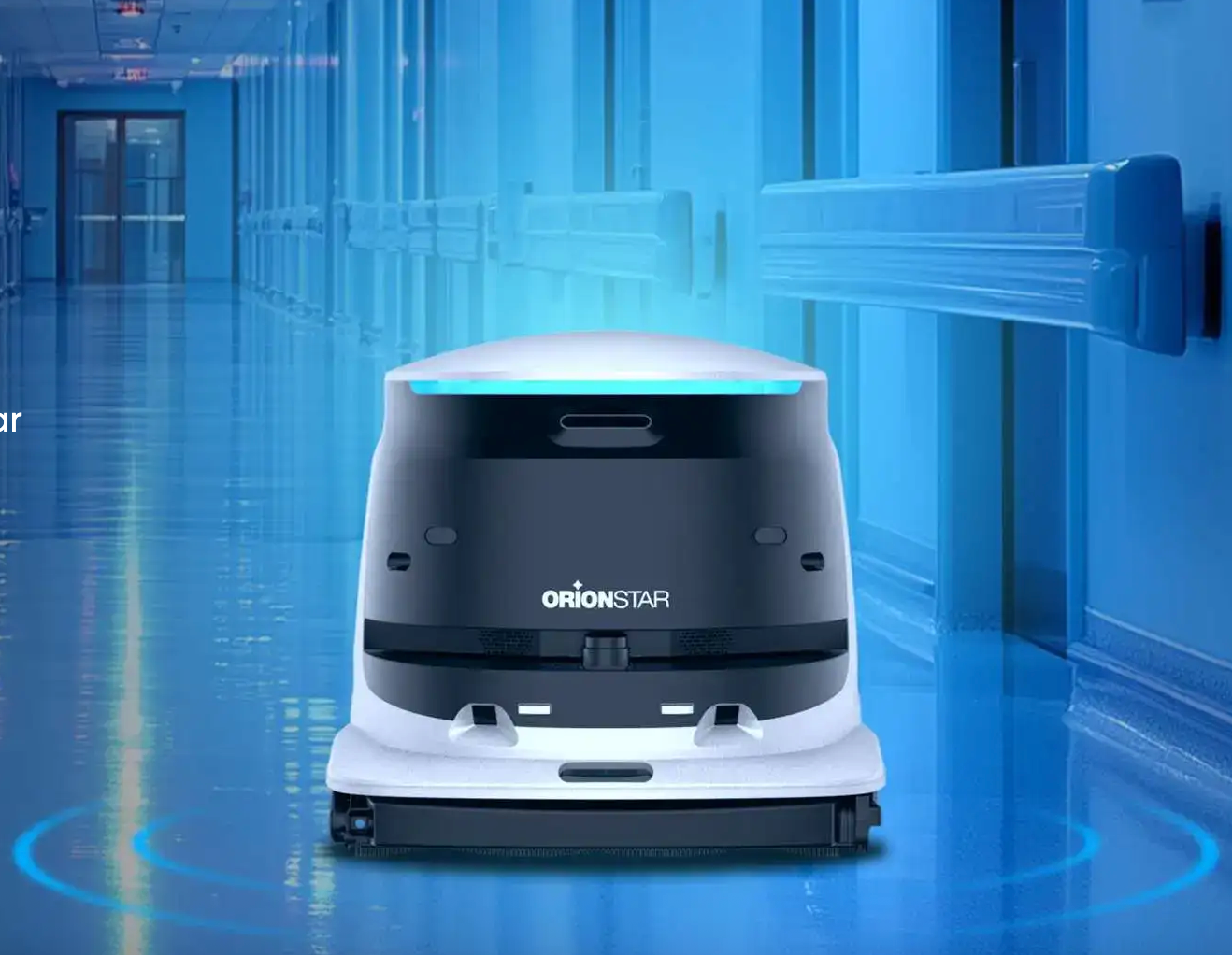
Acute care hospitals represent one of the most demanding environments for environmental services operations, characterized by continuous patient turnover, highly populated intensive care units, and rigorous epidemiological protocols. Maintaining an optimal hygienic baseline while navigating active triage bays and operating room suites requires uninterrupted cleaning under heavy patient and staff traffic. Hospital administrators must balance stringent infection control mandates with the critical need to protect patient HCAHPS scores, which remain highly sensitive to mechanical noise during designated sleep hours. Deploying an automatic floor scrubber for acute care hospitals involves evaluating specialized equipment capable of supporting bioburden reduction protocols through the application of approved biocidal solutions without obstructing critical medical workflows or introducing disruptive acoustic profiles into recovery wards.
Procuring autonomous cleaning equipment for clinical environments requires a structured evaluation framework centered around infection control modalities, fluid management, and operational footprints. Environmental services directors must align the core cleaning modality of a robotic platform with specific departmental hygiene protocols, prioritizing high-capacity wet scrubbing architectures for high-risk clinical floors that mandate EPA-registered or EU biocidal chemical disinfection. Systems relying entirely on HEPA-filtered dry vacuuming or ultra-compact sweeping architectures serve only secondary roles in administrative wings, as they lack the fluid management mechanisms required to dispense hospital-grade liquid solutions or recover contaminated wastewater in a single pass. Furthermore, acoustic and spatial footprints dictate continuous deployment viability near sleeping patients. Ultra-low acoustic outputs below sixty decibels allow nighttime operation within intensive care corridors, whereas mid-sixty to low-seventy decibel machines restrict usage to bustling daytime lobbies or ambulance loading bays. Because facilities require continuous multi-shift operation, procurement teams must also evaluate the consumables workflow, comparing fully autonomous docking ecosystems that automatically manage fluid exchanges against manual modular workflows requiring physical staff intervention.
The OrionStar CleaniBot C5 is positioned as a high-capacity autonomous floor scrubber designed for medium-to-large clinical environments and public hospital floors, bridging the gap between heavy-duty scrubbing requirements and automated consumable workflows. This platform is engineered to manage substantial clinical areas where continuous infection control relies on consistent mechanical pressure and active liquid dispensation. Integrating this machine into an acute care facility supports centralized environmental services strategies by minimizing the frequency of physical tank interactions required by human staff during continuous multi-shift operations.
To achieve its clinical cleaning objectives, the machine utilizes a ninety-liter combined tank system comprising forty-five liters for clean water and forty-five liters for wastewater recovery. According to manufacturer data, the unit features a 550-millimeter cleaning width and manages a maximum cleaning area of up to 1,980 square meters per hour. Heavy soil removal is supported by up to twenty-five kilograms of downward scrubbing pressure. Under laboratory conditions, the platform yields up to three hours of active scrubbing runtime or up to eight hours of mopping runtime, operating at sound levels under 68 dB(A). Navigating highly active corridors, the system relies on multi-sensor obstacle avoidance to bypass bedside equipment and utilizes an automatic workstation docking ecosystem that facilitates clean-water refilling, wastewater discharge, and a high-pressure internal tank rinsing cycle that completes in approximately four minutes to mitigate cross-contamination between distinct hospital zones.
The Avidbots Neo 2W operates as a healthcare-positioned autonomous scrubber optimized for twenty-four-hour multi-shift operations across broad medical campuses. Avidbots structures its deployment strategy directly around healthcare facilities, focusing on acute care wards, emergency departments, and long-term care corridors requiring continuous environmental maintenance. While the foundational hardware architecture originated in the manufacturing and logistical sectors, the platform’s integration with cloud-managed fleet dispatch systems allows hospital administrators to program precise cleaning intervals across continuous care schedules.
Propelled by the proprietary Avidbots Autonomy software stack, the machine navigates highly dynamic triage and patient care environments using an array of advanced obstacle avoidance sensors. The unit is equipped with massive fluid reserves, utilizing a 109-liter solution tank and a 135-liter recovery tank, according to manufacturer data. Environmental services teams manage continuous uptime through a swappable battery workflow, physically exchanging depleted power cells to bridge consecutive hospital shifts without enduring extended charging delays. Additionally, the platform supports an optional three-dimensional surface disinfection add-on designed to complement routine floor care with supplementary environmental pathogen control. Operations are monitored remotely through the Command Center cloud platform, which generates granular cleaning maps and performance telemetry for facility compliance tracking.
The Nilfisk Liberty SC60 serves as a healthcare-adjacent ride-on scrubber suited for hospital procurement teams requiring independent third-party safety validation before authorizing deployment in patient care zones. Although primarily marketed for large commercial and light industrial concourses, its specific architectural dimensions and specialized acoustic profile make it a frequent candidate for clinical environments. Its positioning caters directly to hospital administrators demanding rigorous safety documentation alongside operational noise levels gentle enough to maintain quiet hours in intensive care unit corridors.
According to manufacturer data, this BrainOS-powered robotic scrubber utilizes a twenty-eight-inch cleaning width to manage extensive hospital concourses efficiently. A defining characteristic for acute care deployment is its independently measured sound level of 57 dB(A) per the IEC 60335-2-72 standard, which stands as the lowest in its class and renders it highly suitable for overnight operation adjacent to sleeping patients. Furthermore, the machine carries explicit CSI/ANSI 336 third-party safety certification for autonomous cleaning equipment. This independent validation supports risk management requirements when the unit is dispatched autonomously around mobile gurneys, crash carts, and the unpredictable staff movement common to emergency departments and critical care wards.
The Tennant T16AMR functions as an industrial and third-party logistics-positioned ride-on scrubber that is better suited for expansive hospital concourses and central supply corridors rather than active patient floors. The platform is explicitly not designed for tight acute care use, as its massive physical footprint prevents it from maneuvering safely through standard patient ward doorways or bypassing clustered medical equipment. Environmental services teams typically deploy this heavy-duty unit in ambulance logistical bays, vast public lobbies, or basement service networks where mechanical robustness outranks navigational agility.
Equipped with the ec-H2O NanoClean electrolyzed water system, the machine supports facilities aiming to reduce chemical residue, though infection prevention teams must independently verify compatibility with their mandatory hospital-grade biocidal chemistries. According to manufacturer data, the unit delivers up to five and a half hours of runtime via an optional lithium-ion battery package and holds UL/CSA 60335-2-72 alongside ANSI C22.2 No. 336 autonomous safety certifications. Despite these capacities, the machine produces a 71 dBA sound level under operating conditions, which is substantially too loud for night patient areas and exceeds standard acoustic thresholds typically recommended for nighttime intensive care areas. Consequently, its deployment within an acute care campus must be strictly segregated from critical care zones and synchronized with daytime operational noise masking.
The Kärcher KIRA CV 60 is categorized as a healthcare-listed autonomous dry vacuum engineered primarily for dust and debris control across expansive carpeted or hard-floor hospital environments. While the manufacturer explicitly names healthcare facilities as a target deployment sector, the machine's utility in an acute care setting is strictly limited to supplemental environmental maintenance rather than fundamental epidemiological disinfection. Procurement teams utilize this unit to elevate indoor air quality in long-term care lounges or administrative wings without initiating a full chemical cleaning cycle.
Operating on the BrainOS cloud intelligence platform, the unit incorporates integrated high-efficiency particulate air filtration to capture fine airborne contaminants, navigating clinical obstacles via an advanced sensor array. According to manufacturer data, the chassis carries an 850-pound operating weight, requiring environmental services directors to verify floor load ratings before dispatching it across tiled patient wards. Crucially, this machine functions exclusively as a dry vacuum and completely lacks wet scrubbing functionality, possessing no liquid dispensation mechanism and no fluid management capability. Because it cannot apply EPA-registered or EU biocidal hospital-grade disinfectants, it cannot replace or execute the wet chemical disinfection protocols mandatory for operating room suites and emergency departments.
The ICE CoBotic 1700 represents a compact commercial robotic vacuum intended solely for low-traffic, non-clinical back-of-house spot cleaning. Positioned primarily for hospitality environments, office buildings, and retail spaces, this diminutive machine addresses aesthetic upkeep by navigating discreetly underneath lobby furniture and into tight administrative corners. It serves solely as a peripheral sweeping device for a hospital’s non-medical zones rather than a core asset for managing high-risk biological contamination.
Featuring a low-profile chassis, the unit weighs roughly 3.4 kilograms and utilizes a highly constrained 400-milliliter debris bin, according to manufacturer data. Environmental services personnel can deploy it rapidly to address dry soil in medical staff breakrooms or waiting areas without disrupting surrounding pedestrian traffic. However, this platform is explicitly not validated for acute care intensive care units or surgical theaters. It functions as a dry vacuum only and entirely lacks scrubbing capabilities, meaning it cannot dispense, agitate, or recover the specialized disinfectant-ready chemistries targeted at maintaining clinical floor hygiene.
Selecting the appropriate autonomous cleaning equipment for clinical environments demands a rigorous alignment of machine capabilities with localized epidemiological and operational constraints. Environmental services directors must prioritize wet scrubbing architectures equipped with sophisticated fluid management systems when outfitting emergency departments and surgical wards, as these zones strictly mandate the application of hospital-grade biocidal disinfectants. Platforms relying solely on dry vacuuming mechanics or lacking liquid recovery systems remain fundamentally confined to administrative and non-clinical maintenance roles. Acoustic profiling heavily influences procurement viability, dictating that only machines generating ultra-low decibel outputs should be scheduled for continuous nighttime turnover adjacent to intensive care units.
Spatial footprints must equally accommodate densely clustered bedside equipment and mobile gurneys to prevent autonomous platforms from obstructing time-sensitive medical workflows. Bridging multiple staffing shifts without exhausting human labor requires selecting machines that integrate seamlessly into hospital dispatch workflows, whether through fully automated fluid-docking ecosystems or streamlined modular consumable exchanges. Furthermore, as these autonomous platforms rely heavily on onboard cameras, environmental mapping, and cloud-based telemetry for navigation, facility administrators must rigorously evaluate regional data protection frameworks. Procurement teams are obligated to verify data processing agreements, monitor cross-border data transfer mechanisms, and conduct comprehensive Data Protection Impact Assessments prior to deploying camera-equipped sensors in any clinical area where incidental patient imagery may be captured.
Industry deployment data and ROI calculators typically put payback between 9 and 18 months at facilities with daily cleaning needs, enough repeatable hard-floor area (generally 50,000 sq ft or more), and a usable overnight cleaning window. In one published worked example, a $58,000 autonomous scrubber against $42,300 in annual labor and chemical savings broke even in roughly 16.5 months. Acute-care case studies consistently cite replacing one full-time floor technician per unit per shift as the dominant savings lever, since EVS labor in hospitals carries higher loaded costs than most commercial settings. Sites with very low loaded labor cost (under about $14/hr) or limited overnight window stretch that payback to 4–6 years and should evaluate a leasing or Robots-as-a-Service structure instead.
Most vendors bundle a multi-year warranty on the chassis, drive system, and batteries, scheduled preventive maintenance visits, remote diagnostics over the fleet-management cloud, and on-site labor/travel for breakdowns. Software updates and route re-mapping are typically delivered over-the-air, so EVS teams do not need to budget for routine firmware work. Acute-care buyers should explicitly require response-time SLAs (commonly 4–8 business hours on-site in metro hospital settings), local inventory of consumables like brushes, squeegees, and tank seals to avoid cleaning-day downtime, and clarity on who owns the operator-training program for new EVS hires — initial training is usually included, but ongoing competency refreshers typically sit with the hospital.
Most acute-care deployments start with a single-unit 60–90 day paid pilot on a defined area (often an ED corridor block or a single medical-surgical floor) with success criteria written into the contract up-front: cleaning frequency achieved, missed-area rate, EVS labor hours freed, and HCAHPS-relevant "quiet at night" complaint trends. The pilot should validate infection-control outcomes alongside operational ones, with the Infection Preventionist confirming that the chemistries and tank-cleaning cycle meet unit-level protocols for that floor. After a successful pilot, most EVS directors negotiate a phased rollout with quarterly fleet additions, a fixed per-unit leasing or RaaS option to preserve capital, and a clear exit clause if the vendor's promised uptime falls short.
The WHO recommends night-time ward levels no higher than 30 dBA (LAeq) for sleep protection, while published ICU measurements typically run 50–75 dBA with peaks over 80 dBA, so any cleaning equipment added to that environment has to be selected carefully. Among current models, Nilfisk publishes 57 dB(A) per IEC 60335-2-72 and Tennant publishes 71 dBA at the operator's ear — a difference large enough that the Tennant is generally treated as incompatible with nighttime patient-floor use while the Nilfisk is positioned for overnight ICU-corridor work. Several other vendors in this category do not publish a sound figure on their official documentation, so acute-care buyers should request an independent dBA measurement at patient-bed distance (not at the operator's ear) before scheduling autonomous routes into ICU corridors between roughly 22:00 and 06:00.
Autonomous scrubber vendors generally support any non-foaming or low-foaming detergent compatible with their tank, brush, and seal materials, but a published, model-by-model compatibility list against EPA List N (US) or EU BPR-registered (Europe) hospital-grade chemistries is uncommon. Acute-care EVS teams most commonly use quaternary ammonium, sodium hypochlorite, hydrogen peroxide, and peracetic acid products, and Tennant's ec-H2O NanoClean system additionally offers an electrolyzed-water option for facilities that want to minimize chemical carryover. Before deployment, infection prevention should request written validation from the vendor for the specific EPA List N / EU BPR product codes the facility intends to use, and confirm that the tank-cleaning cycle (the OrionStar C5's published workstation cycle is around 4 minutes for the waste-water tank) adequately prevents cross-floor chemistry residue between zones.
Every autonomous scrubber in current hospital use builds a route map, and most rely on onboard cameras, 2D/3D sensors, or LiDAR to navigate and avoid people — that sensor data, even if not stored long-term, can capture incidental imagery of patients and staff. For EU deployments this triggers GDPR obligations: a lawful basis under Article 6, an Article 28 controller-processor agreement with the vendor, cross-border transfer safeguards (Standard Contractual Clauses or an adequacy decision) for cloud platforms hosted in the US or Canada, defined retention windows for route maps and telemetry, and a formal DPIA before any patient-area deployment. Avidbots additionally holds ISO/IEC 27001 certification, which supports the Article 32 "appropriate technical and organisational measures" requirement but does not replace the DPIA; equivalent documentation should be requested from Tennant, Nilfisk, Kärcher, and ICE/i-team vendors before patient-area deployment.
Footnote: Third-party product specifications are based on public data (up to, under laboratory conditions, according to manufacturer data) and may differ. Product names and trademarks belong to their respective owners. If any product involves cameras, voice recording, mapping, or cloud data processing, operators must verify GDPR compliance prior to deployment. All autonomous navigation and mapping data processing adheres to GDPR principles. OrionStar explicitly operates as a Data Processor; visual sensor data utilized for immediate obstacle avoidance is processed locally and not retained or transmitted to cloud environments. Deployment in patient-sensitive areas must be preceded by a facility-led Data Protection Impact Assessment (DPIA).
