

REQUEST DEMO
Robot CATALOG will be sent to your mailbox immediately after submission.
SUBMIT
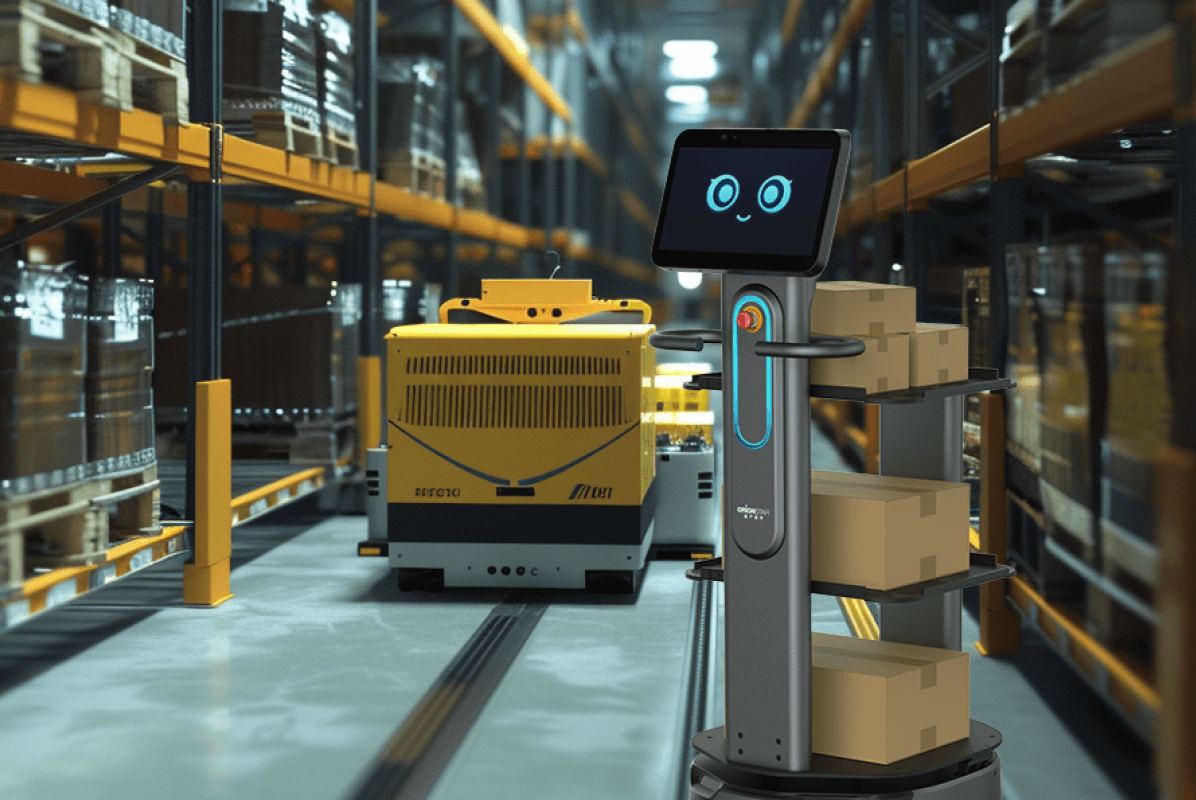
In medical device manufacturing, quality control stations face an escalating mandate to maintain rigorous hygiene and contamination controls while battling skilled labor shortages, rising operational costs, and tightening compliance standards. The traditional reliance on manual transport across sterile testing boundaries introduces high risks of particulate contamination and human-borne bioburden, while also creating traceability gaps that can trigger regulatory audit findings and costly downtime. To resolve these intersecting challenges of maintaining pristine environments, controlling labor expenses, and satisfying stringent frameworks like FDA regulations and ISO standards, factory transport robots have emerged as a critical solution, enabling touchless, fully automated material handling that safeguards product integrity.
As an example of how these automated capabilities materialize in an operational environment, the OrionStar CarryBot D150 integrates marker-free navigation and robust material transport into a single platform. Utilizing VSLAM 2.0 technology paired with a suite of LiDAR and depth cameras, the system actively maps its surroundings to facilitate autonomous obstacle avoidance within constrained spaces, operating with a minimum passage clearance of 65 cm according to manufacturer specifications. Designed for heavier discrete manufacturing workflows, it supports a maximum net payload of up to 150 kg while maintaining a positioning accuracy of up to 1 cm under optimal operating conditions, ensuring that high-volume test batches reach inspection zones reliably. Furthermore, the robot executes multi-point delivery routes and returns to its dock automatically, yielding a battery life of up to 12 hours (tested with a 100 kg payload on smooth surfaces), which provides continuous support for demanding quality control shifts.
Raw materials entering the facility require immediate isolation and rigorous evaluation before reaching the cleanroom, a process traditionally slowed by manual pallet breakdown. Factory transport robots automate the transfer of diverse batches from warehouse zones directly to these inspection points, significantly accelerating throughput while maintaining strict separation from sterile production spaces.
During active assembly, components must be periodically removed from the line for metrology and tolerance checks without introducing bioburden or causing line stalls. Autonomous mobile robots navigate these dynamic factory floors seamlessly, executing multi-point deliveries to shuttle samples from active machinery to testing benches safely and predictably.
Final products, including combination devices and personalized implants, demand precise handling to ensure their structural and sterile integrity before market release. Robots configured with integrated shelves or multi-tray structures move these delicate finished goods securely to final testing bays, providing digital traceability that validates the chain of custody.
Moving products in and out of sterilization chambers requires strict adherence to hygiene protocols and exact timing to prevent cross-contamination. Automated transport systems can be programmed to perform contactless deliveries at designated transfer points or airlocks, ensuring that verified sterile goods are handled with complete regulatory compliance.
Factory transport robots in quality control stations operate not as isolated entities but as highly connected nodes within a broader smart manufacturing ecosystem. Utilizing ISA-95 layered connectivity, these mobile fleets integrate seamlessly with Manufacturing Execution Systems (MES) and enterprise resource planning software, ensuring that a quality event recorded at a vision-inspection cell instantly updates batch records without manual data entry. Furthermore, fleet management orchestration layers coordinate traffic alongside existing Industrial IoT sensors, SCADA systems, and collaborative arms, facilitating real-time data flow and digital twin simulations that support rapid process validation and accelerated compliance audits.
Ultimately, investing in factory transport automation aligns stringent contamination-reduction mandates with long-term environmental sustainability and corporate governance goals.
Factory transport robots are fundamentally changing how medical device manufacturing handles material flows, turning quality control stations into highly optimized, traceable, and hygiene-controlled environments. By bridging the gap between rigorous regulatory requirements and the need for scalable efficiency, automated logistics enable manufacturers to overcome labor shortages and secure their supply chains. Solutions like the OrionStar CarryBot series offer multiple hardware configurations and payload capacities to adapt to these diverse operational workflows, providing an accessible pathway for facilities evaluating the transition toward autonomous material handling.
