REQUEST DEMO
Resources > Blogs > Transforming Throughput: How Restaurant Robots Are Reshaping Fast Food Restaurants' Pickup Counters

Transforming Throughput: How Restaurant Robots Are Reshaping Fast Food Restaurants' Pickup Counters

2026-09-17 23:41 OrionStar

Transforming Throughput: How Restaurant Robots Are Reshaping Fast Food Restaurants' Pickup Counters

Introduction

Fast food restaurants face a compounding set of operational pressures at pickup counters, driven by persistent labor shortages, rising wage costs, and high turnover rates that compromise service reliability. These challenges make traditional, labor-dependent service models increasingly fragile, often resulting in longer queue-to-handoff times and decreased customer satisfaction during peak meal rushes. In response to these structural industry hurdles, operators are increasingly adopting restaurant robots as a pragmatic solution to stabilize throughput, automate repetitive transport tasks, and alleviate the physical burden on front-line staff.

The Growing Need for Smarter Operations in Pickup Counters

  • Fast food operators face a severe labor shortage, with 70% of restaurant managers reporting job openings that are difficult to fill and directly hinder demand fulfillment.
  • Annual employee turnover rates approaching 80% severely disrupt pickup-counter reliability, leaving operations vulnerable to sudden no-shows during peak lunch rushes.
  • Rising minimum wages across major markets inflate fully-loaded labor costs, heavily compressing the already tight profit margins of traditional fast food unit economics.
  • Short-staffed counters struggle to manage the high volume of digital and physical orders, leading to extended wait times that depress customer satisfaction and reduce repeat-order frequency.

How Restaurant Robots Can Help

  • Visual SLAM navigation empowers these machines to autonomously map and traverse crowded, dynamic dining environments without human intervention.
  • Multi-tray delivery capabilities allow a single unit to transport multiple orders simultaneously from the kitchen to the staging area.
  • Advanced 3D obstacle avoidance ensures safe maneuvering around unpredictable queues, moving guests, and tight architectural aisles.
  • Voice interaction and smart dish detection facilitate intuitive handoffs and clear operational communication between the machine, busy staff, and waiting patrons.
  • Because these platforms rely on onboard cameras, mapping sensors, and cloud-based data processing, fast food operators must rigorously verify that the vendor ecosystem complies with GDPR and local privacy frameworks regarding customer data.

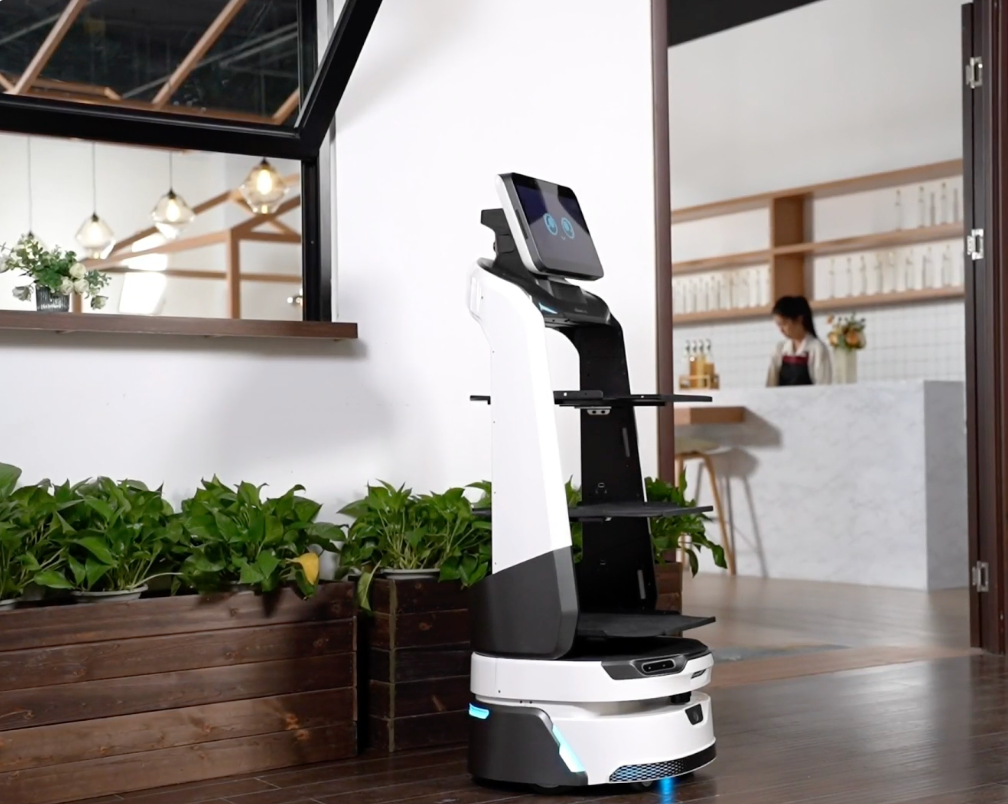
A Closer Look: OrionStar LuckiBot Pro in Action

The OrionStar LuckiBot Pro demonstrates how these autonomous capabilities are deployed in high-volume food service environments. According to manufacturer data, it features a heavy-duty loading capacity of up to 60 kg across its adjustable trays, allowing it to transport significant order volumes during intense service peaks. Utilizing a 240-degree 3D obstacle recognition system equipped with triple RGBD cameras and LiDAR, the robot is designed to navigate safely through highly congested restaurant zones. Additionally, it supports up to 12 hours of cruising time on a single charge, providing continuous operational assistance throughout extended daily shifts.

Benefits for Fast Food Operators

  • Labor Optimization: Deploying automation frees human runners from repetitive back-and-forth transport tasks, allowing limited staff to remain stationed at the counter for order handoff.
  • Favorable Financial Returns: At an $18 per hour fully-loaded labor cost, integrating automation platforms yields measurable savings, dropping the technology payback period to approximately 3.2 years.
  • Consistent Throughput: Shifting physical tray transport off the critical path stabilizes queue-to-handoff cycle times, effectively managing the variability of unpredictable meal rushes.
  • Improved Guest Satisfaction: By relieving front-line service pressure, robotic assistance correlates with higher overall service quality, matching similar hospitality deployments where guest satisfaction scores rose by 12%.
  • Enhanced Hygiene Compliance: Consistent, automated transport minimizes human contact with food items en route and maintains baseline hygiene standards without over-relying on understaffed manual crews.

Real-World Applications

Front Counter Queue Zones

Managing congested lines at the main counter requires rapid order dispatch and constant staff presence. Restaurant robots can autonomously shuttle completed meals from the kitchen directly to the counter staff, preventing operational bottlenecks and enabling cashiers to remain focused on customer interactions.

Lobby Waiting Areas

During peak hours, patrons waiting for their meals frequently crowd the dining room and block essential walkways. Automation allows robots to navigate these dense environments safely to deliver digital orders directly to seated customers, minimizing congregation at the front desk.

Mobile Order Pickup Shelves

The continuous surge in online ordering has overwhelmed traditional staging shelves, demanding constant replenishment from back-of-house personnel. Robots act as dedicated runners that transport bagged meals directly to these staging zones, ensuring digital orders are accurately placed for quick grab-and-go access.

Curbside Pickup Bays

Moving orders from the interior kitchen to exterior waiting vehicles strains limited indoor staff and slows down total service times. By staging completed orders near the exit doors, integrated robotic systems significantly shorten the total distance human runners must travel, streamlining the final handoff to the customer's vehicle.

Integration With Other Smart Systems

Effective deployment of restaurant robots at fast food pickup counters requires tight integration with the venue's existing technology stack, particularly Point of Sale (POS) and Kitchen Display Systems (KDS). When an order is bumped to "ready" on the KDS, cloud-based APIs can instantly trigger the robot to receive a dispatch and staging task, effectively bridging the fleet manager with the restaurant's operational flow. Furthermore, connecting these robotic systems with online-ordering channels and broader smart-building IoT networks ensures that digital order inflows are continuously synchronized with physical delivery throughput, preventing pileups at the counter.

Supporting ESG and Sustainability Goals

  • Automating repetitive transport tasks measurably reduces workplace repetitive-strain injuries, directly supporting employee well-being and occupational health initiatives.
  • Consistent automated delivery supports rigorous food-contact hygiene and steady operational cycles, aligning with stringent local food-safety and compliance frameworks.
  • Integrating these robots into a unified digital ecosystem enhances overall operational efficiency, which contributes to waste reduction targets by minimizing errors and dropped items.
  • Ultimately, deploying automated service solutions helps fast food operations meet emerging sustainability metrics by fostering a safer, more efficient, and highly resource-conscious working environment.

Closing

Restaurant robots are fundamentally changing how fast food restaurants operate and maintain throughput at their pickup counters amidst ongoing labor shortages and economic pressures. By offloading repetitive transport tasks and integrating deeply with kitchen display networks, these autonomous solutions provide the reliability necessary to sustain high-volume service. The OrionStar LuckiBot series offers multiple models designed to adapt to varying spatial constraints and throughput requirements, providing facility managers and franchise owners with adaptable tools to explore automated service integration.