Introduction
Auto Showrooms face mounting pressure to deliver a seamless customer experience in their customer waiting lounges, where long dwell times, fragmented communication, and staffing shortages often lead to frustrated buyers and lost conversions. With the average dealership hold time exceeding three minutes and nearly half of service customers reporting frustration during their visit, the friction of waiting to be greeted directly erodes profitability while simultaneously raising compliance risks regarding customer data capture. To address these interconnected challenges of labor costs, brand consistency, and lead management, an intelligent reception robot has emerged as a practical solution to bridge the operational gaps between the showroom floor and the back office.
The Growing Need for Smarter Engagement in Customer Waiting Lounges
- Failing to greet a customer promptly results in a roughly 23-point drop in satisfaction, highlighting the critical impact of idle waiting time in the showroom.
- With nearly 60 percent of buyers purchasing within the first three days of engagement, slow CRM logging and lead responses—where 43.2 percent of leads are mishandled—routinely cost dealerships sales.
- Dealerships face significant workforce coverage gaps, particularly after hours, missing calls that can cost an average dealer over $1 million annually in lost revenue.
- Multi-rooftop dealer groups struggle to maintain consistent brand presentation and engagement standards between their flagship and satellite showrooms.
How Reception Robot Can Help
- Advanced multi-modal human-robot interaction allows the robot to proactively detect visitors and initiate face-to-face greetings even in noisy environments using an omnidirectional microphone array and sound source localization.
- Autonomous navigation powered by LiDAR and depth cameras enables the robot to seamlessly guide customers to specific seating zones or service bays without requiring physical location markers.
- A large, high-definition display serves as an interactive hub for real-time content updates, allowing dealerships to showcase vehicle promotions, service menus, or digital retailing options while the customer waits.
- Multilingual voice interaction with automatic language detection ensures that a diverse customer base receives immediate, personalized assistance without relying on specialized staff.
- When utilizing integrated cameras, mapping, or cloud-based data processing features, dealership operators act as data controllers and must verify that their deployment complies with GDPR and other local privacy regulations.
A Closer Look: OrionStar GreetingBot Mini in Action
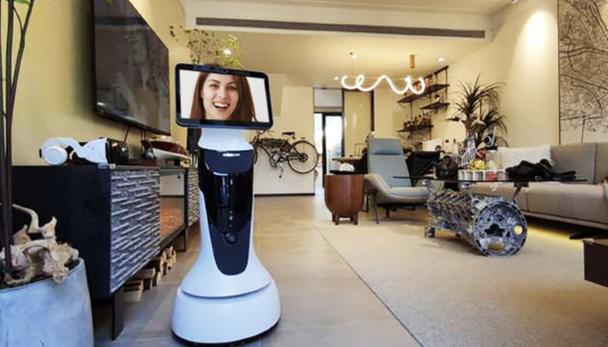
Translating these generic capabilities into a physical footprint, the OrionStar GreetingBot Mini demonstrates how intelligent automation integrates into automotive retail spaces. Built with a compact chassis that can navigate passages as narrow as 55 centimeters, the device utilizes a six-microphone array that, according to manufacturer data, can isolate speech and maintain interaction accuracy in environments with background noise levels up to 75 decibels. It supports customer engagement through a 14-inch FHD display for digital signage and lead capture, while its battery system allows for up to 12 hours of continuous cruising, automatically returning to its charging dock to maintain operational readiness throughout dealership hours.
Benefits for Auto Showroom Staff, Dealership Receptionists, Customer Experience Managers
- Immediate customer acknowledgment: Ensuring every visitor is engaged immediately prevents the documented 23-point satisfaction drop associated with waiting to be acknowledged by busy human staff.
- Enhanced lead capture and conversion: By standardizing front-of-house data collection, dealerships can prevent the 14.1 percent of leads that typically go unlogged in the CRM, capturing intent during the crucial first three days of the buying window.
- Reduced staffing friction: Automating routine greetings and after-hours interactions helps mitigate the revenue loss associated with the 32.3 percent of inbound inquiries that typically end up in voicemail.
- Consistent brand experience: Delivering synchronized promotional messaging and uniform greeting protocols helps multi-rooftop dealer groups maintain a unified brand standard across all satellite and flagship locations.
- Data-driven compliance: Standardizing the privacy consent prompt at the point of interaction supports compliance with frameworks like GDPR and CCPA by systematically gating downstream data capture.
- Service wait mitigation: Providing interactive entertainment and real-time updates reduces the perceived wait time for the 45 percent of service customers who experience frustration during their visits.
Real-World Applications
Reception Area
During peak hours, dealership receptionists are often overwhelmed by simultaneous walk-ins and phone calls, leading to unattended visitors and dropped leads. A reception robot can instantly greet arriving guests, collect basic contact information for the CRM, and notify the appropriate sales associate, ensuring no visitor is left waiting at the door.
Customer Seating Zones
Customers waiting for a test drive or service appointment often experience idle time that can quickly turn into frustration if communication is sparse. The robot can navigate through these seating zones to offer automated beverage service, display current vehicle promotions on its screen, or provide answers to frequently asked questions to keep visitors engaged.
Vehicle Pick-Up Bay
The handover process can be delayed when staff are occupied finalizing paperwork, leaving buyers lingering near their new vehicle without direction. Stationing a robot in this area allows the dealership to walk the customer through digital accessory catalogs or loyalty program sign-ups while they wait for their keys.
Integration with Other Smart Systems
To function effectively within auto showrooms, a reception robot must connect seamlessly with the dealership's broader technology stack, bridging the gap between front-of-house interactions and back-office management. Integration with primary Dealer Management Systems (DMS) and automotive CRMs ensures that any lead captured by the robot in the customer waiting lounges is instantly logged with full context for sales follow-up. Furthermore, the robot can be synchronized with existing digital signage networks and showroom screens to push coordinated promotional content, while connections to building IoT systems allow for dynamic adjustments to the environment based on lounge occupancy and visitor flow.
Supporting ESG and Sustainability Goals
- Consistent and positive first impressions enabled by automated reception workflows contribute directly to long-term customer retention, which is a measurable factor in reducing churn-driven remarketing emissions.
- Automated data collection standardizes consent logging for GDPR and other privacy frameworks, aligning with corporate governance expectations for secure consumer data handling.
- Digital information sharing via the robot's display reduces the reliance on printed brochures and physical promotional materials in the showroom.
- By improving operational efficiency and supporting robust data governance, intelligent automation helps auto dealerships align their front-of-house operations with broader environmental, social, and corporate governance objectives.
Closing
The integration of a reception robot is fundamentally changing how auto showrooms manage visitor flow and engagement in their customer waiting lounges, turning idle dwell time into an opportunity for consistent, data-driven interaction. By bridging the gap between immediate customer needs and dealership staffing constraints, these systems help ensure that every visitor receives prompt attention and accurate information. For dealerships exploring how to implement this technology across various operational footprints, the OrionStar GreetingBot series provides multiple models designed to adapt to the specific spatial and functional requirements of modern retail environments.