REQUEST DEMO
Resources > Blogs > Elevating Retail Hygiene: How Commercial Cleaning Robots Transform Main Aisles in Big-Box Stores

Elevating Retail Hygiene: How Commercial Cleaning Robots Transform Main Aisles in Big-Box Stores

2026-09-17 00:48 OrionStar

Elevating Retail Hygiene: How Commercial Cleaning Robots Transform Main Aisles in Big-Box Stores

Introduction

Big-box stores face unique floor maintenance challenges across their expansive retail footprints, balancing severe labor shortages and escalating operational costs with strict safety and compliance standards. With relentless foot traffic and continuous operations, facility teams struggle to maintain consistent manual cleaning quality while mitigating high-risk slip and trip hazards. To overcome these labor constraints and ensure regulatory compliance, retail operators are increasingly deploying commercial cleaning robots as a reliable, automated solution to improve floor safety and maintain cleanliness without disrupting the shopper experience.

The Growing Need for Smarter Cleaning in Big-Box Stores

  • Big-box store operations managers struggle with severe labor shortages and rising inventory costs, making it difficult to staff and retain crews for repetitive manual floor scrubbing tasks.
  • Store facility managers must navigate the high risk of slip, trip, and fall incidents, which account for roughly 27 percent of nonfatal workplace injuries in the U.S. retail trade and pose significant liabilities.
  • In-store cleaning crews face ergonomic strain and repetitive-task exposure when trying to manually maintain massive floor plans containing mixed surfaces, ramps, and anti-fatigue mats.
  • All retail staff must manage unpredictable floor contaminants, such as fresh produce misting spills and frozen food condensation, while safely cleaning around continuous shopper flow and shopping carts.

How Commercial Cleaning Robots Can Help

  • LiDAR navigation and autonomous path planning allow these units to map extensive retail environments and seamlessly navigate around dynamic obstacles like shoppers, carts, and temporary displays.
  • Multi-mode cleaning capabilities—spanning scrubbing, vacuuming, and dust mopping—enable machines to adapt to various floor types, from sealed concrete to polished tile, without manual intervention.
  • Multi-sensor obstacle avoidance mitigates collision risks in highly populated aisles by detecting unexpected drop-offs, sudden movements, or misplaced merchandise.
  • Auto-recharging systems allow the robots to independently return to their docks, minimizing downtime and maximizing cleaning coverage across long operational shifts.
  • Wi-Fi/4G connectivity provides real-time fleet monitoring and cloud-based performance reporting, though facility operators must strictly verify that all camera and mapping data processing complies with GDPR privacy regulations.

A Closer Look: OrionStar CleaniBot S55 Pro in Action

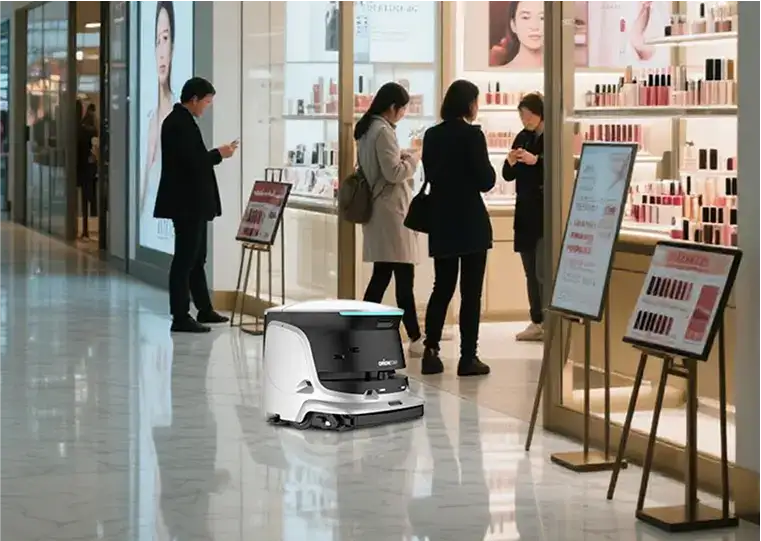
The OrionStar CleaniBot S55 Pro demonstrates these autonomous capabilities in retail environments through its multi-sensor array, which combines LiDAR, stereo cameras, and ultrasonic sensors for precise navigation and obstacle avoidance. According to manufacturer data, the unit supports multi-mode floor care and delivers a cleaning efficiency of up to 1,368 square meters per hour depending on the active setting. By integrating auto-recharging capabilities and Wi-Fi/4G connectivity, the robot maintains continuous operation and allows facility managers to oversee performance and map updates across areas of up to 10,000 square meters without constant manual interruption.

Benefits for Big-Box Store Operations Managers, Store Facility Managers, In-Store Cleaning Crews

  • Labor Reallocation: Automating repetitive floor scrubbing frees up in-store cleaning crews to focus on higher-value tasks, such as customer assistance and detailed spot cleaning.
  • Consistent Cleaning Quality: Autonomous robots follow precise, optimized routes that ensure no spaces are skipped, replacing the inconsistency and fatigue often associated with manual mopping across massive retail footprints.
  • Data-Driven Accountability: Connected units provide store operations managers with verifiable proof of performance and coverage area, similar to large European grocery deployments that successfully tracked over 92,000 cleaning routes in under a year.
  • Enhanced Slip Prevention: By applying precise amounts of water and instantly recovering it, automated scrubbers reduce wet floor exposure, helping facility managers mitigate the slip, trip, and fall hazards that frequently lead to costly liability claims.
  • Quiet Operation: Certain energy-efficient vacuum and dust mopping modes run at lower noise levels, allowing retail locations to maintain clean floors during regular business hours without disrupting the shopping environment.
  • Reduced Ergonomic Strain: Taking over the heavy lifting and repetitive scrubbing motions significantly lowers the musculoskeletal strain experienced by manual cleaning staff on a daily basis.

Real-World Applications

Main shopping aisles

These central arteries experience the highest volume of foot traffic and shopping cart movement throughout the day. Commercial cleaning robots utilize intelligent obstacle avoidance to safely scrub floors alongside shoppers, maintaining a pristine appearance on high-visibility pathways without causing closures or disruptions.

Fresh produce aisles

Misting systems used for fruits and vegetables frequently create wet floor exposure, making these areas high-risk zones for slip and fall incidents. Automated scrubbers can consistently pass through these specific aisles to recover dropped organic debris and quickly dry floors, directly addressing common grocery safety hazards.

Frozen food aisles

Temperature differentials in frozen sections often result in condensation dripping onto the floor, while broken glass or packaging from dropped items present sudden trip hazards. Robots equipped with powerful vacuuming and scrubbing modes can address these moisture buildups and small debris before they become a hazard to customers.

Promotional endcap zones

Endcaps are frequently restocked with pallets, leaving behind packaging clutter, dust, and uneven transitions near high-traffic intersections. Cleaning robots map these dynamic, frequently changing obstacles in real time, safely sweeping and mopping right up to the edges of temporary displays to keep promotional areas looking their best.

Integration With Other Smart Systems

Rather than operating as isolated devices, modern commercial cleaning robots function as mobile IoT nodes that integrate seamlessly into big-box store operations and smart building ecosystems. They push validated data packets—including zone coordinates, timestamps, and consumable statuses—directly into Building Management Systems (BMS) or Computerized Maintenance Management Systems (CMMS) over the facility Wi-Fi. This connectivity allows robots to interface with broader IoT sensor networks and fleet management dashboards, enabling dynamic scheduling based on real-time building data and providing managers with comprehensive, cloud-based reporting on resource utilization.

Supporting ESG and Sustainability Goals

  • Connected cleaning robots dispense precise, real-time-adjusted amounts of water and biodegradable chemicals, significantly reducing resource waste and wastewater volume compared to traditional manual mopping.
  • Modern robotic units operate efficiently in low-light conditions during after-hours shifts, contributing to overall facility energy conservation efforts.
  • IoT-enabled robots track energy, water, and consumable usage accurately, generating the verifiable data necessary for retail facilities to support environmental management frameworks like ISO 14001.

By optimizing resource consumption and providing transparent operational data, commercial cleaning robots actively advance the broader sustainability and ESG commitments of modern retail chains.

Closing

Commercial cleaning robots are fundamentally changing how retail operators maintain big-box stores by delivering consistent hygiene, mitigating floor hazards, and providing valuable data insights. As facilities transition toward smarter, automated maintenance strategies, hardware like the OrionStar CleaniBot series provides a variety of models to accommodate different floor types and spatial requirements. Readers interested in exploring how autonomous floor care can align with their specific operational environments can review the manufacturer's technical specifications for further details.