

REQUEST DEMO
Robot CATALOG will be sent to your mailbox immediately after submission.
SUBMIT
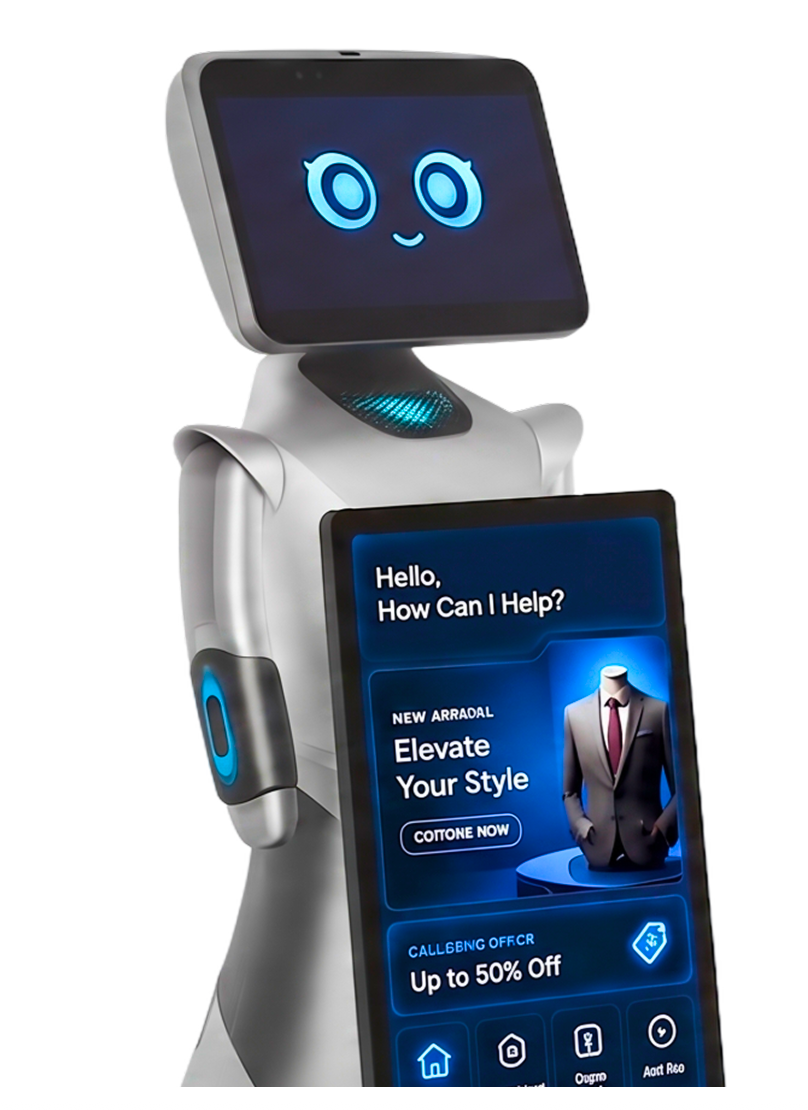
Home appliance retail faces immense structural pressure in new product display areas, where high-ticket items require detailed storytelling and seamless omnichannel alignment within a compressed in-store visit window. As showrooms struggle with uneven staff coverage during seasonal traffic spikes and the necessity to differentiate through engaging store layouts, reception robots have emerged as a highly effective solution to seamlessly bridge physical product demonstrations with dynamic digital engagement.
As an example of these category capabilities, the OrionStar GreetingBot AD combines proactive customer routing with dynamic visual storytelling. According to manufacturer data, the unit features a 14-inch head touch screen and a 21.5-inch chest-mounted display, supporting simultaneous face-to-face AI interaction and broadcast-style promotional content. Relying on an advanced sensor suite, it can map spaces up to 50,000 square meters and safely navigate through 60-centimeter corridors, allowing it to move seamlessly between dense appliance aisles without disrupting standard showroom traffic.
These high-priority zones require immediate attention-grabbing mechanics to highlight flagship refrigerators or washing machines. The robot patrols the perimeter, utilizing its large chest display to broadcast launch videos and intercepting wandering shoppers to offer guided tours of the new models.
Spaces where customers interact with connected appliances often require an initial guide to explain the broader ecosystem. A reception robot acts as the interactive front-end, greeting the user, launching the voice demo, and outlining the smart features before handing them over to a human specialist.
Dedicated brand pop-ups inside larger retail environments demand consistent, immersive brand storytelling. The system functions as a mobile brand ambassador, leveraging multi-modal voice and visual interaction to answer specific brand heritage questions and display detailed product specifications.
These areas feature dense layouts of various interconnected small and large appliances, making navigation challenging for first-time visitors. Using autonomous wayfinding, the robot safely guides customers through tight corridors directly to the specific smart oven or air conditioner they researched online.
Reception robots integrate directly into the existing digital infrastructure of home appliance stores, acting as an extension of the broader smart retail ecosystem. Based on industry deployments, these units interface with electronic shelf labels (ESLs) and digital signage networks, syncing with online inventory systems to trigger contextual messages when a product runs out of stock. Furthermore, open SDK environments allow internal IT teams to integrate proprietary retail point-of-sale applications, brand-loyalty CRM platforms, or warranty registration portals directly onto the device, ensuring the robot operates seamlessly alongside existing IoT demonstration zones and in-store security analytics.
Ultimately, substituting traditional physical displays with automated digital storytelling provides a measurable environmental win for modern retail operations.
Reception robots are fundamentally changing how home appliance retail approaches the design and operation of new product display areas in home appliance stores. By merging autonomous mobility with rich digital storytelling, these platforms ensure that every customer receives a consistent, engaging introduction to high-ticket items, even during the busiest retail seasons. As the landscape of physical retail continues to evolve, the OrionStar GreetingBot Pro series offers multiple models tailored to fit diverse architectural constraints and engagement goals, providing operators with versatile tools to elevate their physical showrooms.
Disclaimer: The OrionStar GreetingBot AD processes navigation and ambient engagement data strictly in accordance with applicable local data protection laws (including GDPR). Video and audio streams are processed locally for real-time interaction and obstacle avoidance; no personally identifiable biometric data is stored or transmitted to external servers without explicit administrative configuration and end-user consent.