

REQUEST DEMO
Robot CATALOG will be sent to your mailbox immediately after submission.
SUBMIT
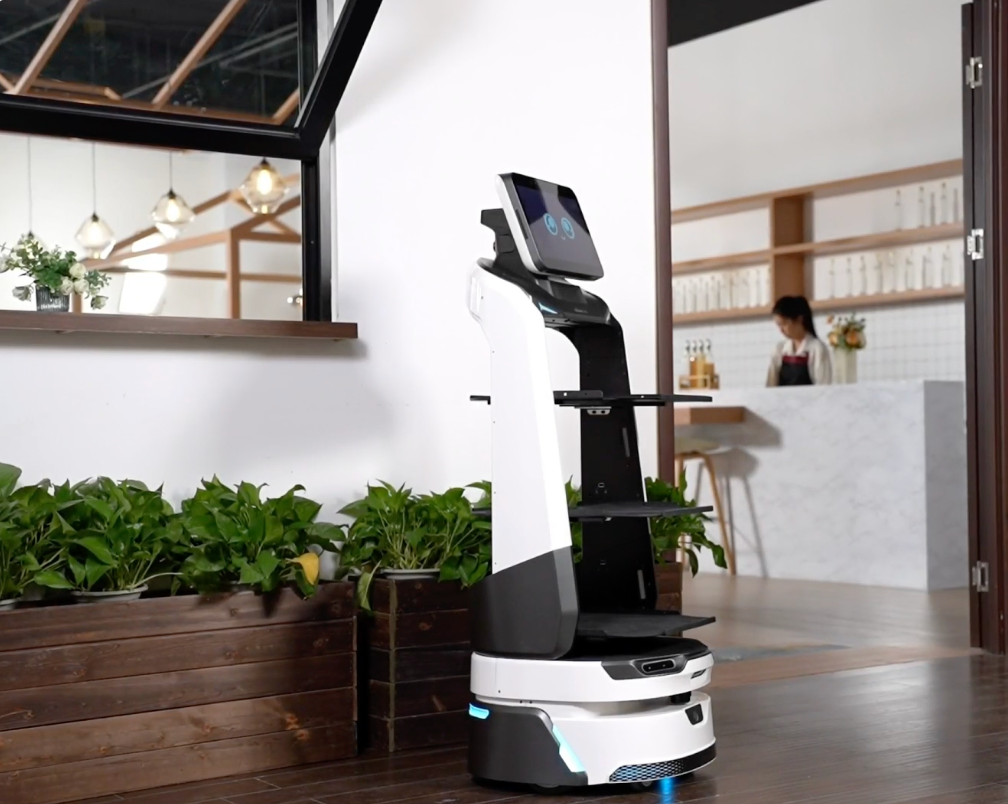
Within the Event Venues sector, banquet halls are facing complex operational challenges, including a structural labor shortage, the need to uphold exceptional guest experiences, declining service efficiencies, and stringent regulatory compliance pressures. As staff-to-guest ratios thin and operators struggle to execute ambitious service plans without overburdening their existing teams, the industry is increasingly seeking reliable technological interventions. In response to these mounting pressures, waiter robots have emerged as a practical solution to bridge the staffing gap, streamline workflow efficiency, and elevate the overall standard of hospitality.
The OrionStar LuckiBot Pro illustrates how these general autonomous capabilities are applied in high-demand service environments. According to manufacturer data, the unit features an upgraded carrying capacity of up to 60 kg across its multi-tray setup, specifically addressing the heavy-duty transport requirements of large dinner parties and corporate events. It navigates complex layouts using 240-degree 3D all-around obstacle recognition supported by triple RGBD cameras and LiDAR, allowing it to safely maneuver around guests and banquet furniture on uneven floors. Furthermore, its interactive capabilities are facilitated by a 14-inch 1080P full HD display and a 6-microphone array designed to process voice commands in ambient noise levels up to 75 dB, supporting continuous operation with a battery life of up to 12 hours.
During a full-service plated dinner, maintaining an elegant and uninterrupted atmosphere is a primary challenge for event coordinators. Waiter robots navigate smoothly among seated guests to deliver multiple hot entrées simultaneously, allowing human servers to present the plates professionally without rushing back and forth to the kitchen.
The space between the bustling culinary line and the main event hall often creates a bottleneck that slows down service. By acting as a constant relay between the kitchen pass and the dining floor, robots maintain a steady flow of dishes, preventing staging areas from overflowing and keeping the culinary team operating at an optimal pace.
Buffet stations require constant replenishment and immediate removal of used tableware to maintain hygiene and aesthetic standards. Robots can be programmed in a continuous cruise mode to run supplies from the back-of-house directly to the stations, or to act as mobile collection points for dirty plates, drastically reducing clutter.
Tight spaces and narrow corridors present navigation hazards, especially when guests are moving around or chairs are pushed out. Utilizing advanced visual SLAM and precise obstacle avoidance, robots safely traverse these narrow pathways, detecting tiny obstacles or sudden pedestrian movements to prevent spills and collisions.
To fully realize their operational potential, waiter robots must seamlessly connect with an event venue's existing digital infrastructure. Standard integration patterns often utilize webhooks connecting Point of Sale (POS) systems directly to the robots, triggering a delivery workflow the moment a transaction or order is completed. Furthermore, broader partnership ecosystems in hospitality robotics now involve integrations with Property Management Systems (PMS) for automated workflow triggers, CRM platforms for guest interactions, and edge-computing networks to ensure real-time data processing across a fleet of robotic units.
Ultimately, integrating robotics into banquet operations not only drives economic efficiency but also provides tangible support for an organization's environmental and social governance objectives.
As structural labor shortages and rising operational costs continue to challenge the hospitality sector, waiter robots are fundamentally changing how event venues service banquet halls. By bridging the gap between kitchen production and floor service, these autonomous systems enable operators to maintain high standards of hospitality without overburdening their human workforce. For venues evaluating automation strategies, the OrionStar LuckiBot series provides a range of models designed to adapt to varying spatial requirements and operational demands, offering a scalable path toward the future of event management.