

REQUEST DEMO
Robot CATALOG will be sent to your mailbox immediately after submission.
SUBMIT
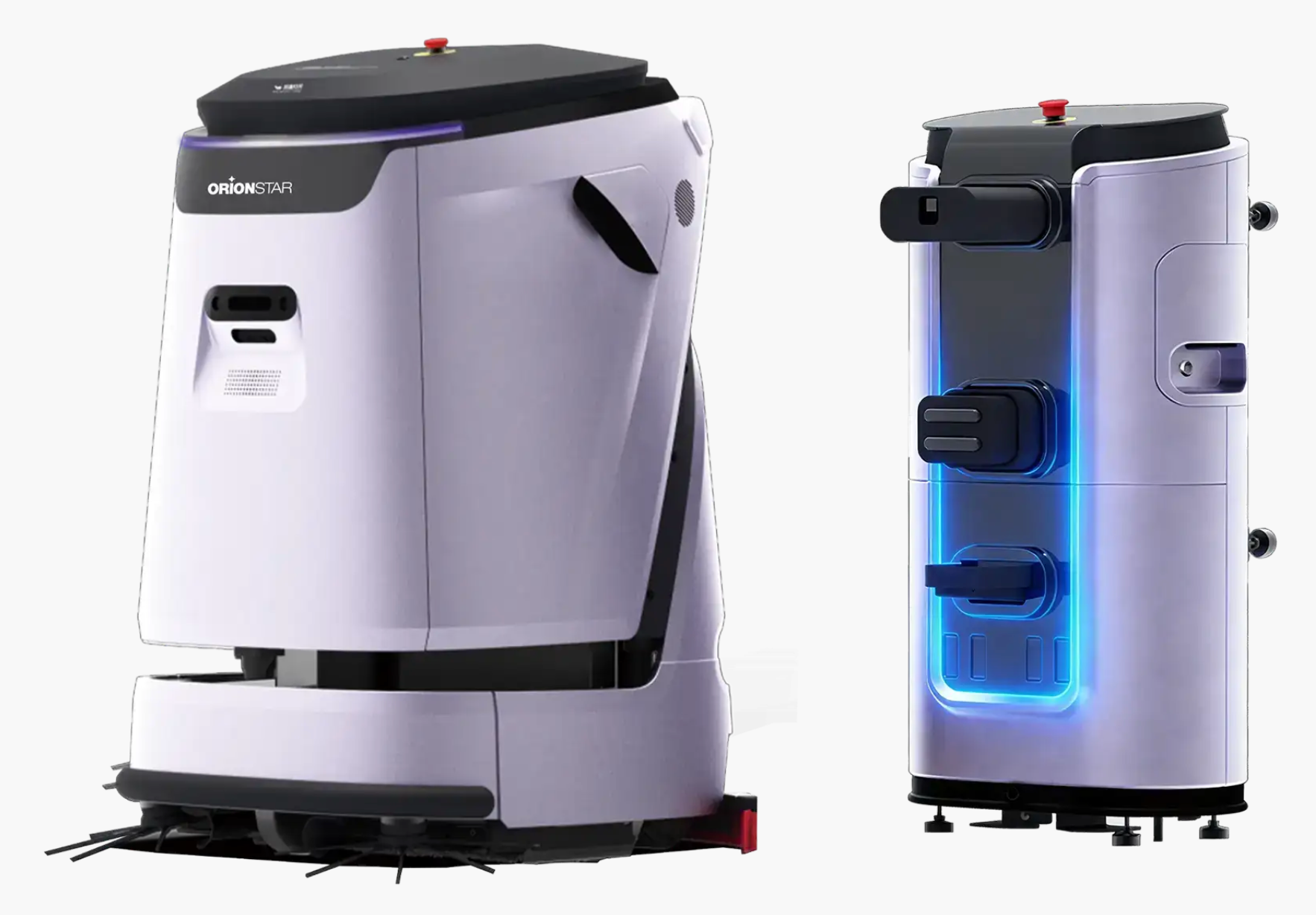
Hospitals face persistent cleaning challenges in their cafeterias, which serve as high-traffic, food-safe spaces where immune-compromised patients, visitors, and staff gather. Structural labor shortages in Environmental Services (EVS) teams, exacerbated by post-pandemic staffing gaps, lead to inconsistent cleaning practices, increased turnover costs, and difficulty meeting strict infection control and food safety compliance standards. These pressures strain facility budgets and raise risks of cross-contamination or slip-and-fall incidents. Robotic scrubbers emerge as a data-driven, efficient solution to address these pain points, delivering consistent, standardized cleaning while reducing reliance on overstretched human staff.
The OrionStar CleaniBot C5 embodies the core capabilities of robotic scrubbers, leveraging advanced navigation and automation to deliver consistent cleaning in hospital cafeterias. According to manufacturer data, it offers a maximum cleaning area capacity of up to 1,980 m² per hour, thanks to its optimized path planning and 550 mm main brush, ensuring efficient coverage during tight post-meal windows. Its dual-rolling-brush system applies 25 kg of downward scrubbing pressure, achieving a reported dirt-cleaning rate of about 95% to remove stubborn food and beverage spills. Additionally, the robot supports automatic docking and charging, with a battery runtime of up to 3 hours for scrubbing and fast charging in around 1.5 hours, enabling continuous operation across multiple shifts without manual intervention.
Disclaimer: This product is not a medical device and does not replace professional disinfection services. It supports surface cleaning to help maintain hygiene standards.
Dining halls are high-traffic areas with frequent food and beverage spills, creating slip-and-fall risks and requiring frequent cleaning between meal services. Robotic scrubbers can autonomously navigate around tables and chairs, using their high scrubbing pressure to remove stubborn stains efficiently, ensuring consistent floor hygiene without disrupting diners during off-peak hours.
Serving lines are prone to grease and food residue buildup, which can attract pests and compromise food safety. The CleaniBot C5’s dual-rolling-brush system and 25 kg scrubbing pressure effectively removes heavy grime in a single pass, while its compact design allows it to navigate narrow spaces between serving counters and queuing areas.
Tray return areas accumulate food scraps, spills, and debris, making them a high-risk zone for cross-contamination. Robotic scrubbers can automatically detect and clean these areas after peak meal times, picking up debris up to 3 cm in height and emptying waste into their onboard dust bin, reducing the need for manual sweeping and mopping.
Back-of-house corridors are busy with staff, equipment, and food carts, making manual cleaning challenging and time-consuming. Robotic scrubbers use advanced obstacle avoidance to navigate these dynamic spaces, maintaining clean floors to prevent cross-contamination between kitchen areas and the public cafeteria, while their auto-charging capability ensures they are ready for scheduled cleaning shifts.
Robotic scrubbers like the CleaniBot C5 can function as connected nodes within a hospital’s digital ecosystem, integrating with existing Computerized Maintenance Management Systems (CMMS) and Building Management Systems (BMS). Through APIs and standard protocols like BACnet or Modbus, robot data such as cleaning session logs, coverage metrics, and equipment maintenance alerts can be fed directly into CMMS platforms, triggering automatic work orders for brush replacement or tank cleaning. Cloud-based fleet management systems allow multi-site health system directors to monitor cleaning operations across all hospital cafeterias from a single dashboard, tracking coverage trends, scheduling cleaning shifts, and receiving real-time alerts for robot interruptions. This integration streamlines facility management workflows, reduces administrative burdens, and ensures alignment with broader smart-building initiatives.
Overall, robotic scrubbers support hospitals’ ESG objectives by balancing hygiene requirements with environmental responsibility, reducing operational waste, and enhancing staff quality of life.
Robotic scrubbers are transforming how hospitals maintain cleanliness and compliance in their cafeterias, addressing longstanding labor shortages, reducing operational costs, and delivering consistent, data-driven cleaning outcomes. The OrionStar CleaniBot series offers a range of models tailored to different facility sizes and cleaning needs, providing flexible solutions for hospitals looking to modernize their EVS operations and meet evolving hygiene and sustainability standards.