

REQUEST DEMO
Robot CATALOG will be sent to your mailbox immediately after submission.
SUBMIT
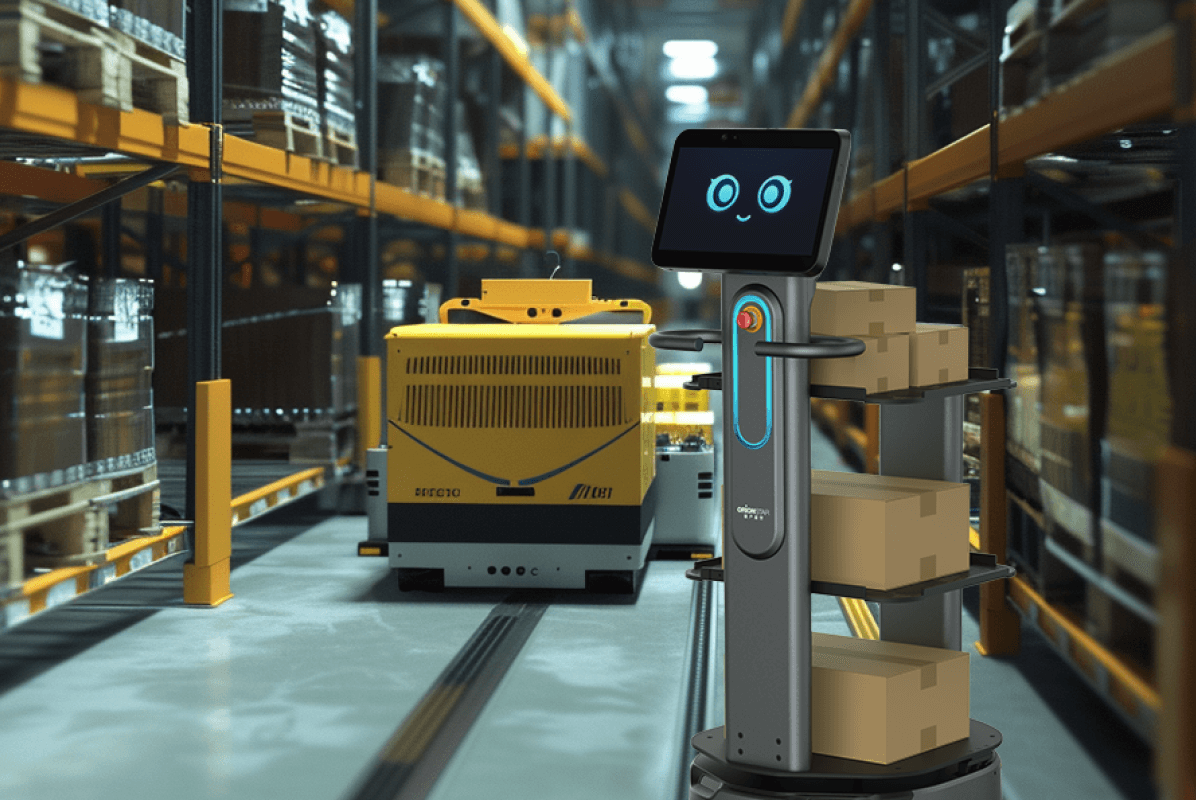
Factories across Europe, the US, and Asia face mounting operational challenges, including structural labor shortages that threaten production capacity—with the US manufacturing sector projected to see a 2.1 million worker shortfall by 2030—high turnover rates exceeding 40% annually, and inefficient, injury-prone manual material transport that causes costly downtime. Additionally, evolving regulatory frameworks like GDPR add complexity to deploying technology that captures sensor or telemetry data. Autonomous Mobile Robots (AMRs) have emerged as a critical solution to address these pain points, offering flexible, efficient, and compliant material transport capabilities that transform factory operations.
The OrionStar CarryBot D150 embodies these core AMR capabilities through its advanced VSLAM+ navigation system, which combines LiDAR, depth cameras, and panoramic vision to enable marker-free deployment in as little as 1 day, eliminating the costly facility modifications required by traditional AGVs. With a net payload capacity of up to 150 kg according to manufacturer data, it addresses heavy-duty material transport needs across factory floors, while its 5-layer safety protection system supports safe multi-robot coordination in shared workspaces alongside human workers. Additionally, its auto-recharge feature ensures up to 12 hours of runtime (tested with a 100 kg load on marble floors), maintaining uninterrupted operation throughout extended production shifts.
Assembly lines face challenges with timely parts delivery, which can cause costly production downtime and worker fatigue from manual ferrying of components. The OrionStar CarryBot D150’s multi-point delivery capability automates parts distribution to specific workstations, reducing line-side worker walking distances by up to 12 miles per day as seen in automotive supplier deployments. Its 1 cm positioning accuracy ensures precise placement of components, minimizing assembly errors and improving overall line efficiency.
Raw material warehouses struggle with inefficient inventory transport and high labor turnover, leading to delays in supplying production lines. The CarryBot D150’s shelf and tray configurations support organized bulk and multi-layer material transport, while its VSLAM+ navigation enables rapid deployment without warehouse modifications. Auto-recharge functionality ensures the robot operates continuously, reducing gaps in material flow between the warehouse and production areas.
Inter-zone material transfer often involves navigating narrow corridors and shared spaces, leading to bottlenecks and safety risks with manual transport. The CarryBot D150’s 65 cm minimum passage clearance allows it to navigate constrained spaces, while its multi-robot coordination capability prevents traffic jams at intersections. Its 5-layer safety protection system, including LiDAR and depth camera obstacle detection, ensures safe operation alongside human workers in busy transfer routes.
Finished goods staging requires accurate and timely transport to loading docks to meet shipping deadlines, with manual handling increasing the risk of product damage and delays. The CarryBot D150’s high payload capacity of up to 150 kg supports bulk transport of finished goods, while its real-time monitoring provides visibility into staging status to optimize shipping workflows. Its adaptive navigation system adjusts to changes in staging area layouts, ensuring flexible operation as production volumes fluctuate.
Autonomous Mobile Robots like the OrionStar CarryBot D150 integrate seamlessly with existing factory systems to maximize operational efficiency. They connect to Manufacturing Execution Systems (MES), Warehouse Management Systems (WMS), and Enterprise Resource Planning (ERP) platforms via over 500 free open APIs, receiving job instructions and reporting task completion in real time. Fleet management software coordinates traffic, charging, and job dispatch across multiple robots, while integration with PLCs enables automated pick-up and drop-off behavior, reducing transport delays by 30% in automotive deployments. Additionally, integration with Industrial IoT (IIoT) frameworks allows dynamic task allocation based on live production state, shortening cycle times by 15% and lifting throughput by 20% in electronics factory implementations.
In summary, AMR adoption supports factories’ ESG objectives by driving operational efficiency, reducing environmental impact, and enhancing workplace safety, making it a key component of sustainable smart manufacturing strategies.
Autonomous Mobile Robots are transforming the way factories handle material transport and operational logistics, addressing critical challenges like labor shortages, inefficiency, and inflexible systems. The OrionStar CarryBot series offers a range of models, including the high-payload D150, to adapt to diverse factory scenarios from assembly line parts distribution to finished goods staging. As factories continue to embrace smart manufacturing, these versatile robots provide a scalable, compliant, and efficient solution to enhance productivity and support long-term operational resilience.