Introduction
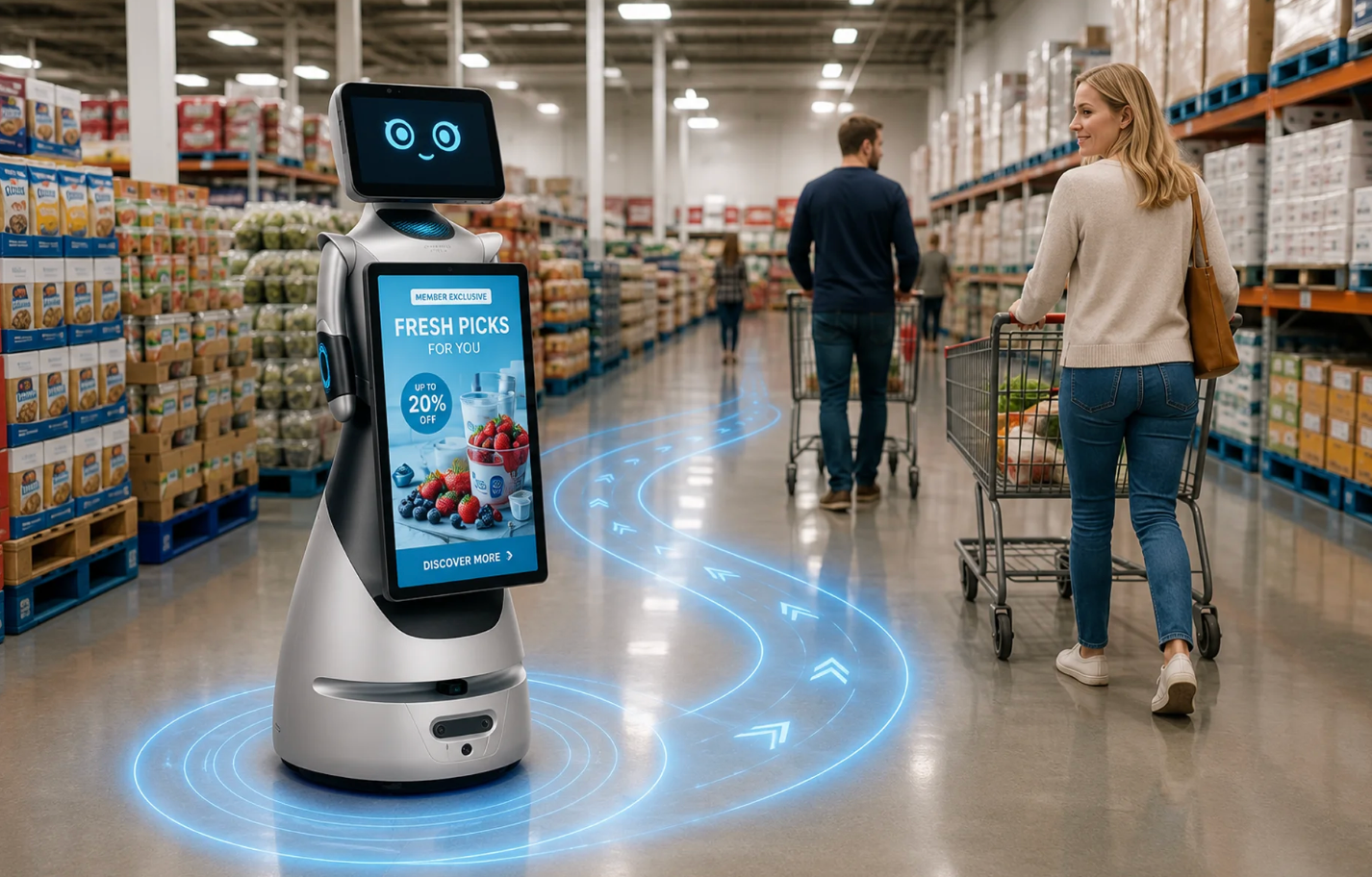
Managing peak traffic in the retail industry poses significant operational challenges in grocery stores, particularly when long waits in checkout lines lead to customer frustration and cart abandonment. To address these friction points, operators are increasingly deploying the reception robot as a dynamic technological solution, utilizing these devices as robotic brand ambassadors that engage shoppers, provide real-time assistance, and seamlessly distract from wait times. By combining interactive communication with mobile digital signage, these automated platforms help modernize the traditional supermarket experience while keeping foot traffic flowing smoothly.
The growing need for smarter engagement in grocery stores
- Long wait times at the register decrease overall customer satisfaction and increase the likelihood of abandoned purchases.
- Persistent staff shortages make it difficult to manage peak traffic while maintaining high face-to-face service standards.
- Traditional static signage fails to capture shopper attention or dynamically promote relevant, high-margin impulse items.
- Customers frequently struggle to locate specific aisles or seasonal promotions, pulling human staff away from urgent restocking or checkout duties.
How a reception robot can help
- Multi-modal human-robot interaction allows the platform to communicate through voice, touch, and visual prompts simultaneously, ensuring accessible engagement for all shoppers.
- A large on-robot information display provides a dynamic, eye-catching visual space for promotions, digital menus, and interactive wayfinding maps.
- Autonomous navigation in narrow spaces ensures the hardware can move safely around shopping carts, merchandise end-caps, and crowded queues without causing disruption.
- Far-field voice pickup with 360° sound source localization enables the system to isolate and orient toward a speaking customer even in a noisy, echoing supermarket environment.
- Real-time content updates and multilingual support allow the deployment to seamlessly adapt to diverse shopper demographics and instant promotional changes.
- Because these systems utilize cameras, environmental mapping sensors, and cloud-based data processing for interaction, operators must ensure that all data collection strictly complies with privacy frameworks such as the GDPR.
The OrionStar GreetingBot AD serves as a practical example of how these generic automation capabilities are implemented in a physical platform. According to manufacturer data, this model features a 21.5-inch FHD chest-mounted display paired with a 14-inch head touch screen, allowing it to broadcast visual content while simultaneously offering interactive touch menus for shoppers. To support continuous operation in high-traffic retail spaces, it utilizes an upgraded 20 Ah battery that provides up to 8 to 10 hours of runtime on a single charge. Furthermore, the robot is equipped with a 6-microphone circular array and centimeter-level positioning accuracy, enabling reliable face-to-face engagement and precise autonomous navigation in dynamic, crowded aisles.
Benefits for store managers, retail operations managers, customer experience managers
- Queue anxiety reduction: Engaging shoppers with interactive content and digital displays naturally distracts them from long wait times during peak hours.
- Dynamic cross-selling: Presenting real-time promotions on mobile screens encourages spontaneous impulse purchases right before the point of sale.
- Labor optimization: Handling routine wayfinding and customer inquiries frees up human associates to focus on complex tasks, restocking, and register operations.
- Compliance-friendly data processing: Secure on-device and local network processing helps operators gather basic foot traffic insights through anonymized, local data processing while remaining aligned with global privacy standards.
- Elevated brand experience: Introducing advanced mobile automation into a traditional supermarket setting creates a modernized, memorable shopping journey that differentiates the brand from competitors.
Real-world applications
Checkout lines and self-checkout zones
During peak hours, these areas frequently become congested, leading to shopper fatigue. A mobile robot can patrol alongside the queue, displaying engaging video content, membership sign-up QR codes, or flash sale alerts to keep waiting customers entertained and informed.
Fresh produce aisles
Navigating these often-crowded sections requires high spatial awareness and reliable obstacle avoidance. The robot can safely guide shoppers to seasonal items or organic selections while broadcasting recipe ideas on its display, enhancing the fresh food purchasing experience.
Entryways and end-caps
First impressions matter, and a welcoming presence at the main doors sets a positive tone for the entire shopping trip. Positioned near high-margin end-cap displays, the robot can proactively greet incoming visitors, provide immediate directions to daily specials, and orient shoppers to essential departments.
Integration with other smart systems
A reception robot maximizes its operational value when seamlessly connected to the existing smart infrastructure of grocery stores. By integrating with store CRM and loyalty systems, the platform can display targeted membership enrollment prompts or scannable personalized coupons directly on its screen. Furthermore, deep integration with POS networks, IoT sensors, and inventory management databases allows the robot to update its digital promotions in real time, ensuring that only currently in-stock items are advertised to shoppers navigating the aisles.
Supporting ESG and sustainability goals
- Replacing disposable printed flyers and cardboard promotional cutouts with digital, continuously updatable screens significantly reduces retail paper waste.
- Energy-efficient hardware design and optimized autonomous charging routines contribute to a lower overall carbon footprint for day-to-day store operations.
- Assisting human workers with repetitive informational tasks supports social sustainability by reducing employee burnout and improving overall workplace conditions.
- By implementing automation that prioritizes resource efficiency and employee well-being, retail operators can make measurable progress toward their broader corporate sustainability targets.
Closing
The strategic deployment of a reception robot is fundamentally changing how the retail industry operates in grocery stores, specifically by transforming checkout lines from points of friction into active hubs of digital engagement. As retail organizations continue to modernize their physical locations, the OrionStar GreetingBot series offers multiple models designed to accommodate the varied spatial, operational, and interaction requirements of different commercial environments.