

REQUEST DEMO
Robot CATALOG will be sent to your mailbox immediately after submission.
SUBMIT
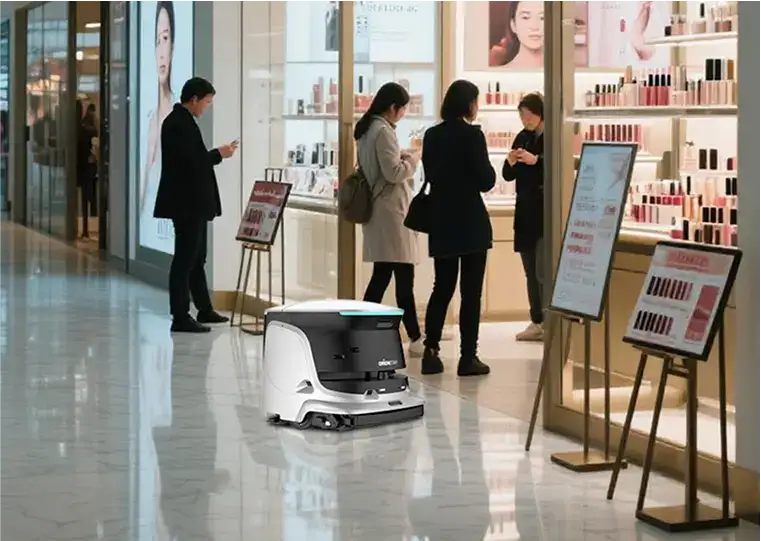
Hypermarkets face compounding operational pressures when maintaining vast main aisles, as persistent labor shortages, rising slip-and-fall liability costs, and strict hygiene compliance frameworks consistently outpace the capacity of traditional manual cleaning teams during active trading hours. To absorb these pressures and ensure uniform floor care across expansive retail footprints, operators are increasingly turning to commercial cleaning robots as a reliable, automated solution that bridges the gap between high foot-traffic demands and constrained facility management resources.
The OrionStar CleaniBot S55 Pro translates these category-wide capabilities into a practical retail tool by integrating multiple floor-care functions, including sweeping, scrubbing, vacuuming, and mopping, into a single autonomous platform. According to manufacturer data, the unit utilizes a multi-sensor navigation system incorporating LiDAR, stereo cameras, and ultrasonic sensors to support map construction for areas up to 10,000 square meters while safely detecting steps and navigating around shoppers. Furthermore, it delivers a cleaning efficiency of up to 1,368 square meters per hour in its combined sweep, vacuum, and mop mode, and operates at a quiet 45 decibels during dust mopping to minimize auditory disruption on the active retail floor.
These central arteries experience constant heavy foot traffic, dry debris accumulation from packaged goods, and daily interruptions from repositioned shopping carts. Commercial cleaning robots navigate these wide, open stretches using dynamic obstacle avoidance to clean around shoppers while utilizing high-capacity vacuuming and scrubbing modes to capture dirt seamlessly.
The perimeter areas surrounding fresh produce are highly susceptible to organic debris, sticky residues, and continuous water drips that create significant slip-and-fall hazards. Automated scrubbers target these slick zones with precise water dispensing and immediate vacuum-drying capabilities, ensuring the floor remains safe and fully compliant with strict food-safety hygiene standards.
Perimeter aisles housing refrigeration units constantly accumulate floor condensation, requiring frequent attention to prevent water pooling and localized safety risks. Robots executing scheduled, high-frequency scrubbing routes effectively neutralize this condensation buildup, maintaining consistent traction without relying on ad-hoc manual mopping cycles.
The layouts of endcap displays change daily, creating unpredictable bottlenecks and shifting physical footprints that complicate standard floor maintenance. Advanced LiDAR navigation allows robots to map these variations in real time, automatically adjusting their cleaning paths to ensure thorough edge cleaning around temporary marketing fixtures without human intervention.
Commercial cleaning robots increasingly function as integrated mobile nodes within the broader hypermarket smart-retail stack, sharing operational telemetry with existing facility management ecosystems. Fleet management dashboards and cleaning telemetry can feed directly into Computerized Maintenance Management Systems (CMMS) via APIs, converting floor cleaning into a plannable, tracked activity alongside automated work orders. Furthermore, by synchronizing cleaning paths with in-store IoT devices like electronic shelf labels and store traffic patterns, store operators can automatically schedule robotic routing during low-traffic windows or restocking lulls, seamlessly blending floor care with inventory management automation.
Ultimately, adopting robotic floor care empowers hypermarkets to hit their environmental targets while maintaining the rigorous hygiene levels required by global food-safety standards.
Commercial cleaning robots are fundamentally transforming how hypermarkets maintain their main aisles, shifting the paradigm from reactive manual labor to proactive, data-verified floor care. By addressing critical labor shortages, mitigating liability risks, and ensuring uniform cleaning quality, these automated systems provide a scalable foundation for modern retail operations. Because different zones present unique maintenance challenges, the OrionStar CleaniBot series offers multiple models equipped with diverse capabilities to accommodate various spatial footprints and operational requirements.