

REQUEST DEMO
Robot CATALOG will be sent to your mailbox immediately after submission.
SUBMIT
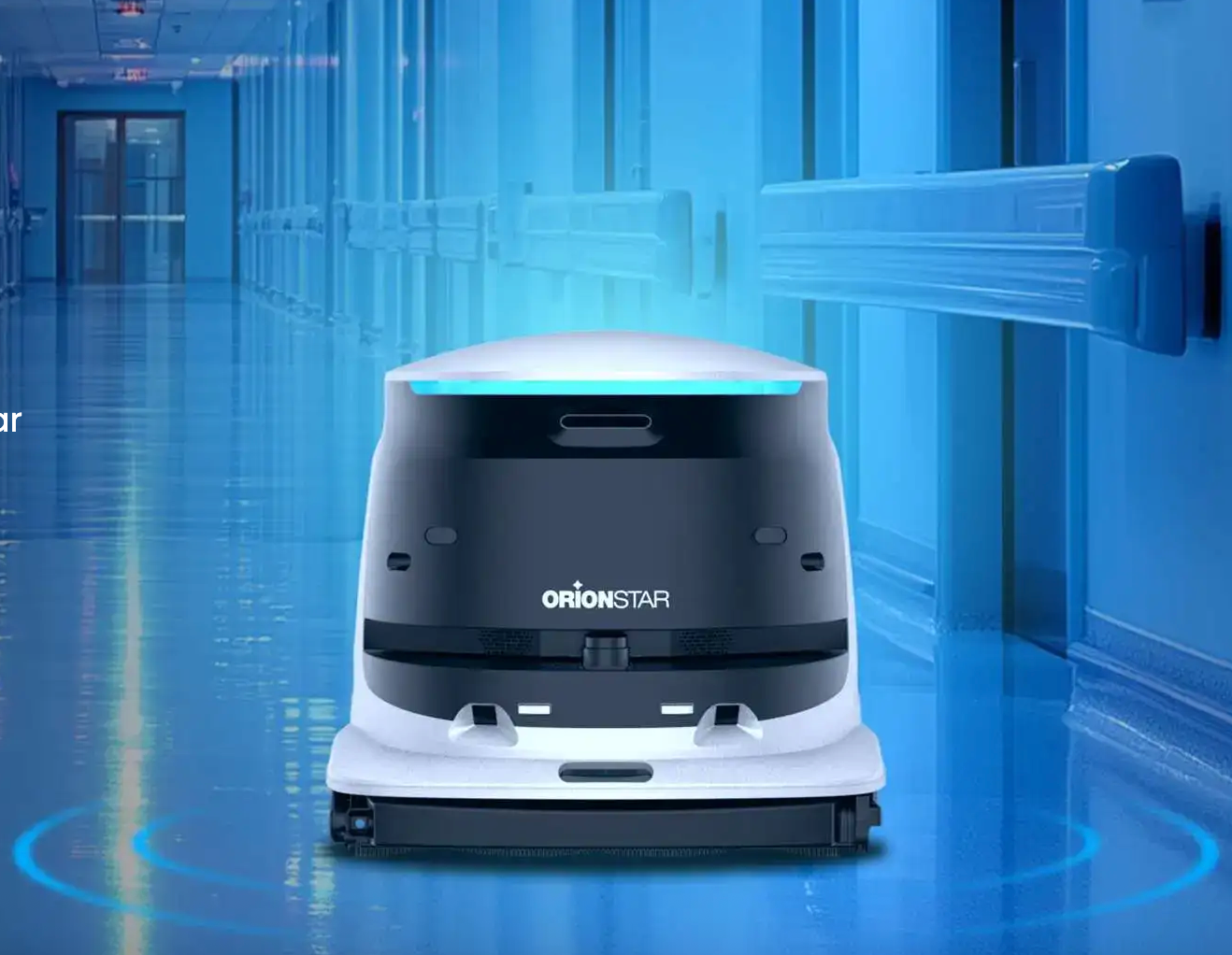
Hospitals face immense challenges in maintaining rigorous environmental hygiene within emergency departments, where 24/7 operations, unprecedented patient volumes, and severe staffing shortages intersect with escalating labor costs and strict infection control compliance demands. As rapid room turnover pressures environmental services staff and leaves critical high-touch surfaces vulnerable to incomplete disinfection, healthcare facilities are increasingly turning to autonomous cleaning robots as a strategic solution. These advanced robotic systems provide consistent, repeatable floor care, alleviating the burden on overstretched human workers while elevating overall hygiene standards in high-risk clinical environments.
According to manufacturer data, the OrionStar CleaniBot S55 Pro translates these advanced automation capabilities into practical floor maintenance by utilizing an array of sensors, including LiDAR and ultrasonic sensors, to navigate safely around active public spaces. The robot supports automated path planning and zone-based mode switching, delivering up to 1,197 square meters per hour of cleaning efficiency in scrubbing modes. Operating at noise levels as low as 45 decibels in dust mopping mode according to the manufacturer, it enables continuous floor care without causing significant disruption to resting patients or focused medical staff.
These high-traffic entry points endure constant footfall, bringing in external dirt and pathogens 24 hours a day. Autonomous cleaning robots can be scheduled to run continuous sweep and vacuum cycles across these large open areas, ensuring a consistent baseline of cleanliness while human staff manage targeted spill responses.
Triage zones are characterized by unpredictable patient movement, crowded seating, and the presence of medical equipment like wheelchairs and gurneys. With multi-sensor obstacle avoidance and adaptive path planning, robotic systems can safely navigate these complex, dynamic environments to scrub hard floors without disrupting urgent clinical assessments.
Waiting rooms present a persistent risk of cross-contamination due to patients shedding pathogens over extended boarding times. Operating in low-noise modes, cleaning robots can discreetly remove dust and debris from mixed-flooring surfaces without disturbing resting patients or exacerbating the stress of the healthcare environment.
Rapid turnover demands in treatment rooms often leave critical environmental hygiene tasks rushed or incomplete. By delegating the time-consuming task of floor scrubbing and vacuuming to automated machines, environmental services personnel gain the crucial time needed to meticulously disinfect bed rails, procedure lights, and other high-touch surfaces.
Autonomous cleaning robots are increasingly functioning as connected nodes within the broader digital ecosystem of modern hospitals. Through IoT connectivity, these robots can communicate with automated doors and elevators to navigate multi-floor clinical facilities independently. Furthermore, through Wi-Fi and 4G connectivity, these robots support cloud-based fleet management and digital data reporting, allowing facility managers to shift from rigid maintenance schedules to a demand-driven model based on operational needs, automatically generating audit-ready documentation for regulatory compliance.
By addressing both environmental conservation and employee well-being, automated floor cleaning technologies play a critical role in advancing the holistic ESG objectives of modern healthcare organizations.
Autonomous cleaning robots are fundamentally changing the way hospitals maintain emergency departments, offering a reliable mechanism to uphold stringent environmental hygiene standards amidst overwhelming patient volumes and labor constraints. As facilities look to optimize their environmental services, solutions like the OrionStar CleaniBot series provide various models to adapt to different spatial constraints and floor types. By adopting these automated systems, healthcare organizations can create a cleaner, safer clinical environment while enabling human staff to focus on the specialized tasks that directly impact patient outcomes.
Disclaimer: OrionStar CleaniBot S55 Pro is a commercial floor cleaning robot designed to support routine environmental hygiene. It is not a medical device. Disinfection capabilities refer to standard commercial floor cleaning workflows and do not guarantee medical-grade sterilization. Actual battery life, cleaning efficiency, and ROI may vary depending on floor types, room layouts, and operational settings. All cloud data processing complies with applicable privacy regulations, utilizing localized processing for navigation to ensure patient privacy.