

REQUEST DEMO
Robot CATALOG will be sent to your mailbox immediately after submission.
SUBMIT
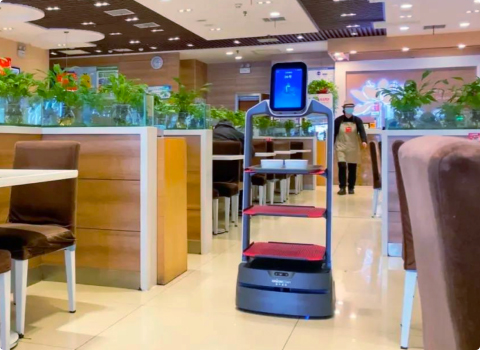
Cafes operating bustling cafe seating areas are currently navigating an unprecedented intersection of operational challenges, defined by persistent labor shortages, rising operating costs, and the intense physical demands placed on limited staff. With the broader food and beverage industry struggling to return to pre-pandemic employment levels and managers finding it increasingly difficult to fill open positions, maintaining rapid table turnover and high-quality customer service during peak rushes has become a daily strain. To mitigate these mounting pressures, operators are integrating indoor delivery robots as a strategic solution to automate table-side drop-offs, augment overworked baristas, and stabilize service consistency without inflating overhead costs.
To illustrate how these generic capabilities function in a real-world environment, the OrionStar LuckiBot utilizes a dual SLAM navigation solution combining LiDAR and visual positioning to map environments and detect obstacles, offering a response time as short as 0.5 seconds according to manufacturer data. Designed to alleviate physical strain on cafe staff, the robot features adjustable trays capable of transporting a total payload of up to 40 kg, allowing it to serve up to four tables per single trip based on official specifications. Multiple units can also operate simultaneously using built-in multi-robot cooperation algorithms, ensuring that complex cafe floor plans can be serviced efficiently while maintaining a reliable, contactless delivery flow.
Delivering multiple hot beverages and food items to standard dining tables requires careful balance and frequent trips during morning rushes. Delivery robots handle these repetitive drops safely by using self-leveling suspensions to minimize the risk of spills during transport, allowing baristas to remain stationed at the espresso machine.
Lounge areas often feature low coffee tables, soft seating, and unpredictable walking paths obstructed by bags or stretched legs. Robots utilize 3D omnidirectional sensors and rapid obstacle avoidance to weave through these tight, irregular spaces seamlessly without disrupting the relaxing atmosphere.
Crowds often form around pickup counters, causing congestion that slows down the flow of service and frustrates waiting guests. By automatically dispatching completed orders directly from the counter to the guest's seating location, robots help disperse these bottlenecks and keep the ordering zone clear and efficient.
Modern indoor delivery robots are designed to function as an active node within a cafe's broader digital ecosystem, integrating smoothly with existing cloud-based point-of-sale (POS) and kitchen display systems (KDS). Through API endpoints or webhooks, a ticket marked as ready by the kitchen can automatically trigger a delivery assignment, dispatching the robot to the appropriate table without manual intervention from the staff. Furthermore, these robots add a floor-level telemetry layer to the cafe's Internet of Things (IoT) network, feeding real-time task duration, location data, and battery metrics into centralized dashboards alongside connected kitchen equipment and AI-driven demand forecasting tools.
Ultimately, leveraging automation in daily operations provides cafe owners with the actionable data and operational efficiency needed to document waste reduction and meet rigorous environmental and governance standards.
Indoor delivery robots are fundamentally changing how the food and beverage industry serves cafe seating areas, providing a practical solution to persistent staffing shortages while optimizing the overall flow of service. By taking over the repetitive, physically demanding tasks of running orders and assisting with table bussing, these systems allow human staff to focus on hospitality, customer connection, and craft. As the technology continues to mature, platforms like the OrionStar LuckiBot series offer multiple models designed to adapt to various floor plans and operational requirements, providing operators with scalable tools to modernize their venues.