

REQUEST DEMO
Robot CATALOG will be sent to your mailbox immediately after submission.
SUBMIT
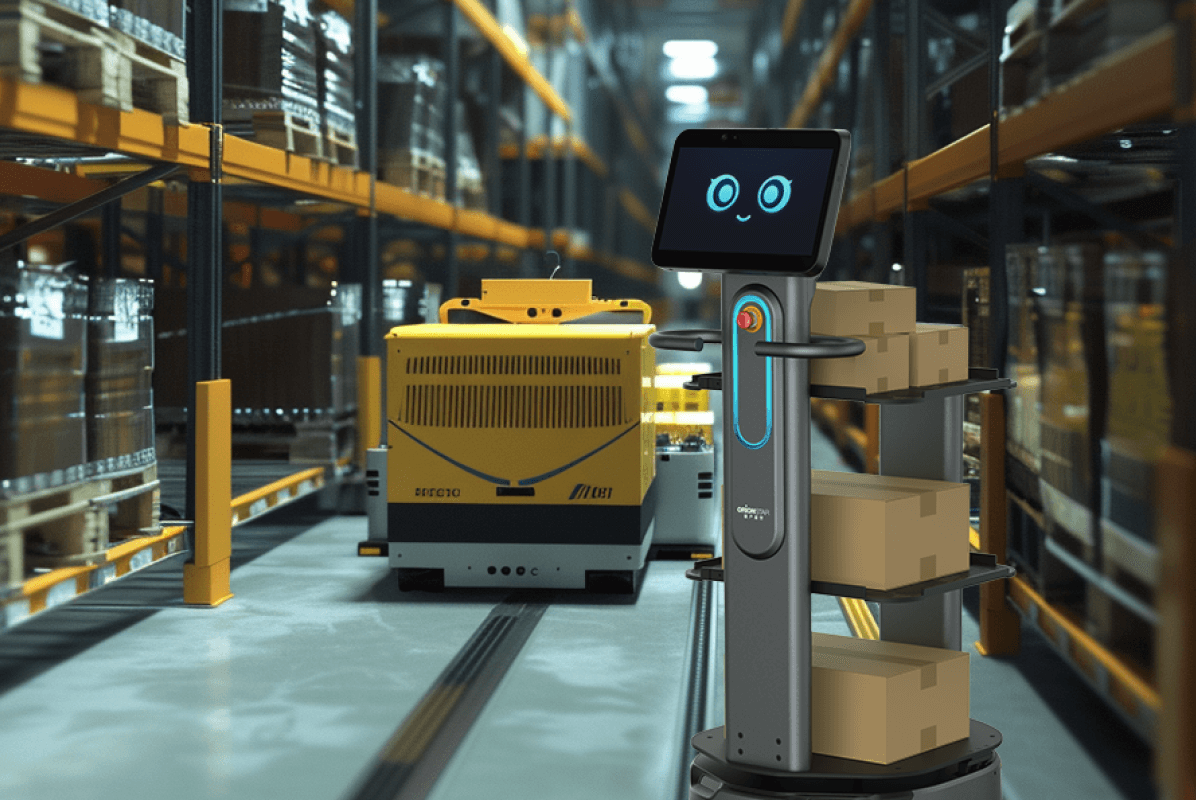
Assembly Plants face mounting operational and material handling challenges at their workstations, driven by structural shortages in skilled labor, the high cost of manual transport, and strict compliance requirements for traceability and safety. As manual cart transfers increasingly lead to congested aisles, delayed component deliveries, and inflated work-in-progress inventory, production lines suffer from costly micro-stoppages and unbalanced takt times. To overcome these bottlenecks, plant operators are turning to intralogistics robots as a dynamic solution to automate material flow, ensure just-in-time delivery, and maintain a highly efficient, compliant production environment.
The OrionStar CarryBot D150 illustrates these intralogistics capabilities within a heavy-duty material transport context. Utilizing VSLAM+ technology and a comprehensive sensor suite that includes LiDAR and multiple depth cameras, the unit can navigate autonomously without facility modifications while maintaining a minimum safe clearance of 65 cm, according to manufacturer specifications. CarryBot D150 is designed with privacy in mind; visual data for obstacle avoidance is processed in real-time at the edge without recording personal identifiers. Designed to support multi-robot cooperation and automated material flow, the platform accommodates a net payload of up to 150 kg and offers up to 12 hours of battery life to sustain continuous workstation feeding across extended production shifts.
These zones frequently struggle with volatile demand spikes during high-mix production changeovers, resulting in manual handlers delivering incorrect or delayed components. Intralogistics robots seamlessly adapt to these fluctuations by fetching precisely sequenced part kits directly from the warehouse and delivering them exactly when the takt time dictates.
Operators at sub-assembly stations often face ergonomic strain and workflow interruptions when forced to manually haul heavy sub-components across the floor. By automating this transport, mobile platforms move bulky items safely through congested aisles, ensuring that technicians remain stationed at their benches focusing on precision work.
Tracking the flow of materials into inspection areas is often managed via disconnected logbooks, leading to traceability gaps and delayed defect detection. Automated transport robots establish a digital chain of custody by registering every movement to the inspection bay, guaranteeing that samples arrive consistently and compliance records are continuously updated.
The transition of completed products from the final assembly line to the warehouse can create severe bottlenecks if pallets or carts are left waiting for a forklift. Intralogistics fleets clear these end-of-line jams instantly by autonomously collecting finished goods as soon as they are ready and transporting them to outbound staging areas without disrupting ongoing assembly.
To function as a controllable intralogistics layer rather than a mere collection of moving carts, intralogistics robots rely on deep integration with existing workstation architectures, including MES, ERP, WMS, and ANDON systems. When a production order changes in the MES or ERP, native software connectors immediately trigger a synchronized chain of logistics operations—such as clearing previous materials and supplying new components—without requiring manual data entry. Furthermore, standard protocols like VDA 5050 and PLC adapter gateways facilitate seamless signal exchange between the fleet management system and diverse factory IoT equipment, enabling fully automated, closed-loop operations that coordinate end-to-end material flow.
Intralogistics robots are fundamentally changing the way assembly plants maintain workstation operations, shifting facilities from reactive, manual material handling to highly synchronized, data-driven workflows. By eliminating bottlenecks and integrating seamlessly with overarching factory systems, these mobile platforms ensure that production lines run steadily and efficiently. The OrionStar CarryBot series provides multiple configurations tailored to accommodate different payload capacities and facility constraints, offering operational leaders a versatile approach for evaluating and addressing their specific intralogistics requirements.
Data Privacy Notice: Audio and visual data processed for navigation and interaction are anonymized and processed locally by default. Cloud features require opt-in and comply with GDPR/PIPL data minimization protocols.