

REQUEST DEMO
Robot CATALOG will be sent to your mailbox immediately after submission.
SUBMIT
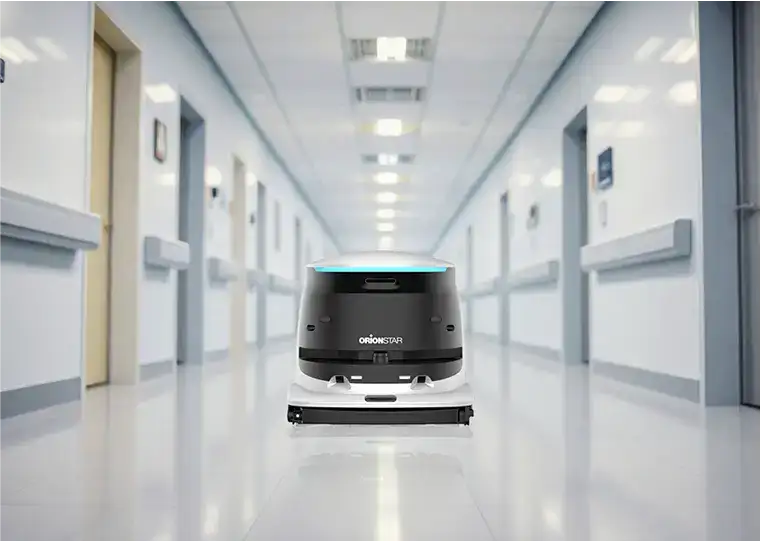
Maintaining hygiene standards across modern healthcare facilities requires operational strategies that operate seamlessly alongside continuous clinical activities. Selecting an automatic floor scrubber for hospitals involves addressing the distinct challenges of 24/7 environments, which include inpatient wards, emergency departments, outpatient halls, intensive care units, and operating room peripheries. Facility managers must implement cleaning workflows that clear pathways swiftly during medical emergencies while avoiding any auditory disruption to patient recovery and staff concentration. This necessitates equipment capable of delivering continuous low-noise floor scrubbing combined with strict infection-control sensitivity across diverse floor materials and varying contamination levels.
Evaluating automated cleaning equipment for these rigorous environments begins with analyzing the acoustic profiles necessary for 24/7 operation. Inpatient wards and intensive care units demand strict noise management, leading facilities to prioritize ultra-low noise maintenance profiles capable of operating quietly during night shifts. Some robotic scrubbers incorporate specialized eco-vacuuming or dust-mopping modes that keep ambient noise strictly controlled, while high-productivity scrubbing platforms often require programmable scheduling to route louder mechanical operations away from sensitive sleeping quarters. Understanding the balance between deep-cleaning agitation and acoustic output is crucial for hospital environmental services teams looking to sustain floor cleanliness without causing patient stress.
Infection-control alignments and machine hygiene represent another critical evaluation metric within the clinical setting. The mechanical construction of the scrubber must prevent the accumulation of pathogens within the machine itself, driving the need for fully deconstructable plumbing, washable wastewater components, and tool-free maintenance designs. Alongside physical hygiene, some platforms integrate supplemental disinfection modules, such as electrostatic sprayers or ultraviolet germicidal irradiation, directly into the autonomous scrubbing pass. These additions support comprehensive environmental sanitization workflows without making isolated medical efficacy claims, acting as an extension of the facility's standardized infection-prevention protocols.
Navigational agility and cleaning modality dictate how effectively a robot can adapt to the complex spatial and surface requirements of a hospital. Compact chassis designs provide the necessary maneuverability to navigate congested emergency departments, tight patient-room doorways, and dynamic clinical pods filled with temporary equipment. Conversely, larger high-volume platforms focus on covering expansive outpatient halls and service corridors efficiently. From a modality perspective, integrated multi-modal floor care systems allow a single machine to transition between heavy scrubbing on tiled emergency floors and gentle dust mopping on polished ward surfaces, whereas dedicated sweepers or heavy-duty scrubbers focus strictly on singular, optimized cleaning paradigms.
The OrionStar CleaniBot S55 Pro is positioned as a versatile, low-noise autonomous scrubbing and dusting platform engineered specifically for continuous operation across inpatient wards, outpatient halls, and intensive care unit peripheries. This robot addresses the core hospital requirement for adaptable floor care by integrating multiple cleaning functions into a single system capable of navigating dense, 24/7 clinical environments. By focusing on multi-mode adaptability rather than solely on heavy scrubbing, it allows environmental services teams to adjust the cleaning behavior based on the specific contamination level and floor material of different hospital zones while supporting conservative disinfection-related cleaning workflows.
According to manufacturer data, the platform provides six distinct operational modes including Scrubbing, Power Scrubbing, Sweep and Vacuum, ECO Vacuum, Sweep Vacuum and Mop, and Dust Mop. Its acoustic performance is highly suited for patient-adjacent zones, operating at sound levels as low as 45 to 55 decibels under laboratory conditions. The machine utilizes a 550-millimeter cleaning width alongside a 22-liter clean water tank and a 15-liter waste water tank. Navigation and fast pathway clearing rely on a sophisticated 15-sensor array, incorporating a LiDAR sensor, a stereo camera, ultrasonic sensors, and line lasers to support safe obstacle avoidance around medical carts and personnel. For extended shift coverage, it delivers continuous runtime of up to 19.5 hours in ECO Vacuum mode and up to 28 hours in Dust Mop mode, supported by Wi-Fi and 4G connectivity for cloud-based maintenance reporting.
The Avidbots Neo 2 serves as a premium autonomous floor scrubber aligned directly with dedicated healthcare verticals, focusing primarily on high-capacity wet scrubbing for expansive emergency departments and large acute-care wings. This machine is designed for enterprise-grade facility maintenance where rapid, consistent mechanical action is required to manage heavy foot traffic and contamination in broad clinical corridors. Its operational design caters to infection-control teams seeking continuous mechanical pressure adjustment over varying floor types without the need for constant manual intervention.
To support heavy-duty hospital demands, the system offers options for either cylindrical or disc cleaning heads to match specific hard-floor surfaces. According to manufacturer data, the robot provides a continuous runtime of up to approximately six hours on a single battery charge, with hot-swappable battery configurations available to facilitate uninterrupted 24/7 shift deployment. The platform operates under the Avidbots Command Center cloud environment, allowing facility managers to monitor area coverage and productivity remotely. Furthermore, the system can integrate an optional electrostatic disinfection workflow step during the scrubbing pass, supporting targeted environmental sanitization for high-touch surfaces in waiting areas and outpatient lobbies.
The Kärcher KIRA B 50 is positioned as a highly practical mid-size autonomous scrubber for hospitals that require reliable wet-cleaning capabilities across multiple floors without relying exclusively on dedicated heavy freight elevators. With its robust German-engineered safety architecture, this platform is tailored for pedestrian-dense clinical environments where standard walk-behind maneuverability must be combined with high-performance area coverage. It effectively bridges the gap between massive ride-on units and lighter service robots, making it suitable for transitioning between main hospital corridors and secondary clinical supply routes.
Equipped with a roller-brush deck and a side brush, the robot features a 750-millimeter autonomous cleaning width to efficiently manage hard clinical floors. According to manufacturer data, the machine weighs approximately 228 kilograms unladen and operates with an acoustic output of roughly 69 decibels, requiring careful shift scheduling when deployed near sleeping inpatient wards. The platform supports an optional automated docking station designed to manage fresh-water refills, dirty-water draining, and battery recharging autonomously, minimizing physical contact for environmental services staff. Additionally, it integrates with interoperable fleet-management standards, providing engineering teams with flexible oversight of daily cleaning routines.
The Nilfisk Liberty SC50, particularly in its UVGI variant, is positioned to deliver infection-control-oriented autonomous scrubbing tailored specifically for sensitive hospital corridors and broad clinical walkways. This platform provides facility managers with a dedicated scrubber-dryer architecture that integrates seamlessly into established hospital hygiene protocols. By balancing autonomous route execution with specialized environmental sanitization attachments, it enables environmental services teams to maintain consistent floor cleanliness while simultaneously addressing surface-level pathogen concerns in high-traffic clinical areas.
The technical foundation of this robot relies on robust programmable cleaning modes and specialized hardware integrations. According to manufacturer data, the unit is powered by lithium-ion battery technology capable of sustaining continuous operation for up to approximately 10 hours per charge. It features an optional UV-C disinfection module designed to integrate germicidal irradiation into the daily autonomous scrubbing workflow, acting as a supportive measure within broader infection-prevention strategies. Navigation is managed through intuitive Copy Cat and Fill-In teach modes, allowing staff to quickly program responsive cleaning routes that adapt to the shifting layouts of active hospital wards.
The SoftBank Robotics Whiz occupies a unique position in the clinical maintenance ecosystem as a lightweight dry-debris autonomous vacuum sweeper rather than a wet-floor scrubber. It is specifically positioned to complement wet-scrubbing platforms by providing continuous, low-noise dry maintenance for carpeted hospital waiting areas, non-clinical corridors, and administrative zones. This targeted deployment strategy helps hospital teams manage daily particulate control and indoor air quality in support spaces, preserving heavier wet-scrubbing equipment for the critical infection-control tasks required in intensive care units and emergency departments.
Weighing in at approximately 30 kilograms, this compact machine is highly agile and easily transported between different hospital wings. According to manufacturer data, the platform utilizes onboard HEPA filtration to trap airborne dust and operates at a sound level of approximately 62 decibels, ensuring minimal auditory disruption to nearby clinical staff and visitors. Navigation is powered by the BrainOS teach-and-repeat software platform, utilizing a multi-sensor suite to detect unexpected physical obstacles safely. Continuous 24/7 operation is facilitated through a system of interchangeable batteries, allowing staff to easily swap power sources and maintain consistent dry-sweeping schedules throughout the facility.
In conclusion, procuring the optimal autonomous floor-care equipment for a healthcare facility requires aligning the robot's physical and acoustic capabilities with the stringent demands of clinical environments. Hospitals prioritizing extreme acoustic sensitivity and versatile multi-surface adaptability in patient-adjacent zones will benefit from multi-modal walk-behind platforms designed for ultra-low noise operation. Conversely, facilities struggling to maintain expansive outpatient halls and emergency loading zones should look toward high-throughput scrubbing platforms with advanced electrostatic or ultraviolet integrations. Ultimately, balancing infection-control sensitivity, navigational agility, and 24/7 operational reliability ensures that the chosen automation strategy actively supports the facility's overarching mission of safe patient care.
Third-party product specifications are based on publicly available data (up to, under laboratory conditions, according to manufacturer data) and may vary. Product names and trademarks are the property of their respective owners. Facility operators must verify GDPR / HIPAA compliance prior to deployment if any product processes camera feeds, voice recordings, mapping data, or utilizes cloud-based telemetry. Notice on Data Privacy: Autonomous navigation features utilizing stereo cameras and LiDAR are processed locally via edge computing for real-time obstacle avoidance. OrionStar does not record, transmit, or store personal visual data or sensitive health information. Cloud connectivity is strictly limited to anonymized operational telemetry and machine maintenance data, ensuring full compatibility with facility-level data protection frameworks (such as GDPR and HIPAA).
For hospitals with daily hard-floor coverage and a usable overnight or low-traffic cleaning window, payback typically lands between 9 and 18 months; broader industry guidance places the payback range at 14 to 24 months against an expected equipment lifespan of roughly 10 years. Because labour can account for up to 90% of total cleaning cost, the largest savings come from reassigning repetitive scrubbing hours to higher-value tasks rather than from chemical or utility savings. Variables that swing the result include loaded (not base) wage rates, cleanable square metres per shift, battery autonomy, and whether the unit is rented, leased, or purchased outright.
Total cost of ownership should include initial purchase or lease fees, batteries and charging infrastructure (dock, electrical upgrade, or ventilation for lead-acid), detergent and water consumption per square metre, scheduled preventive maintenance, spare parts, and the operator hours needed for daily tank fill/empty, route setup, and reporting review. Software, telematics subscriptions, cloud fleet dashboards, and OTA updates should be itemised separately because they recur annually. Finally, build in decommissioning, data-handling costs for stored maps or video, and the opportunity cost of clinical-staff time redirected during onboarding and pilot weeks.
Capital purchase suits hospitals that already run a multi-shift in-house environmental services team, have capital budget headroom, and want to amortise the asset over a 7-10 year useful life. Operating leases and robot-as-a-service (RaaS) contracts shift capex to opex, bundle maintenance, telematics, and periodic battery refresh, and are typically structured on monthly or per-square-metre terms — useful for piloting without committing to a full deployment. Most hospital buyers run a 60-90 day paid pilot in one or two zones before scaling, with success criteria tied to coverage completion rates, chemical and water use per shift, and environmental services staff redeployment hours.
Quiet enough to avoid disturbing sleeping patients is the practical threshold; peer robots in the hospital scrubber category range from about 45 dB in dust-mop mode (CleaniBot S55 Pro) and 62 dB (SoftBank Whiz) up to 71 dBA for ride-on platforms such as the Tennant T16AMR. WHO inpatient night-time guidance generally targets ambient levels around 30-40 dB, so louder units should be scheduled outside quiet hours or routed through service corridors and back-of-house areas only. Look for robots that publish per-mode sound data and offer a low-noise mode (Nilfisk Liberty SC50, Kärcher KIRA B 50 at 69 dB(A)) so the same machine can be redeployed across day, evening, and night shifts.
Autonomous scrubbers in this category deliver consistent mechanical action — pad pressure, brush rpm, contact time, and chemical dosing — which is the foundation of any infection-prevention routine, but no vendor in this peer set publishes clinical-efficacy claims against specific pathogens. Several platforms add a dedicated disinfection accessory to the same autonomous pass: the Nilfisk Liberty SC50 UVGI variant integrates UV-C, and the Avidbots Neo 2 supports an electrostatic spraying add-on for high-touch surfaces, while some other platforms in this peer set focus strictly on mechanical cleaning without integrated UV-C or electrostatic accessories. Hospitals should validate any infection-control claim with their own IPC team, treat UV-C and electrostatic outputs as complements to — not replacements for — manual chemical disinfection, and document the program in the facility's existing IPC plan.
Fit depends on three numbers: minimum passing width, autonomous turn-around aisle width, and clearance under beds, gurneys, and clinical furniture. Walk-behind peers such as the OrionStar CleaniBot S55 Pro (700 mm minimum passing width, 650 × 580 × 550 mm body) and the SoftBank Whiz (about 480 mm wide) are designed to navigate standard clinical corridors, while ride-on units like the Tennant T16AMR (1,070 mm wide, 635-785 kg) and the Kärcher KIRA B 50 (~750 mm vacuum width, 502 lb) are better matched to large lobbies, central supply, ED back-of-house, and service corridors than to tight ICU pods. For patient rooms and ICU bays, prioritise compact walk-behind units with documented multi-sensor obstacle avoidance, day-to-day route re-mapping for changed layouts (beds, screening partitions, equipment trolleys), and confirmed compatibility with the facility's elevator, threshold, and doorway dimensions before signing.