

REQUEST DEMO
Robot CATALOG will be sent to your mailbox immediately after submission.
SUBMIT
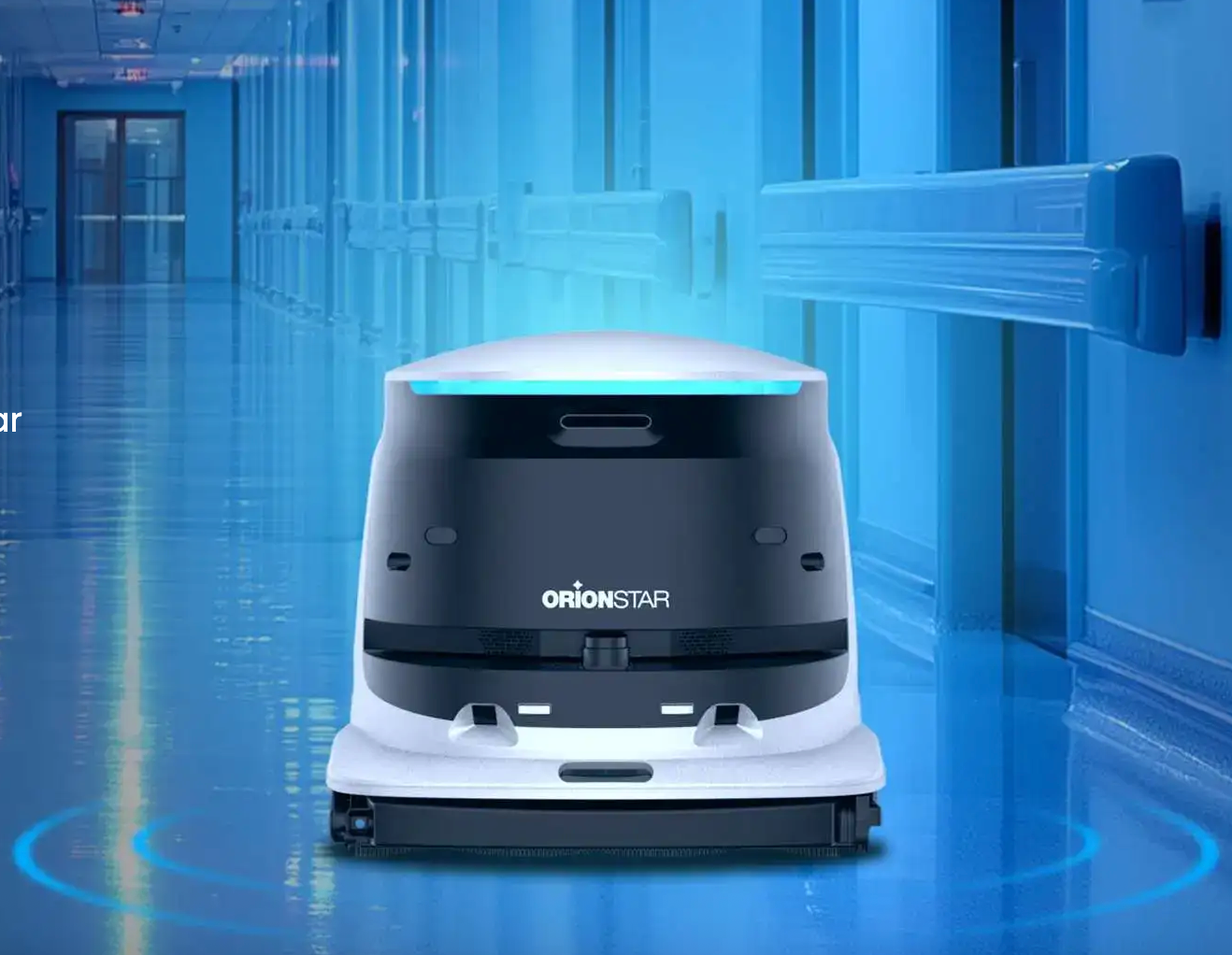
Facility management in global airports stands at a pivotal inflection point. Surging passenger traffic—reaching 9.4 billion in 2024, an 8.4% jump from the previous year—exerts relentless pressure on cleaning operations. Compounding this is a structural labor shortage, with the facility services sector facing a 61% annual turnover rate among cleaning staff, and demand outpacing workforce growth. Post-COVID, travelers expect elevated cleanliness as a non-negotiable part of their airport experience, tying directly to higher spending and satisfaction scores. These shifts, paired with rising costs of manual cleaning inefficiency, have pushed automatic floor scrubbers from experimental tools to essential industry solutions, capable of addressing scale, labor, and quality challenges simultaneously.
These pressures collectively lead to one clear conclusion: traditional manual cleaning models are no longer sustainable.
OrionStar’s CleaniBot series offers a dual-model approach tailored to the diverse needs of airport environments. The CleaniBot C5, an industrial-grade scrubber, excels in high-traffic, heavy-soil areas like check-in halls, baggage claim zones, and food courts. Boasting a 550 mm main brush and up to 1,980 m² per hour cleaning capacity (according to manufacturer data), its 25 kg downward scrubbing pressure effectively removes stubborn grime and oil stains in a single pass. With a combined 90 L water tank system, it minimizes refills and downtime, ideal for large, continuous cleaning tasks.
The CleaniBot S55 Pro, by contrast, is designed for versatile, quiet operation across a wider range of spaces, including gate lounges, retail concourses, restrooms, and back-of-house corridors. Its multiple cleaning modes—from scrubbing to dust mopping—adapt to different floor surfaces, with noise levels as low as 45 dB in dust mop mode to avoid disturbing passengers. With up to 28 hours of runtime in dust mop mode (per manufacturer specifications), it can handle extended, low-intervention cleaning shifts.
Together, the two models complement each other: the C5 tackles heavy-duty, high-soil zones while the S55 Pro maintains consistent cleanliness across more delicate or noise-sensitive areas. Both support digital management features, including remote deployment, cloud-based maintenance, and data reporting, enabling facility teams to optimize cleaning schedules and track performance. For deployments in EU airports, operators should verify GDPR compliance for any camera or sensor data processing to ensure alignment with privacy regulations.
These results are not theoretical; they are real-world outcomes that facility managers and building operators are already verifying across global airports.
Automation in airport facility management is not about replacing human staff—it’s about elevating their roles to focus on higher-value tasks. Autonomous floor scrubbers handle repetitive, large-area cleaning, freeing up facility teams to concentrate on quality oversight, passenger assistance, and specialized deep cleaning. This redeployment model is already in action: some airports have shifted janitorial staff from routine floor scrubbing to tasks like sanitizing high-touch surfaces and managing robot fleets.
New skills and roles are emerging as a result. Facility teams now require training in robot operation, digital management tools, and data analysis to optimize cleaning workflows. These shifts not only improve job satisfaction by reducing physically demanding, repetitive work but also create more stable, skill-based positions within airport operations. The transition has been widely welcomed by staff, especially when framed around role expansion rather than headcount reduction.
Looking ahead, automatic floor scrubbers are set to become a foundational component of airport facility management infrastructure. As passenger volumes continue to rise and labor challenges persist, scalable, autonomous cleaning solutions will be essential to maintaining operational efficiency and meeting passenger expectations. OrionStar’s CleaniBot series, with its dual-model approach, offers tailored options to cover the full spectrum of airport cleaning needs—from heavy-duty scrubbing to quiet, versatile maintenance. This shift toward smart automation is not just a temporary fix; it’s a long-term evolution of facility management practices, ensuring airports can adapt to changing demands while delivering consistent, verifiable cleanliness.