

REQUEST DEMO
Robot CATALOG will be sent to your mailbox immediately after submission.
SUBMIT
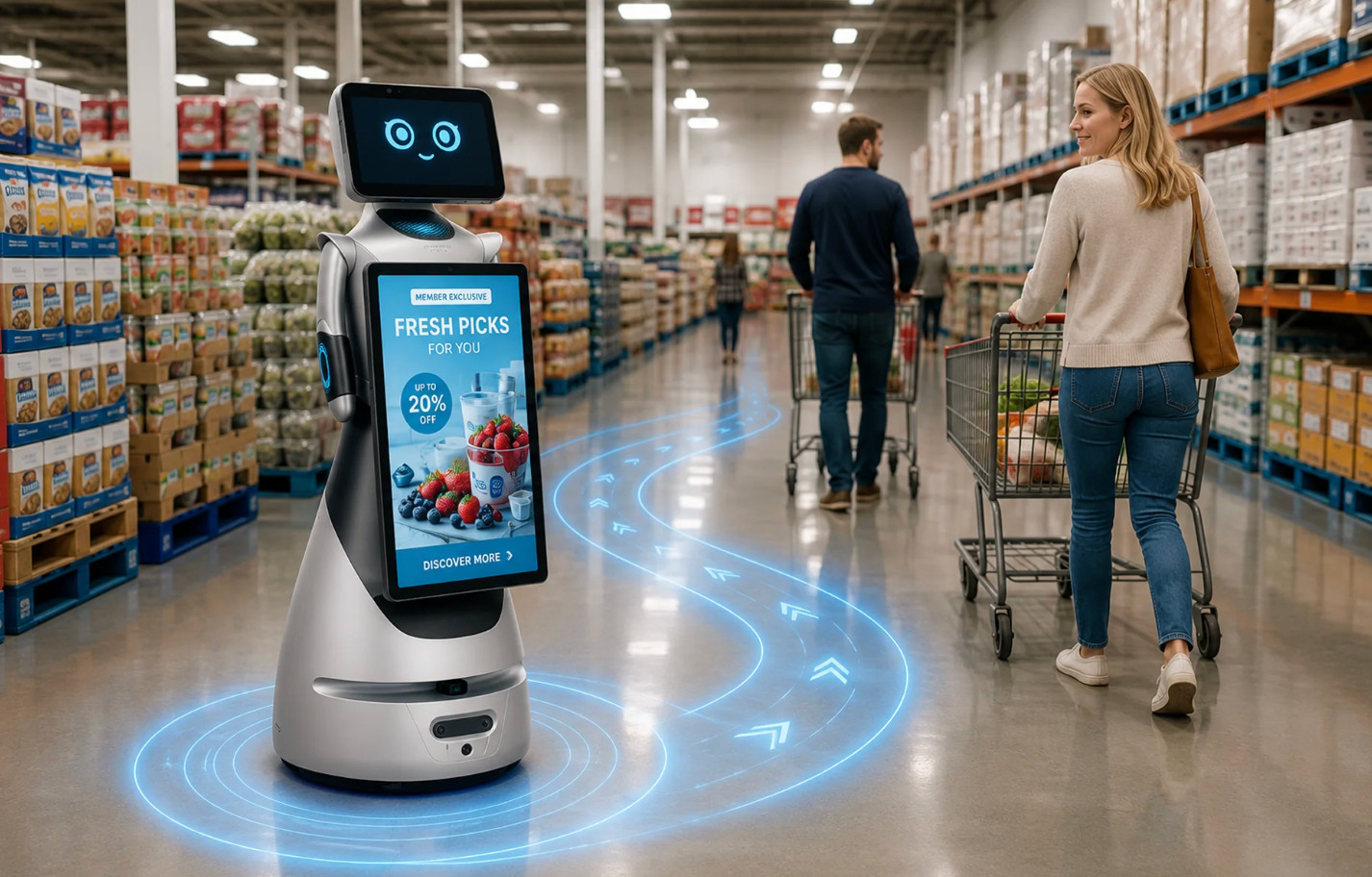
In the dynamic retail landscape, escalator landings in department stores represent critical transition zones that are historically prone to wayfinding confusion, missed promotional opportunities, and staffing inconsistencies. As shoppers pause to decide their next move between floors with distinct merchandising themes, traditional static signage and stretched floor staff often fail to deliver a timely or targeted message at this point of high decision density. To address this structural operational challenge, the industry is increasingly turning to the reception robot as an interactive, proactive solution that bridges the gap between digital marketing and physical customer service right at these pivotal vertical-circulation chokepoints.
The OrionStar GreetingBot Pro (Large-Screen Edition) demonstrates these category capabilities by integrating voice artificial intelligence, mobility, and digital signage into a single retail footprint. Designed for high-footfall commercial venues, this model features a 21.5-inch FHD chest-mounted display alongside a 14-inch head touch screen, providing substantial real estate for simultaneous face-to-face interaction and broadcast-style promotional content. According to manufacturer data, it utilizes a 6-microphone circular array with 360-degree sound source localization to maintain conversational clarity, while relying on LiDAR and multiple sensors to autonomously navigate and map areas up to 50,000 square meters. Powered by a 20 Ah lithium ternary battery, the unit supports up to 8 to 10 hours of runtime, allowing it to sustain active greeting and wayfinding duties throughout standard retail shifts without requiring mid-day recharges.
These vertical-circulation chokepoints are where shoppers naturally pause to plan their next move between distinct floors. Reception robots stationed here serve as interactive, adaptable directories, capturing foot traffic during moments of hesitation to offer floor-specific promotions and accurate wayfinding.
Large open spaces in department stores often suffer from a lack of clear focal points for customer assistance or orientation. A mobile reception robot can patrol these wide corridors, adjusting its route to greet approaching shoppers and displaying dynamic event information on its large screens.
Typically located on the ground floor, beauty halls are dense, brand-heavy environments with high sensory competition and heavy international footfall. Robots navigate these complex layouts to direct customers to specific brand activations, seamlessly switching languages to assist tourists looking for signature cosmetic counters.
Traditional welcome desks can easily become overwhelmed by routine inquiries during peak weekend shopping hours. Deploying a robot alongside human staff provides an immediate triage point, allowing the robot to handle standard questions like restroom locations while human concierges manage more complex customer service issues.
To maximize operational value, reception robots are primarily deployed as active nodes integrated into a department store's existing digital infrastructure rather than operating as standalone devices. When connected to CRM and loyalty systems, these robots can utilize anonymized identifiers to surface personalized greetings and push daily membership offers directly to a shopper's mobile device. They also interface seamlessly with the venue’s broader in-store media networks and digital signage systems to create a cohesive, dynamically updated promotional layer across the store. Furthermore, advanced deployments involve multi-floor coordination via elevator dispatch systems and real-time inventory platforms, enabling the robot to guide shoppers to in-stock items while actively managing overall building flow and security sensor integrations under strict GDPR governance.
Integrating automated reception platforms ultimately aligns with the retail sector's broader ESG objectives by minimizing physical waste while fostering a more supportive, efficient environment for the human workforce.
The reception robot is steadily transforming how the retail industry manages the customer experience at escalator landings in department stores, turning transitional points of hesitation into measurable moments of engagement. By combining autonomous mobility, real-time promotional capabilities, and interactive wayfinding, these platforms address long-standing operational pain points surrounding staffing limits and static digital signage. The OrionStar GreetingBot series provides multiple models to accommodate various venue architectures and operational requirements, allowing facility managers to align hardware configurations precisely with their spatial and interaction needs.