

REQUEST DEMO
Robot CATALOG will be sent to your mailbox immediately after submission.
SUBMIT
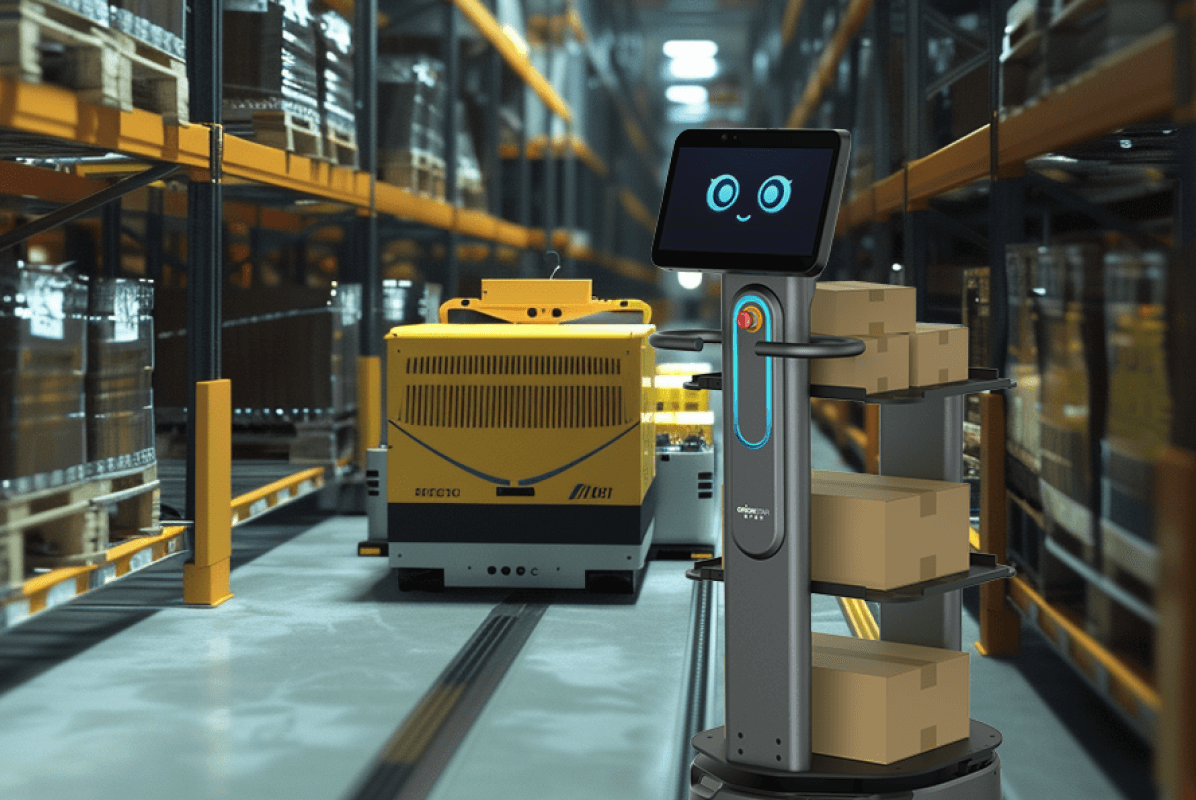
As Warehouses strive to maximize storage density, maintaining and clearing narrow aisles presents compounding cleaning and operational challenges surrounding labor shortages, rising costs, and strict safety compliance. Traditional manual upkeep and waste removal in these tightly constrained spaces force workers into repetitive physical strain while draining valuable resources from core fulfillment tasks. To address these structural inefficiencies, autonomous warehouse robots are emerging as a vital solution, transforming how facilities manage aisle maintenance and material transport safely and cost-effectively.
The OrionStar CarryBot D150 translates these generic automated capabilities into a practical logistical tool for tightly spaced environments. Operating with advanced VSLAM+ technology and a multi-sensor suite, the unit navigates autonomously with a minimum passage clearance of 65 cm according to manufacturer data, allowing it to easily bypass obstacles in constrained pathways. It can effectively transport waste, recyclables, or inventory with a net payload capacity of up to 150 kg, while sustaining continuous operations for up to 12 hours before autonomously returning to its charging dock. By utilizing these integrated features, the robot manages repetitive material handling and aisle-clearing tasks without requiring structural changes to the facility.
High volumes of incoming inventory and packaging materials frequently clutter these zones, creating immediate safety and navigation hazards. Warehouse robots efficiently clear away discarded dunnage and transport empty pallets, maintaining a clean environment that accelerates the intake process.
These highly trafficked, narrow pathways are prone to congestion from dropped items, debris, and constant human movement. Automated units can continuously navigate these tight clearances to remove recyclables, ensuring human pickers experience zero delays from blocked or dirty routes.
During off-peak restocking, empty boxes and shrink wrap can quickly accumulate and restrict access to high-density racks. Robots equipped with heavy-duty payload modules autonomously gather and transport this waste to disposal areas, maintaining compliance and smooth restocking operations.
The final stages of order fulfillment generate significant amounts of waste and require seamless coordination to prevent shipping bottlenecks. Deploying robots to systematically clear these staging zones helps logistics managers sustain high-throughput order processing and maintain a pristine outbound environment.
Modern warehouse robots function as interconnected nodes within a facility's broader technological ecosystem rather than as isolated tools. By integrating directly with Warehouse Management Systems (WMS) and Computerized Maintenance Management Systems (CMMS), these automated units provide real-time inventory tracking and predictive maintenance alerts. Furthermore, by linking with IoT sensors and Building Management Systems (BMS), the robot fleet shares environmental telemetry and traffic-flow analytics, ensuring that the entire automation network operates cohesively to prevent bottlenecks in narrow pathways.
By aligning operational efficiency with these environmental and regulatory benchmarks, automated systems actively drive a facility's long-term sustainability and ESG objectives.
Note: Customers are responsible for ensuring their use of visual navigation systems complies with local data protection laws (e.g., GDPR).
As labor shortages and high-density storage requirements intensify, warehouse robots are fundamentally changing the way Warehouses maintain and clear narrow aisles. By integrating advanced navigation, high payload capacities, and smart system connectivity, these autonomous solutions ensure that critical pathways remain unobstructed and highly functional. To support diverse facility configurations, the OrionStar CarryBot series provides multiple hardware variants designed to adapt seamlessly to specific operational demands, allowing facilities to explore the best fit for their unique layouts.