

REQUEST DEMO
Robot CATALOG will be sent to your mailbox immediately after submission.
SUBMIT
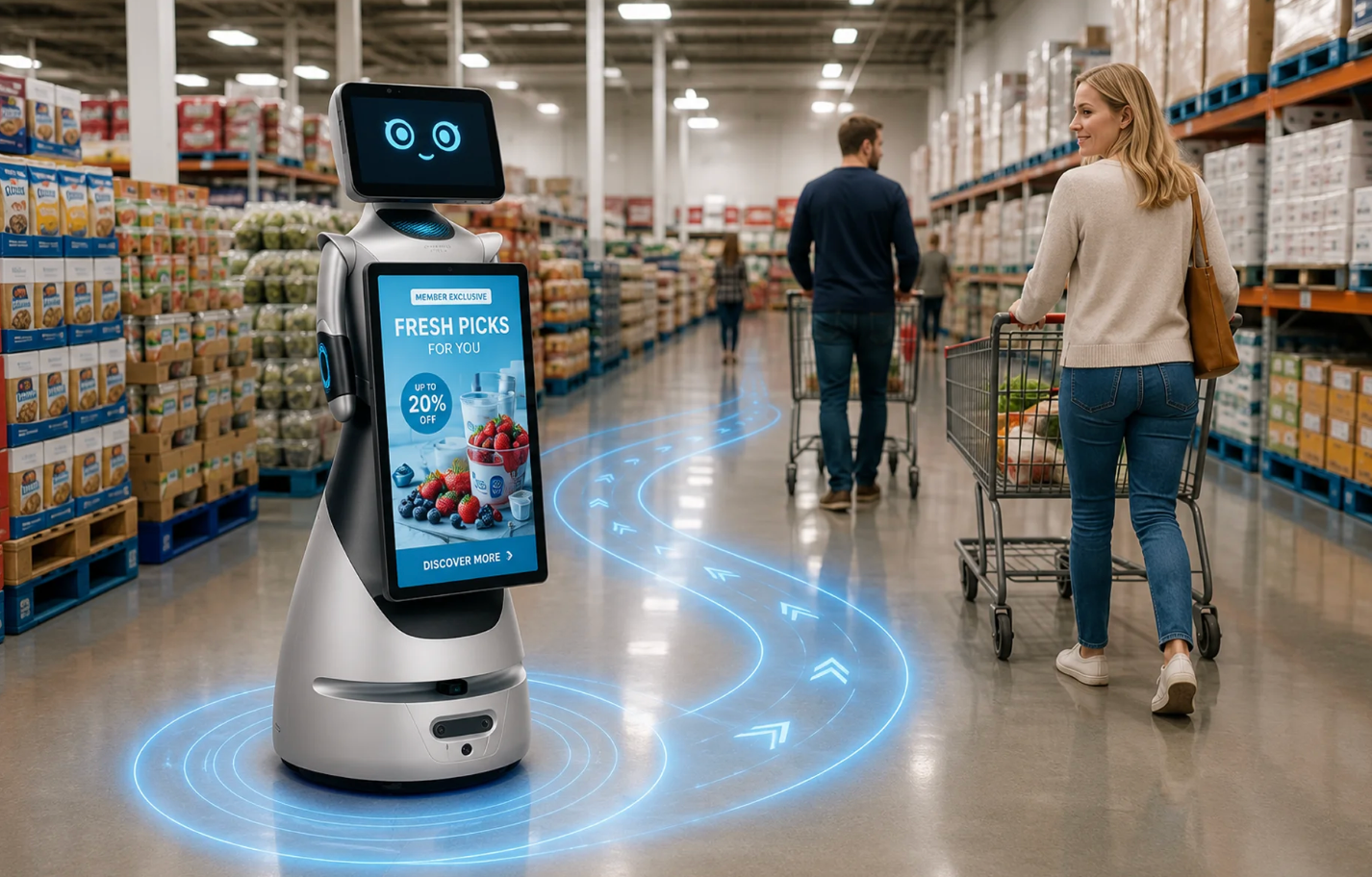
Retail operators in flagship stores, particularly within high-stakes hero product zones, face mounting challenges in delivering consistent, high-touch brand storytelling amidst ongoing staffing shortages and shifting consumer attention. These curated spaces require immediate, engaging, and repeatable interactions that human associates, often pulled away by back-of-house tasks, struggle to provide continuously during peak hours. To bridge this gap and maintain the desired level of customer immersion, greeting robots are increasingly being deployed as a specialized solution to capture shopper interest, deliver reliable product information, and anchor the brand experience without adding to frontline labor strain.
The OrionStar GreetingBot AD illustrates how these generic capabilities are implemented in a commercial hardware platform designed for high-footfall environments. To facilitate continuous engagement, the unit combines a 14-inch head touch screen with a 21.5-inch chest-mounted full high-definition display, allowing it to act as both an interactive interface and a mobile digital signage panel simultaneously. According to manufacturer specifications, it utilizes a 6-microphone circular array for accurate voice pickup and is equipped with a 20 Ah battery designed to deliver up to 10 hours of runtime to accommodate standard retail operating shifts. Furthermore, the robot supports autonomous movement through 60-centimeter corridors utilizing lidar and camera-based navigation, reflecting the industry’s requirement for safe mobility in busy commercial spaces.
These high-stakes real estate areas demand the most consistent brand storytelling for new product launches. Greeting robots anchor these zones by immediately recognizing approaching customers, delivering synchronized digital media on their displays, and answering foundational product questions while human staff finalize complex sales.
The storefront threshold sets the tone for the entire flagship experience and often suffers from bottlenecking during peak hours. Automated greeters manage this flow by welcoming guests in multiple languages, displaying daily event schedules, and triaging visitors to appropriate store sections based on their immediate needs.
Dedicated areas for immersive brand storytelling require tools that can bridge the physical and digital divide. By utilizing real-time cloud connectivity, mobile platforms interact with shoppers, sync their displayed multimedia with surrounding video walls, and maintain an interactive dialogue that deepens brand recall long after the visit.
Lines at the point of sale frequently cause friction and present a final risk of cart abandonment. Deployed near these queues, information-display robots entertain waiting customers, answer policy questions regarding returns or warranties, and promote loyalty program enrollments to maximize the value of the final touchpoint.
Greeting robots in flagship environments generate the most value when deeply integrated into the broader retail technology ecosystem rather than operating as standalone kiosks. Through application programming interfaces, these platforms connect with customer relationship management and loyalty systems to utilize opt-in loyalty integrations (such as QR codes or RFID) to identify returning shoppers and tailor interactions at the hero zone. Additionally, they synchronize their on-screen multimedia with the store’s larger digital signage networks, perform live inventory lookups via point-of-sale systems to confirm product availability, and feed valuable foot traffic and dwell-time metrics directly into the retailer’s Internet of Things and store-analytics dashboards.
By integrating digital efficiency with supportive labor practices, automated engagement platforms actively advance the environmental, social, and governance objectives of modern retail operators.
The strategic implementation of greeting robots is fundamentally changing how the retail industry designs and operates hero product zones within flagship stores. By addressing structural labor shortages, driving measurable engagement, and seamlessly integrating with existing data networks, these automated platforms provide a reliable mechanism for delivering consistent brand storytelling. Hardware ecosystems like the OrionStar GreetingBot Pro series offer multiple configurations to meet diverse spatial and functional requirements, providing operators with flexible tools to explore how autonomous engagement can support their broader physical retail strategies.
Note: The deployment of facial recognition and data collection features must comply with local privacy regulations (e.g., GDPR, PIPL, CCPA). Retail operators are solely responsible for providing transparency notices and obtaining necessary customer consents prior to use.