

REQUEST DEMO
Robot CATALOG will be sent to your mailbox immediately after submission.
SUBMIT
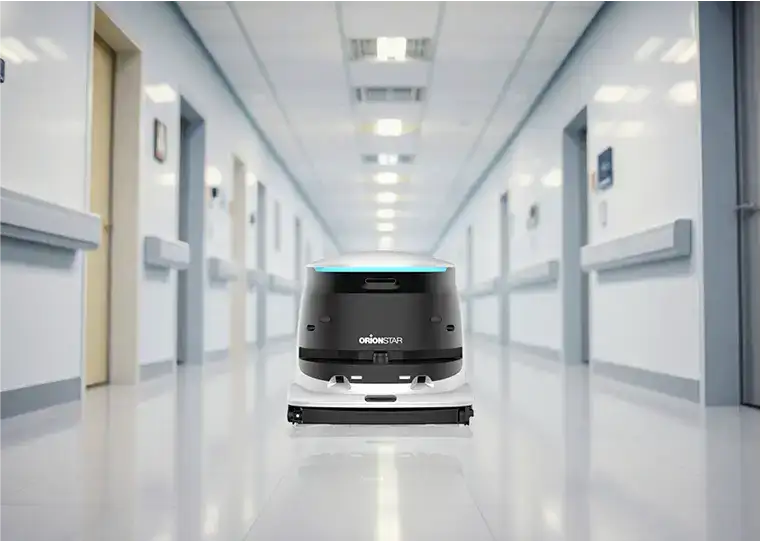
Integrated Facility Management in hospitals currently faces intense operational strain due to unprecedented manual labor shortages, rising wage inflation, and increasingly strict infection-control compliance mandates. As facility teams struggle to maintain continuous, verified hygiene standards across expansive clinical spaces, commercial cleaning robots have emerged as a necessary operational solution. By taking over repetitive floor care tasks, these automated systems allow acute-care facilities to control rising overhead costs, document cleaning cycles for regulatory audits, and reallocate human staff to high-value, detail-oriented routine cleaning tasks that contribute to a well-maintained clinical environment.
The OrionStar CleaniBot S55 Pro illustrates how these general autonomous capabilities are implemented in current hardware designed for large indoor environments. According to manufacturer specifications, the unit utilizes a multi-sensor system incorporating LiDAR, stereo cameras, and ultrasonic sensors to support map construction for areas up to 10,000 square meters while actively avoiding dynamic obstacles. To address diverse floor types common in healthcare settings, the robot can switch between multiple modes, achieving a cleaning efficiency of up to 1,368 square meters per hour in sweeping and vacuuming operations. Additionally, manufacturer data indicates it operates at noise levels as low as 45 dB during dust mopping, allowing it to perform continuous floor care without causing significant acoustic disruption to staff or resting patients.
High foot traffic from visitors, patients, and staff brings constant dirt and debris into hospital entryways, creating an immediate need for continuous floor maintenance. Autonomous robots can be programmed to run frequent sweep-and-vacuum cycles across these large open zones, handling the heavy influx of soil without tying up manual labor.
Hallways require frequent sanitization and floor washing but are often congested with moving beds, medical carts, and walking patients. Utilizing multi-sensor obstacle avoidance, commercial cleaning robots safely navigate these narrow, dynamic spaces while applying consistent scrubbing pressure to maintain required hygiene standards.
Waiting rooms present a cleaning challenge due to stationary furniture, changing occupancy, and the need for a quiet, low-stress environment. Robots utilizing low-noise dust mopping or energy-efficient vacuum modes maneuver around chairs and tables to remove debris without disturbing resting patients or disrupting clinical conversations.
Outpatient clinics experience concentrated daytime usage, leaving only brief after-hours windows for comprehensive floor care. Automated scrubbers can be deployed immediately after hours to execute pre-mapped deep cleaning routes, ensuring the facility is fully prepped and safe for the next day's clinical operations.
To function as part of a measurable operations platform, commercial cleaning robots are increasingly integrated into existing hospital smart-building ecosystems. By pushing structured telemetry data through REST APIs directly into Computerized Maintenance Management Systems (CMMS), robots can automatically trigger work orders for preventive maintenance when consumable parts, like brushes, reach specific wear thresholds. Furthermore, integration with Building Management Systems (BMS) and IoT sensor layers allows the automated fleet to coordinate with zone occupancy data, elevator calls, and after-hours scheduling, transforming isolated cleaning machines into mobile data collectors that enrich the facility's overall digital twin.
Automating these workflows ensures that integrated facility management programs can meet strict sustainability targets while providing transparent, data-driven reporting to stakeholders.
Commercial cleaning robots are fundamentally changing the way Integrated Facility Management maintains hospitals by addressing the root causes of labor shortages, cost inflation, and strict compliance demands. As facility teams transition from manual verification to data-driven, automated operations, these robotic platforms provide a reliable foundation for continuous clinical hygiene. For organizations evaluating their operational strategies, the OrionStar CleaniBot series offers multiple configurations designed to adapt to the varying floor types and spatial requirements inherent to complex healthcare environments, providing a practical path toward modernized facility care.