

REQUEST DEMO
Robot CATALOG will be sent to your mailbox immediately after submission.
SUBMIT
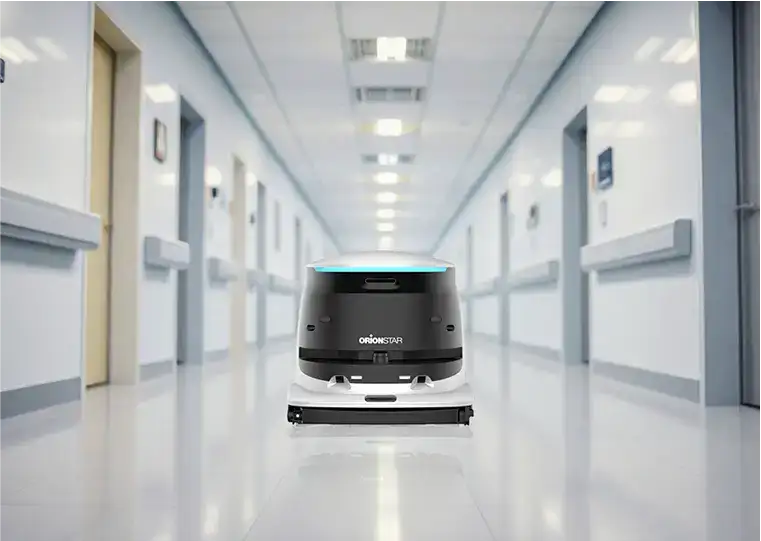
Hospital management teams overseeing hospital waiting rooms face a complex triad of challenges as unpredictable, high foot traffic collides with the strict hygiene standards required for infection control, exacerbating existing labor shortages, rising operational costs, and stringent compliance mandates. With environmental services facing a sustainable workforce gap and protocols demanding frequent terminal cleaning in these high-transmission hotspots, maintaining auditable, consistent cleanliness is increasingly difficult using traditional manual methods. To bridge this gap between rigorous sanitation requirements and labor constraints, facility leaders are turning to robotic floor cleaners as a reliable, data-driven solution to ensure safe, compliant, and cost-effective environments.
The OrionStar CleaniBot S55 Pro illustrates how these autonomous capabilities are implemented in a physical commercial platform designed for large indoor environments. According to manufacturer specifications, the unit utilizes a multi-sensor navigation system that includes LiDAR, a stereo camera, and ultrasonic sensors to support map construction of up to 10,000 square meters while actively detecting steps and avoiding obstacles. To accommodate varying operational needs, it features multiple cleaning modes that can deliver a cleaning efficiency of up to 1,368 square meters per hour in sweep and vacuum settings, alongside an ECO Vacuum mode capable of running for up to 19.5 hours to provide continuous, quiet dust control.
These high-visibility zones endure constant foot traffic from arriving patients, visitors, and staff, bringing in outdoor debris and moisture that degrade floor appearance and safety. Robotic floor cleaners can be deployed during off-peak hours to systematically scrub and vacuum these expansive hard floors, ensuring a consistent, welcoming environment while minimizing slip hazards.
Triage areas represent critical infection hotspots where symptomatic patients are initially assessed, requiring rapid and frequent cleaning cycles to prevent cross-contamination. Autonomous cleaners equipped with multi-mode capabilities can efficiently manage targeted floor sanitation in these zones, allowing clinical and environmental staff to maintain a consistently clean perimeter without being tied to a mop and bucket.
Patients in ambulatory waiting bays often sit for extended periods, making quiet operation and non-disruptive maintenance a priority for facility managers. Utilizing low-noise eco-vacuuming or dust-mopping modes, robotic platforms can continuously remove dust and minor debris around seating arrangements without disturbing patients or interrupting medical consultations.
Pediatric zones are particularly prone to unpredictable spills and high levels of direct contact with floor surfaces, demanding stringent hygiene standards. By running automated, chemical-free, or low-moisture cleaning passes, robotic systems maintain a dry and thoroughly sanitized floor space that safely accommodates young patients while avoiding the use of harsh, lingering chemicals.
Robotic floor cleaners are increasingly functioning as connected nodes within a hospital's broader digital ecosystem, seamlessly integrating with Building Management Systems (BMS), Computerized Maintenance Management Systems (CMMS), and IoT platforms. Through cloud-based dashboards and fleet management layers, these autonomous units can transmit real-time telemetry, allowing integration with BMS to coordinate cleaning cycles during after-hours HVAC setbacks or reduced occupancy windows. Furthermore, they can link with CMMS to automatically generate work orders if a fault or refill need is detected, while IoT sensor platforms—such as occupancy sensors and smart dispensers—can trigger need-based routing, transforming reactive floor maintenance into a dynamically scheduled, data-driven digital service.
Ultimately, automating environmental hygiene empowers hospital management to meet rigorous infection control standards while simultaneously advancing environmental and social governance objectives.
Robotic floor cleaners are fundamentally changing how hospital management approaches the maintenance of hospital waiting rooms, shifting the paradigm from labor-intensive manual upkeep to verifiable, data-driven hygiene. By addressing critical labor shortages and stringent infection control mandates, these autonomous platforms help ensure that high-traffic patient areas remain consistently safe and clean. As facilities evaluate their specific environmental requirements, the OrionStar CleaniBot series offers various models designed to adapt to different spatial and operational demands, providing a practical pathway for integrating automated floor care into broader healthcare facility strategies.