

REQUEST DEMO
Robot CATALOG will be sent to your mailbox immediately after submission.
SUBMIT
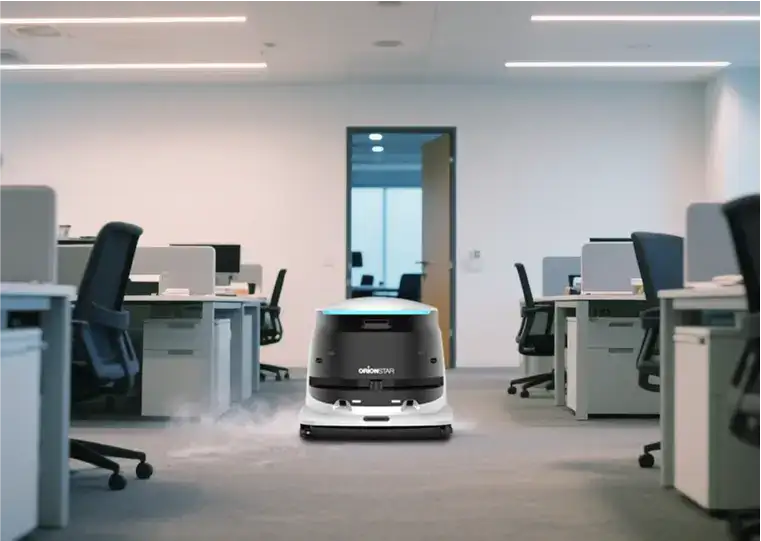
Facility Management in office buildings is currently facing an unprecedented intersection of challenges, characterized by severe labor shortages, rising operational costs, and increasingly strict hygiene compliance standards. With cleaning staff turnover rates averaging 40 to 60 percent annually and the unpredictability of hybrid work models complicating daily scheduling, traditional manual cleaning operations are struggling to keep pace with modern property demands. To address these mounting structural pressures, facility managers are increasingly turning to commercial cleaning robots as a reliable, scalable solution to automate repetitive floor care tasks, stabilize labor expenses, and ensure a consistently clean environment for commercial tenants.
The OrionStar CleaniBot C5 exemplifies these automated capabilities within heavy-duty commercial environments by integrating robust mechanical hardware with intelligent autonomous navigation. Operating with a 550 mm main brush, the machine covers maximum cleaning areas of up to 1,980 square meters per hour, according to manufacturer data, while utilizing advanced mapping technology to independently plan optimal routes across expansive floor plates. It supports seamless multi-shift operations through an automated workstation that handles clean-water refilling and waste-water discharge, and it relies on multiple sensors to actively avoid obstacles while keeping operating noise levels below 68 dB(A) to minimize disturbance in active commercial spaces.
These high-traffic entry points accumulate dirt rapidly and require continuous, visible maintenance to uphold the building's professional image. Automated scrubbers independently patrol these open concourses to maintain immaculate hard floors, safely navigating around incoming employees, visitors, and security turnstiles.
Long, repetitive hallways demand consistent floor care but are incredibly tedious and time-consuming for human staff to clean manually on a daily basis. Commercial cleaning robots efficiently run straight-line paths through these narrow passageways, navigating around temporary obstructions and seamlessly transitioning across varying hard floor types.
Spaces such as cafeterias, tenant lounges, and fitness centers experience highly unpredictable foot traffic and rapid debris accumulation due to flexible hybrid work schedules. Intelligent machines equipped with spot-cleaning and multi-mode capabilities can systematically address localized spills and dirt without requiring complete manual sweeps of the entire floor.
The transition zones near elevator banks face constant wear and tear from concentrated foot traffic moving between different levels of the office tower. Compact robots consistently dust-mop and scrub these confined spaces, while some advanced models can integrate with building elevator control software to autonomously travel between multiple floors.
To maximize their operational utility, commercial cleaning robots are increasingly functioning as active nodes within the broader Smart Building ecosystem by integrating with Computerized Maintenance Management Systems (CMMS), Building Management Systems (BMS), and broader IoT networks. Through API connections, these robotic units transmit real-time operational logs, coverage maps, and brush-wear metrics directly to centralized facility dashboards, transforming routine patrols into thoroughly documented maintenance events. This seamless data exchange allows consumable alerts—such as HEPA filter replacements or battery load testing—to automatically trigger pre-loaded work orders, ensuring the fleet maintains high uptime and contributes comprehensively to the building's predictive maintenance strategies.
By dramatically lowering resource consumption and providing verifiable compliance data, automated cleaning technologies actively empower the Facility Management industry to achieve and accurately document their long-term sustainability objectives.
Commercial cleaning robots are fundamentally reshaping the way the Facility Management sector maintains and optimizes office buildings, offering a highly effective response to ongoing labor volatility, rising costs, and heightened hygiene expectations. By merging autonomous navigation with rigorous data reporting, these automated platforms elevate the consistency of daily floor care while seamlessly integrating into modern smart facility ecosystems. For organizations evaluating ways to adapt to these evolving operational demands, the OrionStar CleaniBot series provides a variety of adaptable models designed to address the specific spatial layouts and workflow requirements of distinct commercial environments.
OrionStar Robotics complies with global data protection regulations, including GDPR. Visual and spatial data collected for navigation is processed on the edge (locally on the device) where possible. Cloud-based telemetry is anonymized and used solely for operational performance and maintenance. Facility managers are responsible for adhering to local signage and consent laws regarding autonomous recording devices in public spaces.