

REQUEST DEMO
Robot CATALOG will be sent to your mailbox immediately after submission.
SUBMIT
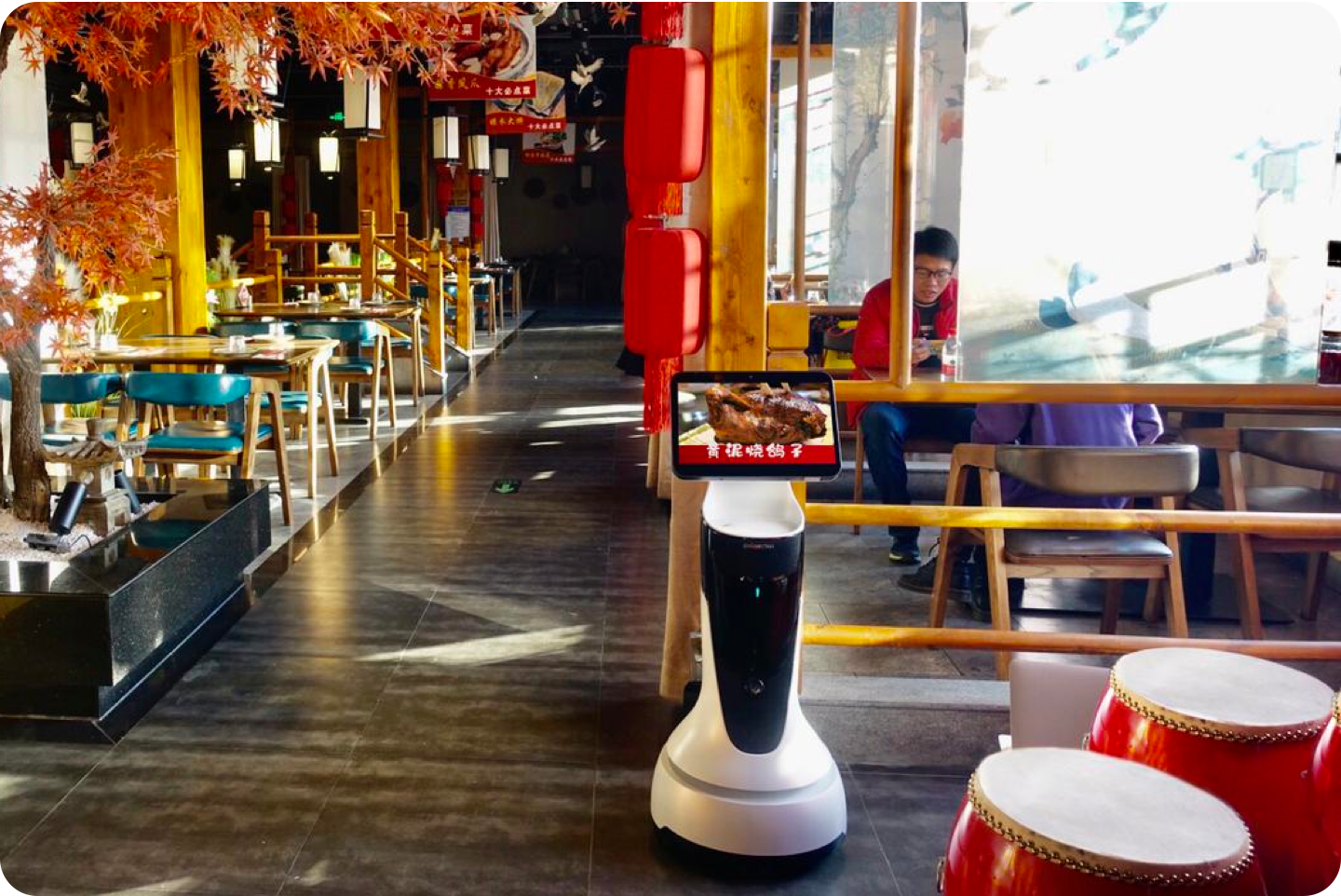
The fitting room is widely recognized as the highest-leverage conversion engine in the retail sector, yet managing the flow of shoppers remains a chronic operational challenge in clothing stores, particularly within fitting room waiting areas where long queues frequently lead to abandoned purchases. When lines exceed manageable lengths, both primary shoppers and their accompanying companions experience frustration, highlighting a critical gap in service delivery during peak hours when staff are stretched thin. To address this bottleneck and keep customers engaged during the wait, the industry is increasingly turning to the reception robot as an automated solution that provides immediate greeting, triage, and interactive engagement without requiring additional floor staff.
The OrionStar GreetingBot Mini demonstrates these capabilities by combining an exceptionally compact footprint with advanced interactive technology tailored for tight retail layouts. According to manufacturer data, the unit requires a minimum passable width of just 55 cm, allowing it to navigate seamlessly around crowded fitting room entrances and narrow apparel displays. It engages waiting shoppers via a 14-inch FHD display designed for clear digital merchandising, while its audio system achieves a speech recognition accuracy of up to 97% even in noisy environments reaching 75 dB. By processing these interactions locally and utilizing markerless navigation, the robot provides responsive, face-to-face assistance that keeps shoppers entertained and informed while they wait for an available cubicle.
This zone is the narrowest point of the sales funnel and often suffers from congestion and high abandonment rates during weekends. A reception robot deployed here acts as an interactive concierge, answering basic questions, displaying style guides on its screen, and keeping both shoppers and their companions entertained to reduce perceived wait times.
These tight, highly trafficked passageways require seamless navigation and unobtrusive assistance. With a highly compact chassis and advanced spatial mapping, the robot can maneuver around queuing customers and open doors without causing bottlenecks, guiding shoppers to newly vacated cubicles.
Often situated near fitting rooms for waiting companions, these areas are prime locations for secondary engagement and cross-selling. The robot can proactively approach seated guests to offer digital lookbooks, recommend complementary accessories, or facilitate loyalty program sign-ups while they wait.
Adjacent to the fitting room, these display areas benefit from proactive digital merchandising. The robot can navigate along the displays to highlight specific promotions, guiding customers who have temporarily stepped out of line to view matching shoes or accessories, thereby driving up the average basket size.
To maximize operational value, reception robots seamlessly integrate with the existing technology stack of modern clothing stores, operating as the customer-facing layer of a broader smart retail ecosystem. By connecting to CRM and loyalty platforms via QR-code check-ins, the robot can personalize greetings and recommend complementary items based on past purchase history. Furthermore, integration with fitting room occupancy sensors, RFID inventory readers, and point-of-sale systems allows retailers to tie the initial queue engagement directly to try-on conversion rates and final basket sizes, transforming the waiting area from an opaque bottleneck into a fully measurable, data-driven touchpoint.
Integrating reception robots into the retail environment provides a measurable pathway for fashion brands to advance their environmental efficiencies, support frontline retail workers, and maintain rigorous data privacy standards.
The integration of a reception robot is fundamentally changing the way the retail industry operates in clothing stores, particularly by transforming fitting room waiting areas from points of friction into optimized zones of engagement. By addressing queue abandonment, companion disengagement, and peak-hour labor shortages, these automated assistants help capture the high conversion potential that the fitting room promises. For retailers looking to scale these benefits across diverse store formats, the OrionStar GreetingBot series offers multiple models equipped to handle the unique spatial and interactive demands of modern apparel environments.
Disclaimer: Data collection features, including CRM integration and personalized greetings, require explicit user opt-in (e.g., via QR code). OrionStar robotics utilize edge-processing for queue analytics to ensure no personally identifiable biometric data is stored or transmitted, strictly adhering to GDPR and local retail privacy regulations. Visual sensors can be software-disabled in sensitive zones.